
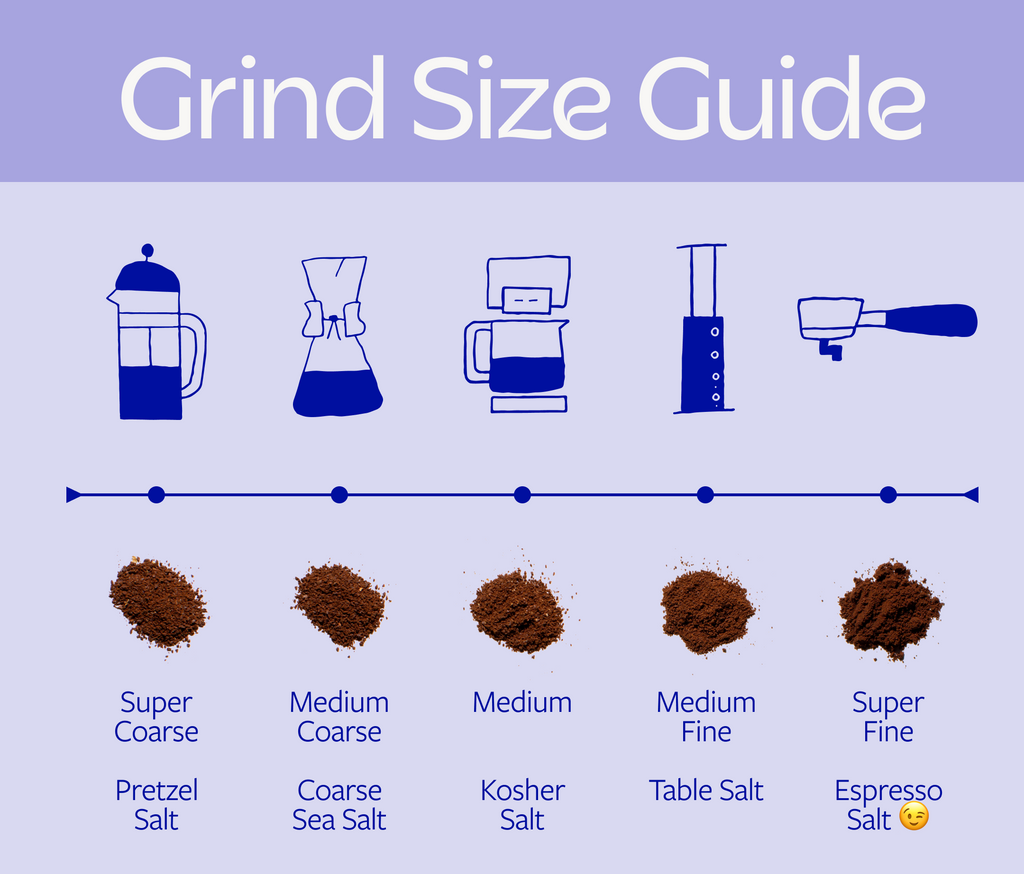
For most drip coffee makers in the United States, use a medium grind. The grounds should look close to table salt or fine sand. Start with a medium setting, brew one pot, and adjust from there. Use a finer grind if the coffee tastes weak and sour. Use a coarser grind if it tastes bitter, dry, or harsh.
Drip coffee needs a grind that lets water flow through the grounds at a steady rate. If the grounds are too fine, water moves too slowly and pulls out too much flavor. If they are too coarse, water runs through too fast and leaves flavor behind.

What Grind Size Is Best for Drip Coffee?
A medium grind is the best starting point for standard automatic drip coffee makers, such as the models commonly used in American homes and offices.
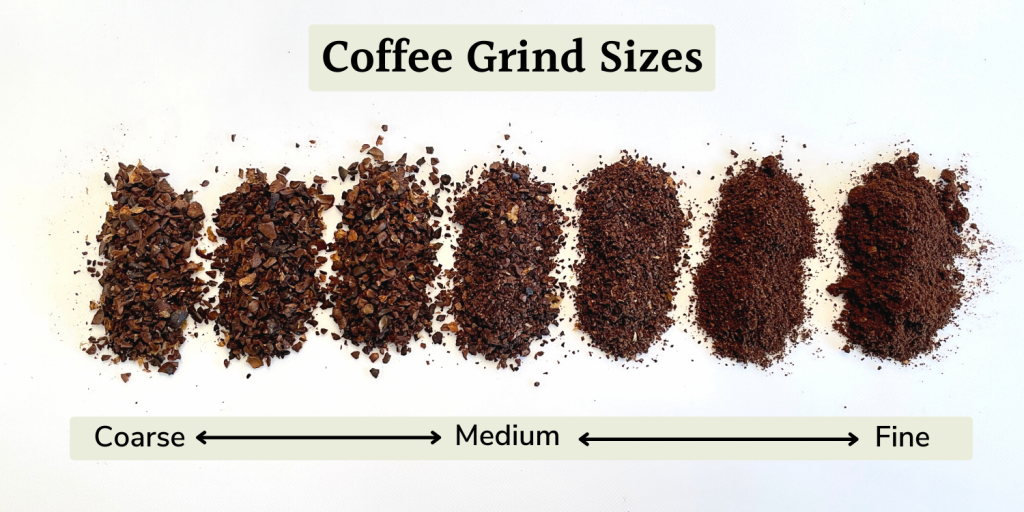
Medium grounds have a texture between table salt and sand. They should feel slightly gritty between your fingers. They should not look powdery like flour or chunky like cracked pepper.
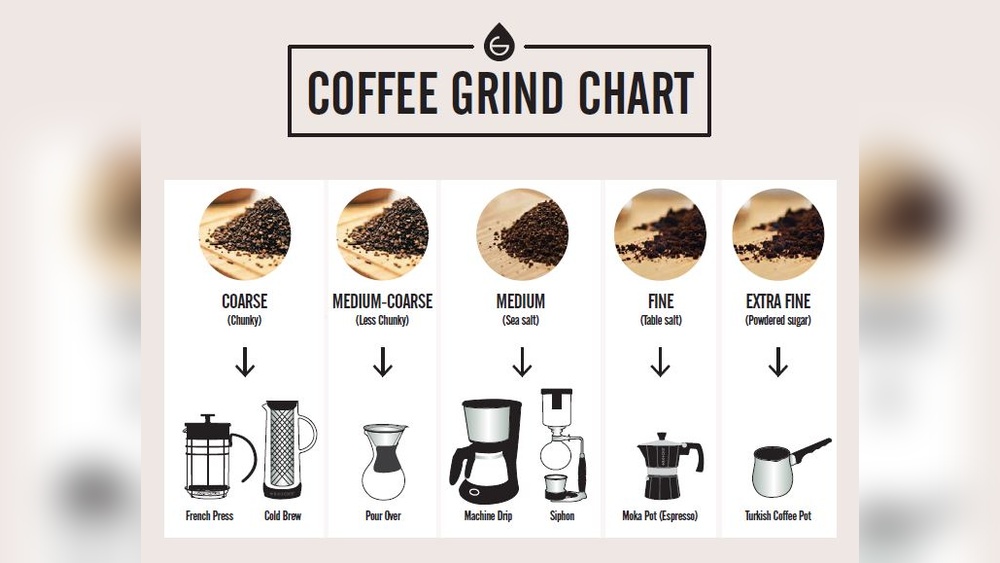
Use these general settings:
| Brewing method | Suggested grind | Texture |
|---|---|---|
| Automatic drip coffee maker | Medium | Table salt or fine sand |
| Flat-bottom basket brewer | Medium to medium-coarse | Sand or coarse table salt |
| Cone-shaped drip brewer | Medium-fine to medium | Fine sand |
| Pour-over with a slow flow | Medium | Sand |
| Cold brew | Coarse | Coarse sea salt |
| French press | Coarse | Rough ground pepper |
These are starting points, not fixed rules. Grinder settings differ from one brand to another. A “7” on one grinder may be much finer than a “7” on another.
The filter also affects the best grind. Flat-bottom baskets often work well with a medium grind. Cone filters may need a slightly finer grind because water passes through a deeper bed of coffee.
Why medium grind works
Drip coffee makers wet the grounds from the top and let brewed coffee pass through a paper or reusable filter. The water needs enough contact time to extract flavor, but it must still drain at a steady pace.
Medium grounds create a balanced path for the water:
- Fine enough to provide good contact with water.
- Coarse enough to reduce clogging.
- Even enough to produce a more balanced cup.
The goal is not to make every particle the same size. The goal is to avoid too many very fine particles or large chunks.

How to Grind Coffee for a Drip Coffee Maker
Follow this simple process to choose and adjust your grind.
1. Start with fresh coffee beans
Fresh beans help you judge the grind more clearly. Old coffee can taste flat even when the grind is correct.
Store beans in an airtight container in a cool, dry cabinet. Keep them away from heat, light, moisture, and strong odors. Do not store them in the refrigerator, where moisture and food odors can affect the beans.
Whole beans usually keep their flavor better than pre-ground coffee because grinding exposes more surface area to air.
2. Set the grinder to medium
Choose the medium range on a burr grinder. If the grinder uses numbers, begin near the center of the available range.
Do not assume that the largest number means medium. Some grinders use “1” for coarse, while others use “1” for fine. Check the grinder guide if one is available.
If you use a blade grinder, grind in short pulses. Shake the grinder gently between pulses. This helps move the larger pieces toward the blades.
A blade grinder will produce a less even grind than a burr grinder. It can still make drinkable drip coffee, but you may need to adjust the brewing method more carefully.
3. Use the right amount of coffee
A useful starting point is:
- 1 to 2 level tablespoons of ground coffee for every 6 fluid ounces of water
- Or about 55 grams of coffee per 1 liter of water
Many American coffee makers mark a “cup” as 5 or 6 fluid ounces, not a full 8-ounce measuring cup. Check the markings on your machine before you calculate the dose.
For a 12-cup coffee maker, the machine’s “12 cups” may not equal 96 fluid ounces. It may hold closer to 60 to 72 fluid ounces, depending on the model.
A kitchen scale gives more consistent results. If you do not have one, use the same scoop each time and change only one variable at a time.
4. Brew with clean water
Use cold, fresh water. Tap water is fine if it tastes good and does not leave heavy mineral buildup.
Water with too many minerals can leave a harsh taste and slow the machine over time. Very soft or filtered water can taste dull if it lacks enough mineral content.
Clean the coffee maker on the schedule listed in the manual. Mineral scale can change flow rate, water temperature, and brew time.
5. Taste the coffee and adjust one step
Let the coffee cool for a few minutes before judging it. Very hot coffee can hide some flavors.
Make one small change:
- Coffee tastes weak, thin, or sour: grind a little finer.
- Coffee tastes bitter, dry, or harsh: grind a little coarser.
- Coffee tastes strong but balanced: keep the grind and adjust the dose only if needed.
- Coffee tastes both bitter and weak: check the water, machine, coffee age, and grind consistency before making a large adjustment.
Small changes work better than moving from medium to very fine or very coarse.
How Fine or Coarse Should Drip Coffee Be?
Drip coffee should usually be finer than French press coffee and coarser than espresso coffee.
Think of grind size as a control for water flow and extraction. Finer grounds give water more surface area to contact. They also slow the flow through the filter. Coarser grounds give water less surface area and allow faster flow.
Here is a simple comparison:
- Too fine: The filter may clog. The coffee may taste bitter, dry, or heavy.
- Too coarse: Water may pass too quickly. The coffee may taste weak, sharp, or sour.
- Medium: Water flows at a steady rate and usually gives the most balanced result.
The best size depends on the machine and filter. A brewer with a slow showerhead may need a slightly coarser grind. A brewer with a fast flow may need a slightly finer grind.
Grind size and extraction
Extraction means the process of dissolving flavor compounds from coffee grounds into water.
Under-extracted coffee often has these traits:
- Sour taste.
- Sharp or salty impression.
- Thin body.
- Short, weak finish.
Over-extracted coffee often has these traits:
- Bitter taste.
- Dry mouthfeel.
- Burnt or woody notes.
- Heavy, rough finish.
Grind size is only one part of extraction. Water temperature, brew time, coffee dose, water quality, and bean type also matter.
This is why changing the grind alone does not always fix a bad cup.

A Drip Coffee Grind Size Chart for Quick Adjustments
Use this chart when the first pot does not taste right.
| What you notice | Likely cause | First adjustment |
|---|---|---|
| Sour, sharp, or thin coffee | Grounds are too coarse or brew time is too short | Grind slightly finer |
| Bitter, dry, or harsh coffee | Grounds are too fine or brew time is too long | Grind slightly coarser |
| Weak but not sour | Too little coffee or too much water | Add coffee before changing grind |
| Strong but balanced | Correct extraction | Keep the grind |
| Muddy coffee | Very fine particles or a clogged filter | Grind coarser and clean the filter |
| Uneven flavor from pot to pot | Inconsistent grind or changing coffee dose | Use a burr grinder or a scale |
| Flat or stale taste | Old coffee or poor storage | Use fresher beans |
| Burnt taste after brewing | Coffee sits on a hot plate too long | Move it to a thermal carafe |
Taste is more useful than appearance alone. Two grinds can look similar but brew at different speeds because of particle shape and grinder design.
Change only one variable at a time
Do not change the grind, water amount, coffee amount, and brewing machine at once. You will not know which change helped.
A simple adjustment plan works well:
- Keep the water amount the same.
- Keep the coffee dose the same.
- Change the grind by one small step.
- Brew again.
- Compare the taste.
If the coffee remains sour after you grind finer, check whether the machine is heating and spraying water correctly. If it remains bitter after you grind coarser, check for old coffee, a dirty machine, or coffee that sat on the hot plate.

Medium or Medium-Coarse for Different Drip Brewers?
The shape of the filter changes how water moves through the coffee bed.
Flat-bottom drip coffee makers
Use a medium grind as your first choice. A flat basket spreads the coffee across a wider area. This often gives water a fairly shallow coffee bed.
If the coffee tastes weak and the machine drains quickly, try a slightly finer grind. If the filter overflows or the coffee tastes dry, try a slightly coarser grind.
Cone-shaped drip brewers
Use a medium or medium-fine grind. Cone filters create a deeper bed of coffee. Water may spend more time in contact with the grounds.
A grind that is too fine can slow the flow and create a bitter cup. Start at medium, then move only slightly finer if the coffee tastes thin.
Reusable metal filters
Metal filters allow more oils and small particles into the cup. They may make coffee taste fuller than paper filters.
Start with a medium grind. If the cup has too much sediment, grind a little coarser or use a paper filter. If the coffee tastes weak, use a slightly finer grind or increase the dose.
Single-serve drip machines
Single-serve brewers vary widely. Some use pods, while others accept loose grounds in a reusable basket.
For loose grounds, use medium unless the machine guide says otherwise. Do not pack the coffee tightly. A tight coffee bed can slow flow and cause overflow.

Burr Grinder or Blade Grinder for Drip Coffee?
A burr grinder is usually easier to adjust for drip coffee because it produces a more even particle size.
A burr grinder crushes beans between two surfaces. A blade grinder chops beans with a spinning blade. Chopping tends to create a mix of fine dust and large pieces.
Burr grinder benefits
- More consistent grounds.
- Clearer adjustment steps.
- Better control over flow rate.
- Less need to grind by time alone.
Blade grinder tips
You can still make good drip coffee with a blade grinder. Use these steps:
- Add only the amount of beans you need.
- Pulse for a short time.
- Shake the grinder gently.
- Pulse again.
- Stop when most pieces look close to medium size.
- Remove the grounds before fine dust settles at the bottom.
Do not run the blade continuously for a long time. Heat from the motor may warm the coffee, and the grind may become too fine.
For either grinder, clean away old coffee oils and dust. Old residue can make new coffee taste stale or rancid.
How Much Coffee Should You Grind for Drip?
Start with a coffee-to-water ratio between 1:15 and 1:17.
That means:
- 1 gram of coffee for 15 to 17 grams, or milliliters, of water.
- 20 grams of coffee for about 300 to 340 milliliters of water.
- 55 grams of coffee for about 1 liter of water.
These amounts are starting points. Dark roasts may taste better with a little less coffee or a slightly coarser grind. Light roasts may need a little more coffee or a slightly finer grind.
Example calculation
Suppose you want to brew 6 US fluid ounces of water.
Six fluid ounces equal about 177 milliliters. At a 1:16 ratio:
177 ÷ 16 = about 11 grams of coffee
That amount is roughly 2 level tablespoons, but spoon measurements vary. A scale will give a more reliable result.
If the coffee tastes weak, increase the coffee dose slightly before making a large grind change. If it tastes bitter, reduce the dose slightly or grind coarser.
Common Mistakes When Grinding Coffee for Drip
Avoiding a few common errors can improve the cup before you buy new equipment.
Using an espresso grind
Espresso grind is much finer than drip grind. It can slow the filter and produce bitter coffee. Use a medium grind for a standard drip brewer.
Using French press grind
French press coffee needs a coarse grind because the grounds steep in water for several minutes. Coarse grounds may drain too fast in a drip machine and produce weak coffee.
Trusting a grinder number without testing
Grinder numbers are not universal. Use the texture and the taste as your guide.
Grinding by color alone
Roast color does not tell you the exact grind size. Dark grounds can look fine even when they are coarse. Check the texture instead.
Packing the coffee into the filter
Drip coffee grounds should sit loosely in the basket. Pressing them down can restrict water flow.
Leaving coffee on the hot plate
Heat can make brewed coffee taste bitter or burnt over time. A thermal carafe helps preserve flavor after brewing, but it cannot restore flavor that was already over-extracted.
Ignoring the filter shape
A flat basket and a cone filter do not always need the same grind. Start with medium, then adjust to the flow and taste.

How to Know When Your Drip Coffee Grind Is Correct
Your grind is close when the coffee has a balanced mix of sweetness, acidity, and bitterness.
Look for these signs:
- The coffee tastes clear rather than muddy.
- It has enough strength without tasting harsh.
- The finish is smooth rather than dry.
- The filter drains without overflowing.
- The brew time remains fairly consistent.
- The same recipe produces similar results each time.
Do not judge coffee only by strength. Strong coffee can still be under-extracted, and weak coffee can still be over-extracted.
For example, a coarse grind with too much coffee may taste strong but sour. A fine grind with too little coffee may taste thin but bitter. Taste and flow together give a better diagnosis.
If you cannot tell whether the coffee tastes sour or bitter, let it cool. Coffee often becomes easier to evaluate at a warm, comfortable drinking temperature.

FAQs About Grinding Coffee for Drip
Is drip coffee grind fine or coarse?
Drip coffee uses a medium grind. It is finer than French press coffee and coarser than espresso coffee.
Can I use pre-ground coffee for a drip machine?
Yes. Choose coffee labeled for drip, automatic drip, or filter brewing. If it tastes weak, the coffee may be stale, the dose may be too low, or the grind may be too coarse.
What happens if coffee is ground too coarse for drip?
Water flows too quickly through the grounds. The coffee may taste weak, sour, sharp, or watery. Grind slightly finer or use a little more coffee.
What happens if coffee is ground too fine for drip?
Water may flow too slowly. The filter can clog, and the coffee may taste bitter, dry, or heavy. Grind slightly coarser and check that the filter is not overloaded.
Does a finer grind make coffee stronger?
A finer grind can make coffee taste stronger because it may extract more flavor. It does not always improve the cup. If the grind is too fine, the coffee can become bitter and dry.
Should I grind coffee finer for a cone filter?
Often, a cone filter works well with medium to medium-fine coffee. Start with medium. Move finer only if the coffee tastes weak and the filter drains too quickly.
Key Takeaways
- Use a medium grind for most automatic drip coffee makers.
- Aim for a texture similar to table salt or fine sand.
- Grind finer when coffee tastes sour or thin.
- Grind coarser when coffee tastes bitter or dry.
- Use the same coffee dose and water amount while testing grind changes.
- A burr grinder gives more even results than a blade grinder.
- Clean water, fresh beans, and a clean machine matter as much as grind size.
Conclusion
The best grind for drip coffee is usually medium. Start there, then make small changes based on taste and flow.
Use fresh beans, measure the coffee and water, and change one variable at a time. With a little practice, the right grind becomes easy to spot: the grounds look like fine sand, the filter drains at a steady pace, and the coffee tastes balanced rather than sour or bitter.
Your next step is simple: brew one pot at a medium grind, taste it after it cools, and adjust one small setting for the next pot.


One Comment