
Introduction
For most people in the United States, coffee and tea can both fit into a healthy diet. Coffee usually gives more caffeine, a stronger boost, and a darker, richer taste. Tea often gives a milder lift, more water, and a wider range of flavors.
The better choice depends on your caffeine needs, sleep, stomach, budget, and taste. Plain coffee and unsweetened tea are low-calorie drinks. The health gap between them is usually smaller than the gap between a plain drink and one loaded with sugar, cream, or syrup.
This guide compares coffee and tea by caffeine, health effects, nutrition, cost, preparation, and safety. It uses guidance from U.S. health agencies and reviews of human research. Many long-term health findings are links seen in groups of people, not proof that coffee or tea alone caused an outcome.

Coffee vs. Tea at a Glance
Coffee is usually better for a stronger and faster caffeine boost. Tea is often better for a gentler lift and more variety. Neither drink is automatically healthier for every person.
| Factor | Coffee | Tea |
|---|---|---|
| Typical caffeine | Often higher | Often lower |
| Taste | Bold, roasted, bitter | Light, earthy, floral, or grassy |
| Common health compounds | Caffeine and polyphenols | Caffeine, L-theanine, and polyphenols |
| Calories when plain | Very low | Very low |
| Main risk | Too much caffeine or added calories | Too much caffeine or added sugar |
| Sleep impact | More likely to disrupt sleep at high intake | Still may disrupt sleep, but often less |
| Best fit | Early-day energy and alertness | Steady focus, variety, and lower caffeine |
| Caffeine-free options | Decaf coffee | Herbal tea and decaffeinated tea |
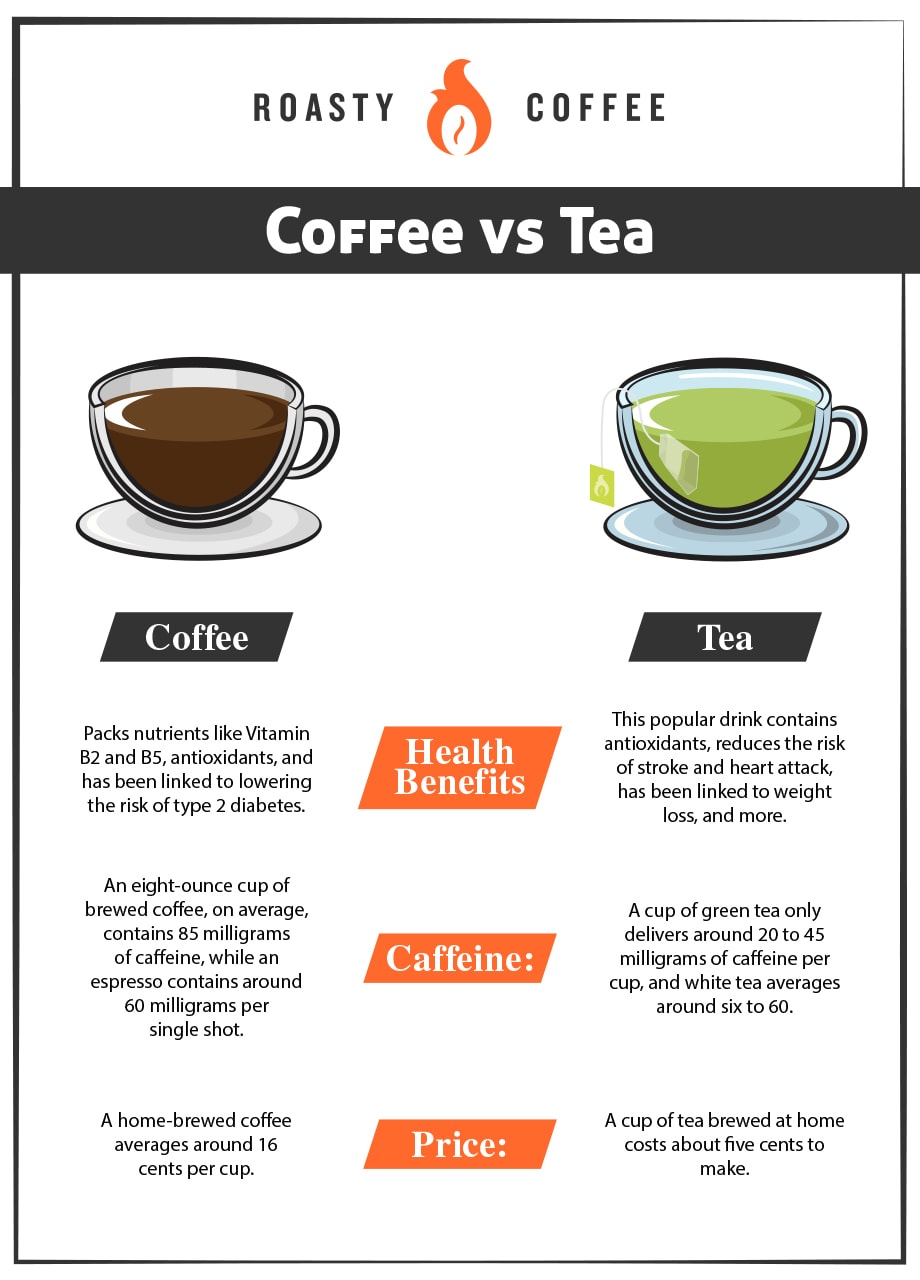
A standard 8-ounce cup of brewed coffee often contains about 80 to 100 milligrams of caffeine. An 8-ounce cup of black tea often contains about 30 to 50 milligrams. Green tea commonly contains less, but the amount can vary.
Cup size matters. A 16-ounce coffee from a U.S. coffee shop may contain much more caffeine than a small home-brewed cup. Brewing method, bean or leaf type, steep time, and serving size all change the final amount.
Caffeine: Which One Gives More Energy?
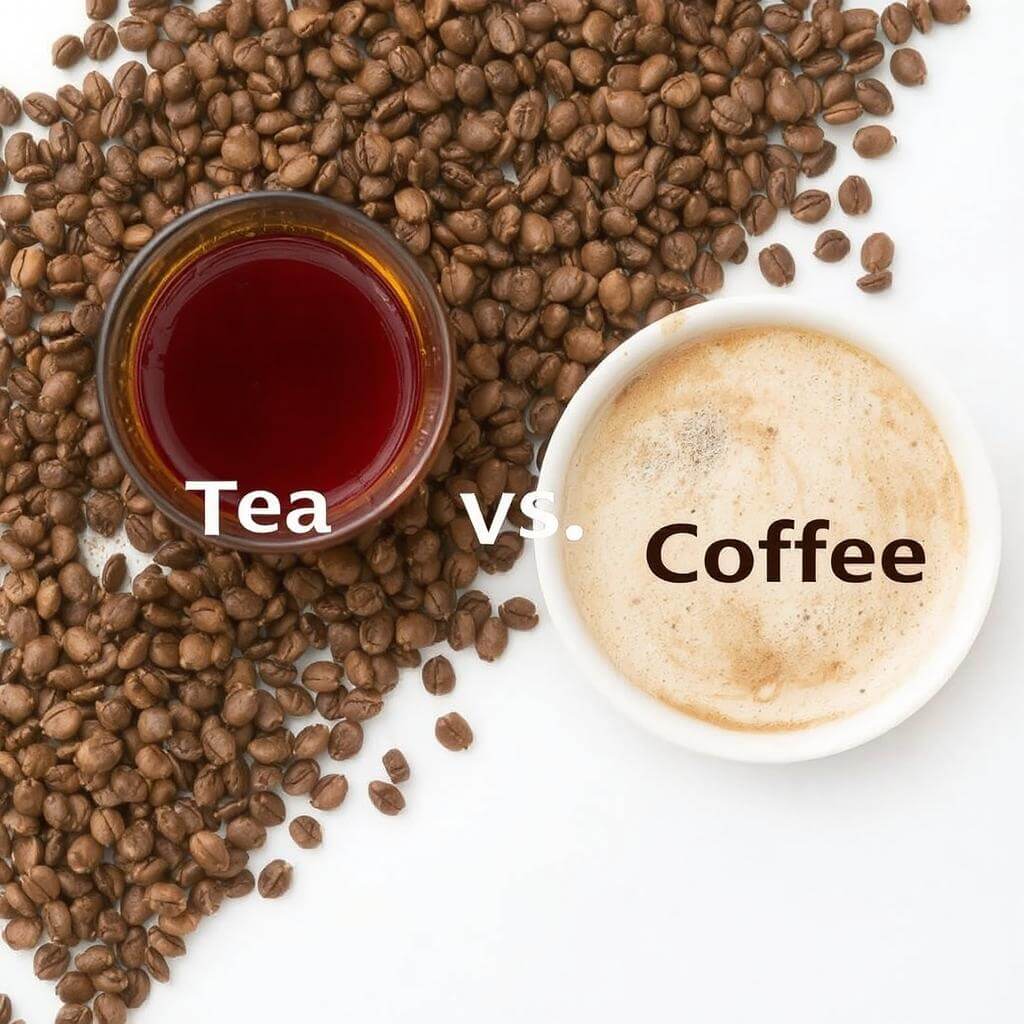
Coffee usually delivers more caffeine per serving, while tea may provide a softer effect. The best choice depends on how your body reacts and when you drink it.
Caffeine blocks adenosine, a brain chemical linked with sleepiness. This can make you feel more awake and alert. Caffeine does not replace sleep, but it may reduce the feeling of tiredness for a while.
Typical caffeine amounts
The U.S. Food and Drug Administration says that up to 400 milligrams of caffeine per day is an amount not generally linked with dangerous, negative effects for most healthy adults. This is a general limit, not a personal target.
Typical amounts include:
- Brewed coffee, 8 ounces: about 80 to 100 mg
- Black tea, 8 ounces: about 30 to 50 mg
- Green tea, 8 ounces: about 20 to 40 mg
- Espresso, 1 ounce: about 60 to 75 mg
- Decaf coffee, 8 ounces: often 2 to 15 mg
- Herbal tea: usually caffeine-free, unless blended with a caffeinated plant
These are estimates, not fixed values. Check the product label when one is available.
Why coffee can feel stronger
Coffee often has more caffeine per ounce and more caffeine per usual serving. A large mug can therefore create a quick rise in alertness. Some people like this effect in the morning or before a demanding task.
Tea may feel smoother for some people. One possible reason is that tea contains L-theanine, an amino acid found naturally in tea leaves. Small studies suggest that caffeine and L-theanine may affect attention together, but the effect is not the same for everyone.
Caffeine and sleep
Caffeine can remain in the body for several hours. The exact timing varies by person. Genetics, pregnancy, medicines, smoking, liver health, and regular caffeine use can all affect how long caffeine lasts.
If you have trouble sleeping, try these steps:
- Track all caffeine for several days.
- Move coffee and caffeinated tea earlier.
- Reduce serving size before removing caffeine completely.
- Choose decaf coffee or herbal tea later in the day.
- Watch for hidden caffeine in energy drinks, soda, chocolate, and some medicines.
Do not assume tea is caffeine-free. Black, green, white, oolong, and matcha teas naturally contain caffeine. Herbal teas, such as peppermint or chamomile, usually do not, but check the label.

Health Benefits of Coffee and Tea
Both drinks provide plant compounds that may support health, but the strongest evidence often comes from overall diet studies rather than direct coffee-versus-tea trials.
Coffee contains polyphenols and other compounds formed or changed during roasting. Tea contains polyphenols such as catechins and theaflavins. These compounds act in complex ways in the body.
Coffee and health
Research has linked moderate coffee intake with lower rates of several health problems, including type 2 diabetes, liver disease, and Parkinson’s disease. Some studies also link coffee drinking with a lower risk of death from several causes.
These findings need care. Most long-term studies are observational. Coffee drinkers may differ from non-drinkers in sleep, work, exercise, income, diet, smoking, and access to health care. Researchers can adjust for some factors, but they cannot remove every source of bias.
Coffee may also help some people with physical performance. Caffeine can lower the sense of effort during exercise and may improve endurance or power. The effect depends on dose and tolerance.
Tea and health
Tea is also linked with several favorable health outcomes. Studies of green and black tea have examined heart health, blood pressure, stroke, and type 2 diabetes.
Tea polyphenols may support blood vessel function and reduce some forms of cell stress. Yet, as with coffee, the evidence does not prove that tea alone prevents disease. Tea drinkers may also have different habits from people who do not drink tea.
What the evidence does not prove
Coffee and tea are not treatments for disease. They cannot replace prescribed medicine, a balanced diet, movement, or sleep.
Be cautious with claims that a special tea “detoxes” the body, melts fat, or cures illness. The word detox often has no clear medical meaning. Some products sold as slimming or cleansing teas contain laxatives, stimulants, or undeclared ingredients.

Antioxidants, Polyphenols, and L-Theanine
Coffee and tea both contain useful plant compounds, but “more antioxidants” does not automatically mean better health.
“Antioxidant” is a broad term. It describes a substance that can help limit certain chemical reactions in a test system or the body. Health effects depend on the compound, dose, food source, and the person consuming it.
Coffee compounds
Coffee provides chlorogenic acids and other polyphenols. Roasting changes the chemical profile of coffee. It can reduce some compounds and create others.
Coffee also contains diterpenes called cafestol and kahweol. Paper filters remove much of these compounds. Unfiltered coffee, such as French press, Turkish, or boiled coffee, can contain more. High intake of these compounds may raise LDL cholesterol in some people.
Tea compounds
Green tea contains catechins, including EGCG. Black tea contains theaflavins and thearubigins formed during oxidation. White and oolong teas have different profiles based on how the leaves are processed.
Tea also contains L-theanine. It does not provide a stimulant effect like caffeine. It may influence the way caffeine feels, but research on attention and mood remains limited and varies by dose and study design.
Matcha is different
Matcha is made from powdered green tea leaves. You drink the leaf rather than steeping and discarding it. This can provide more caffeine and plant compounds than a typical cup of green tea.
That does not make matcha automatically healthier. It can also increase caffeine intake. Products with added sugar or large serving sizes may contain more calories than plain tea.
Calories, Sugar, and Weight
Plain coffee and plain tea contain very few calories. Added ingredients often matter more than the drink itself.
A black coffee or unsweetened tea can fit easily into a lower-calorie eating plan. The calorie count rises with:
- Sugar, honey, or flavored syrup
- Cream and half-and-half
- Sweetened condensed milk
- Whipped cream
- Whole milk or plant milk in large amounts
- Blended coffee drinks
- Sweet bottled teas
A large flavored coffee drink can contain as much added sugar as a dessert. A sweet tea can also add a large amount of sugar without making you feel full.
A simple comparison
Consider two hypothetical 16-ounce drinks:
- Plain iced coffee: very few calories
- Sweetened iced tea: calories depend on the amount of sugar added
The drink with fewer calories is not always the one with the better taste or greater satisfaction. Still, if weight control or blood sugar matters to you, compare the label and serving size.
Better ways to reduce added sugar
- Order half the usual syrup.
- Choose unsweetened tea and add a small amount yourself.
- Use milk instead of cream if you prefer a lighter drink.
- Select a smaller size.
- Treat whipped cream and flavored toppings as optional.
- Taste the drink before adding more sweetener.

Coffee vs. Tea for the Heart
Both coffee and tea can be compatible with heart health, but unfiltered coffee may matter more for cholesterol than filtered coffee.
Caffeine can cause a short-term rise in blood pressure in some people. Regular users may develop partial tolerance. A person with high blood pressure should follow their clinician’s advice and monitor their own response.
The preparation method also matters. Paper-filtered coffee removes much of the cafestol and kahweol found in coffee oils. French press, Turkish, boiled, and some espresso-based preparations may retain more.
This does not mean that every person must avoid espresso or French press coffee. It means the choice may matter more if you have high LDL cholesterol or a condition affected by cholesterol.
Tea may have a smaller short-term caffeine effect per serving, but strong tea and large servings can still provide substantial caffeine. Sweet tea can also add sugar, which changes the nutrition picture.
If you have heart palpitations, chest pain, fainting, or severe shortness of breath after caffeine, stop using the product and seek medical care. Call 911 for severe or sudden symptoms.

Coffee vs. Tea for Digestion and the Stomach
Tea may feel gentler for some people, but neither drink is best for every stomach.
Coffee can increase stomach acid and may speed bowel movements. This can help some people feel regular. It can also worsen heartburn, reflux, loose stools, or stomach discomfort in others.
Tea may be easier to tolerate because it often contains less caffeine. Yet black tea, green tea, mint tea, and concentrated tea products can affect people in different ways. Peppermint may worsen reflux for some people.
Try a simple test if a drink causes symptoms:
- Reduce the amount.
- Drink it with food.
- Avoid very strong or concentrated versions.
- Test decaf coffee or caffeine-free herbal tea.
- Track symptoms for one to two weeks.
Do not use coffee or tea to treat ongoing stomach pain, vomiting, bleeding, unexplained weight loss, or persistent diarrhea. These symptoms need medical evaluation.

Coffee vs. Tea During Pregnancy
Pregnant people should discuss caffeine with a health professional and follow current prenatal guidance.
The American College of Obstetricians and Gynecologists states that moderate caffeine intake, commonly described as less than 200 milligrams per day, does not appear to be a major cause of miscarriage or preterm birth. Individual advice may differ.
The 200-milligram limit includes all caffeine that day. One large coffee may use much of that amount. Tea, chocolate, soda, energy drinks, and some medicines also count.
Herbal tea is not automatically safe during pregnancy. Herbs can have active effects, and safety data may be limited. Ask a prenatal clinician before using herbal blends, concentrated extracts, or “detox” teas.

Which Is Better for Focus, Exercise, and Work?
Coffee often works better when you want a stronger alertness boost. Tea may suit long periods of calm focus.
Caffeine can improve alertness and reduce perceived effort. This may help with early work, long drives, or exercise. The response varies widely. A regular coffee drinker may feel less of an effect than someone who rarely uses caffeine.
For exercise, caffeine is not required. If you use it, test your response during normal training rather than before an important event. Too much can cause shaking, nausea, anxiety, rapid heartbeat, or poor sleep.
For desk work, the best drink may be the one that helps you stay alert without making you restless. Consider:
- Your usual caffeine tolerance
- The length of the task
- Your bedtime
- Whether you need a second serving
- Your response to coffee acidity
- Whether the drink contains added sugar
A small tea may provide enough lift for a short task. Coffee may be more practical when fatigue is strong. Neither choice can overcome severe sleep loss.
Cost, Convenience, and Environmental Factors
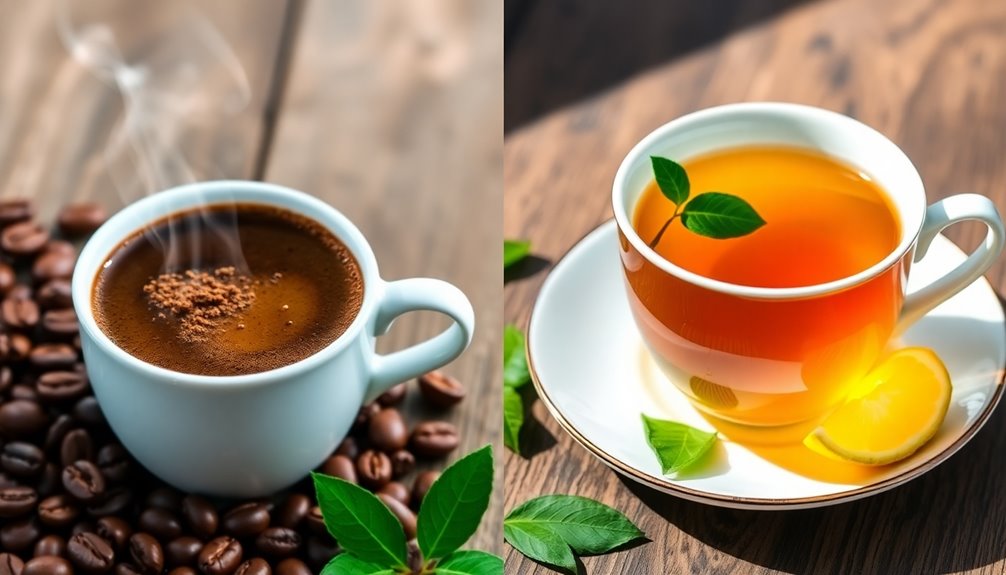
Home-brewed coffee and tea are usually less expensive than café drinks, while tea often needs less equipment.
Coffee may require a grinder, filter, brewer, and fresh beans. Tea usually needs a kettle, cup, and tea leaves or bags. Both can be made at home with low ongoing cost.
Cost depends on:
- Beans, leaves, bags, or pods
- Serving size
- Brewing equipment
- Café visits
- Milk and sweeteners
- Disposable cups
- How often you drink it
Tea bags are simple and consistent. Loose-leaf tea can reduce packaging per serving but needs an infuser. Coffee grounds can be composted in some home systems, though local rules vary.
Neither drink has one universal environmental advantage. Farming, water use, packaging, shipping, energy, and waste all matter. A drink used often in a reusable mug may create less waste than a drink bought in a disposable cup each day.
Common Mistakes to Avoid
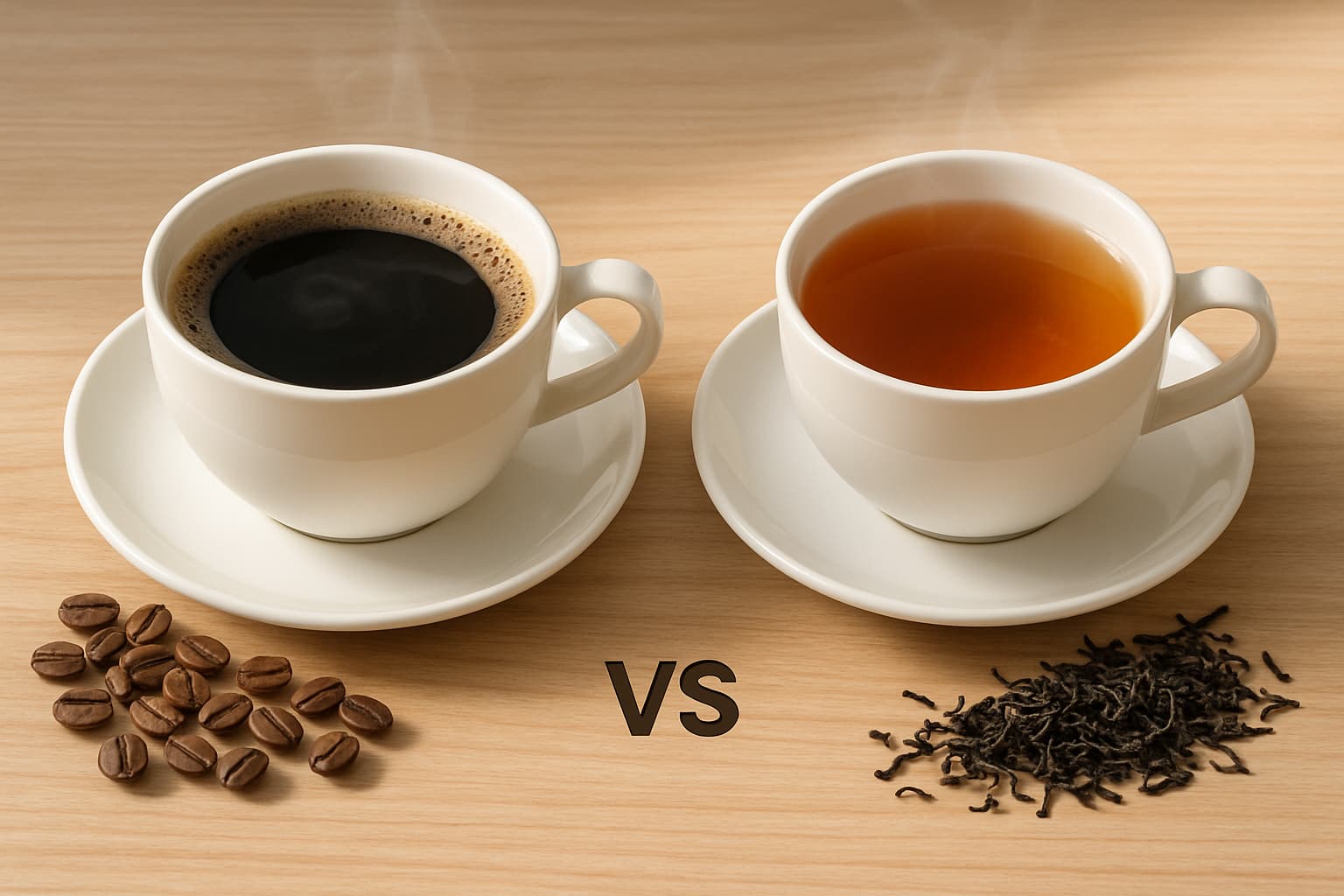
Most problems come from dose, timing, added ingredients, or assuming that “natural” means risk-free.
Avoid these common mistakes:
- Counting cups instead of milligrams of caffeine
- Forgetting that café servings may be larger than 8 ounces
- Drinking caffeine late and blaming poor sleep on stress alone
- Treating decaf as completely caffeine-free
- Assuming herbal tea has no drug-like effects
- Using concentrated green tea extracts as if they were normal tea
- Adding enough sugar or syrup to change the drink into a high-calorie dessert
- Using coffee or tea to replace meals, water, or sleep
- Assuming a health association proves cause and effect
- Ignoring symptoms such as palpitations, severe anxiety, or persistent reflux
Caffeine withdrawal can cause headache, tiredness, irritability, and trouble focusing. If you want to cut back, reduce the amount over several days rather than stopping suddenly.
People who take certain medicines or have heart rhythm problems, anxiety disorders, reflux, pregnancy, or other health conditions may need individualized advice. A pharmacist or clinician can review caffeine and supplement use with you.

How to Choose Between Coffee and Tea
Use this short decision guide:
Choose coffee if you:
- Want more caffeine in one serving
- Enjoy a roasted, bold flavor
- Need a stronger morning boost
- Prefer espresso or brewed coffee
- Tolerate coffee without stomach or sleep problems
Choose tea if you:
- Want less caffeine
- Prefer a lighter or more varied flavor
- Like green, black, oolong, white, or herbal blends
- Want a slower, calmer drinking routine
- Find coffee too acidic or intense
Choose decaf or caffeine-free options if you:
- Are sensitive to caffeine
- Have sleep problems linked with caffeine
- Need to limit daily caffeine
- Want a warm drink later in the day
- Have been told by a clinician to avoid caffeine
The most practical answer may be both: coffee in the morning, tea later, and caffeine-free drinks near bedtime. Keep track of your total caffeine rather than following a strict rule about one beverage.

Key Takeaways
- Coffee usually has more caffeine than tea.
- Plain coffee and unsweetened tea are both low-calorie choices.
- Coffee may support alertness and exercise performance, but it can disturb sleep or worsen reflux.
- Tea offers many flavors and often a milder caffeine effect.
- Filtered coffee may be a better choice for people concerned about LDL cholesterol.
- Added sugar, cream, and syrups can matter more than the choice between coffee and tea.
- The FDA says up to 400 mg of caffeine per day is not generally linked with dangerous effects for most healthy adults.
- Pregnancy, heart symptoms, anxiety, reflux, medicines, and sleep problems can change the best choice.
Frequently Asked Questions
Is coffee healthier than tea?
Not for everyone. Both can provide beneficial plant compounds and fit a healthy diet when consumed in moderate amounts. Coffee usually provides more caffeine, while tea may be easier to tolerate for people who want less stimulation.
Does tea have more antioxidants than coffee?
There is no simple winner. Coffee and tea contain different polyphenols, and laboratory antioxidant measures do not directly predict a person’s health outcome. The type, amount, preparation, and overall diet matter.
Which has more caffeine: coffee or green tea?
Coffee usually has more caffeine per typical serving. An 8-ounce brewed coffee often contains about 80 to 100 mg, while green tea often contains about 20 to 40 mg. Exact amounts vary by brand, strength, and serving size.
Can coffee or tea help with weight loss?
Caffeine may have a small effect on energy use and appetite for some people, but coffee and tea are not reliable weight-loss treatments. Sweetened drinks can add substantial calories. Sustainable weight change depends on overall eating, activity, sleep, and health factors.
Is decaf coffee completely caffeine-free?
No. Decaf coffee usually contains a small amount of caffeine. If you need to avoid caffeine completely, check the label and ask a health professional about suitable options.
Can I drink coffee or tea every day?
Many healthy adults can drink either daily within their personal caffeine limit. Watch for poor sleep, anxiety, heart palpitations, headaches, stomach symptoms, or rising dependence. Reduce intake if these problems appear and seek medical advice when symptoms are severe or persistent.
Conclusion
Coffee and tea are both reasonable choices for many people in the United States. Choose coffee for a stronger caffeine boost, or choose tea for a lighter lift and broader range of flavors. Then adjust the serving size, timing, and added ingredients to fit your body and routine.
A useful next step is to record your drinks for three days. Write down the type, size, caffeine amount when listed, sweeteners, and time of day. That simple log can show whether your main issue is caffeine, sugar, portion size, or timing.
Sources
- U.S. Food and Drug Administration: Spilling the Beans—How Much Caffeine Is Too Much?
- U.S. Department of Agriculture FoodData Central
- American College of Obstetricians and Gynecologists: Moderate Caffeine Consumption During Pregnancy
- National Center for Complementary and Integrative Health: Green Tea
- National Institutes of Health Office of Dietary Supplements: Caffeine




2 Comments