
A SENSARTE nonstick frying pan can be a useful choice for eggs, pancakes, fish, grilled cheese, and other foods that may stick to bare metal. The right pan depends on the exact model, size, cooktop, oven needs, and care rules. SENSARTE sells several frying pan designs, so features such as induction use, oven safety, dishwasher use, coating type, and lid style can differ.
This guide explains what to check before buying, how to use a SENSARTE pan safely, and how to tell when it is time to replace it.
What Is a SENSARTE Nonstick Frying Pan?
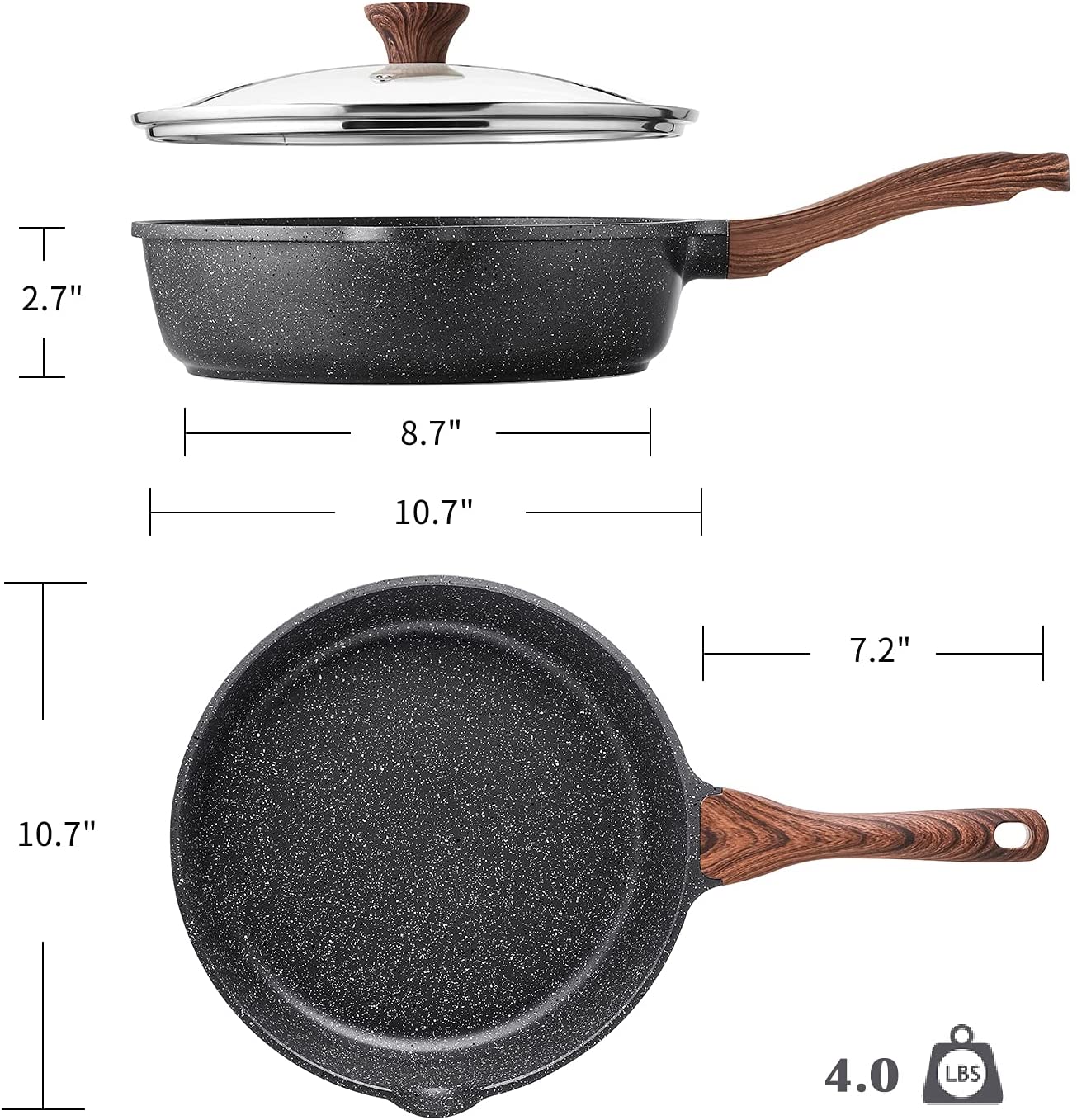
A SENSARTE nonstick frying pan is a coated cooking pan made for low- to medium-heat cooking with less sticking. The brand sells several sizes and styles, including skillet-shaped pans, sauté pans, and pans with glass lids.
Most SENSARTE nonstick pans use an aluminum body or aluminum cooking base. Aluminum heats fast and spreads heat well. The nonstick surface sits above the metal and helps food release with less oil.
The name “granite” or “stone” on some product pages describes the look or marketing style of the surface. It does not mean the pan is made from solid granite or stone.
Common features
Depending on the model, a SENSARTE pan may include:
- A coated nonstick cooking surface
- An aluminum body
- A flat base for use on some induction cooktops
- A cool-touch or heat-resistant handle
- A tempered glass lid
- A pouring rim
- A silicone seal or helper handle
- Several size choices, often from small egg pans to larger family skillets
These features are not universal. Check the product page, box, and manual for the exact model.
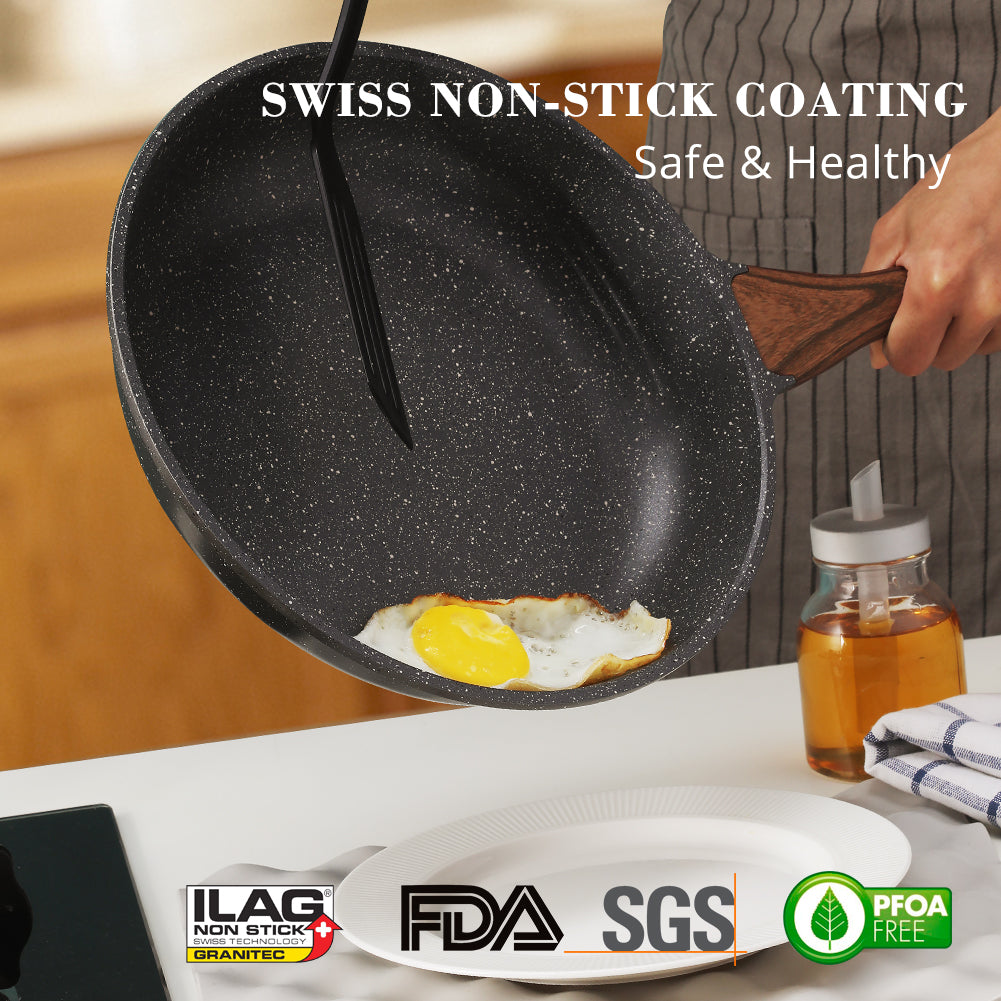
SENSARTE product listings often describe their coating as PFOA-free and may identify a Swiss coating supplier. That is a manufacturer claim about the listed product. It is not the same as an independent test of every pan or every production batch.

Is the SENSARTE Nonstick Frying Pan Safe?
When used as directed, a modern nonstick pan can be suitable for normal home cooking. The main safety risks come from overheating, damaged coatings, hot handles, and incorrect use on the wrong cooktop.
Many nonstick coatings use PTFE, a fluoropolymer that helps food slide from the pan. The U.S. Food and Drug Administration allows certain cookware coatings for food contact when they meet applicable requirements. The safety question is not only the brand name. It also depends on the coating, temperature, pan condition, and use.
Avoid extreme heat
Do not heat an empty nonstick pan on high for a long time. A coated pan can become much hotter than the food inside it. High heat can damage the surface and may create fumes from overheated PTFE coatings.
Use low or medium heat for most tasks. Preheat only briefly, then add oil or food. If the pan begins to smoke, turn off the burner and let it cool. Do not pour cold water into a very hot pan.
Keep birds away from overheated cookware
Overheated nonstick cookware can release fumes that may be very harmful to pet birds. Keep birds away from the kitchen during cooking and avoid overheating any coated pan.
Do not use a damaged pan
Stop using the pan if you see:
- Deep scratches through the cooking surface
- Peeling or flaking
- Blisters
- A loose handle
- A warped base
- Coating that lifts when washed
A few light marks do not always mean an immediate hazard, but damage can reduce release and make cleaning harder. Replace the pan when the coating no longer stays intact or food starts sticking across much of the surface.
PFOA-free does not mean chemical-free
“PFOA-free” means the product is marketed without PFOA. It does not mean the pan has no coating or no chemicals. Nonstick cookware needs a coating to create its release effect.
Look for clear product information about the coating. If a listing only says “stone,” “granite,” or “natural,” that wording does not fully identify the material.

How to Choose the Right SENSARTE Frying Pan
The best SENSARTE frying pan is the one that matches your cooktop, food portions, storage space, and cooking habits. A larger pan is not always better. It may be heavier and may heat less evenly if used on a small burner.
Size guide
| Pan size | Good for | Main limit |
|---|---|---|
| 8 inches | One egg, a small omelet, one grilled sandwich | Too small for family meals |
| 10 inches | Two to three eggs, fish fillets, small stir-fries | Less room for large batches |
| 12 inches | Family portions, several pancakes, larger proteins | Needs more storage and a larger burner |
| Deep sauté style | Sauces, vegetables, shallow frying, one-pan meals | Heavier than a standard skillet |
A 10-inch pan is a useful middle choice for one or two people. A 12-inch pan gives more room for browning, but food may steam if the pan is overloaded.
Cooktop compatibility
Check the exact listing for your cooktop:
- Gas: Most flat pans work if the base sits level over the burner.
- Electric coil: The pan should match the coil size as closely as possible.
- Glass or ceramic electric: Avoid dragging the pan, since this can scratch the cooktop.
- Induction: The model must have a magnetic base. A quick test is to place a magnet on the outside bottom. If it sticks firmly, the pan may work on induction, but the product instructions are the final check.
- Oven: Oven limits vary by model. The handle, lid, silicone parts, and coating may have different heat limits.
Never assume that all SENSARTE frying pans have the same cooktop or oven rating.
Handle design
A long handle can keep your hand away from heat, but it also takes more storage space. A helper handle helps when moving a full 12-inch pan.
Check whether the handle is:
- Permanently attached
- Removable
- Metal
- Covered with silicone or another material
- Rated for oven use
A pan may be oven-safe while its lid or handle is not. Treat the lowest-rated part as the limit.

How to Use a SENSARTE Nonstick Pan
Good technique can extend the life of the coating. It also helps the pan brown food without forcing you to use high heat.
- Wash the pan before first use. Use warm water, mild dish soap, and a soft sponge. Dry it well.
- Place it on a matching burner. The flame or heating ring should not extend far beyond the base.
- Use low or medium heat. Nonstick surfaces do not need high heat to release food.
- Add a small amount of oil when useful. Some foods cook well with little oil, but oil can improve browning and flavor.
- Let food release on its own. If eggs or fish stick, give them more time before turning them.
- Use wood, silicone, or plastic tools marked for nonstick cookware.
- Move the pan with care. Lift it instead of sliding it across a glass cooktop.
- Cool the pan before washing. A sudden temperature change can warp the base.
- Dry it fully before storage. Store it with space between pans when possible.
A nonstick pan works best as a gentle cooking tool. It is not the ideal choice for searing steak at very high heat, heating an empty pan until it smokes, or cutting food inside the pan.
Foods that suit this pan
A SENSARTE nonstick skillet is well suited to:
- Eggs and omelets
- Pancakes
- French toast
- Fish
- Chicken breasts
- Tofu
- Vegetables
- Quesadillas
- Grilled cheese
- Delicate foods that tear in stainless steel
For strong searing, very high heat, or oven broiling, stainless steel or cast iron may be a better tool.

Cleaning and Maintaining the Pan
Hand washing is usually the safest care method for a coated pan, even when the product listing says it is dishwasher-safe. Dishwasher detergent, hot water, and repeated cycles can shorten the useful life of nonstick coatings and may dull the exterior.
Use this cleaning method:
- Let the pan cool.
- Rinse away loose food.
- Wash with warm water and mild soap.
- Use a soft sponge or cloth.
- Rinse well.
- Dry with a towel.
For stuck food, soak the pan in warm, soapy water for a short time. Do not scrape with a knife, steel wool, scouring powder, or rough scrub pad.
Do not use cooking spray unless the pan maker allows it. Aerosol sprays can leave a sticky film that builds up over time. A small amount of liquid oil is easier to control.
Avoid stacking pans directly on one another. If stacking is needed, place a soft pan protector or clean cloth between them. Keep metal tools, sharp edges, and heavy cookware away from the coating.
SENSARTE Nonstick Pan: Pros and Limitations
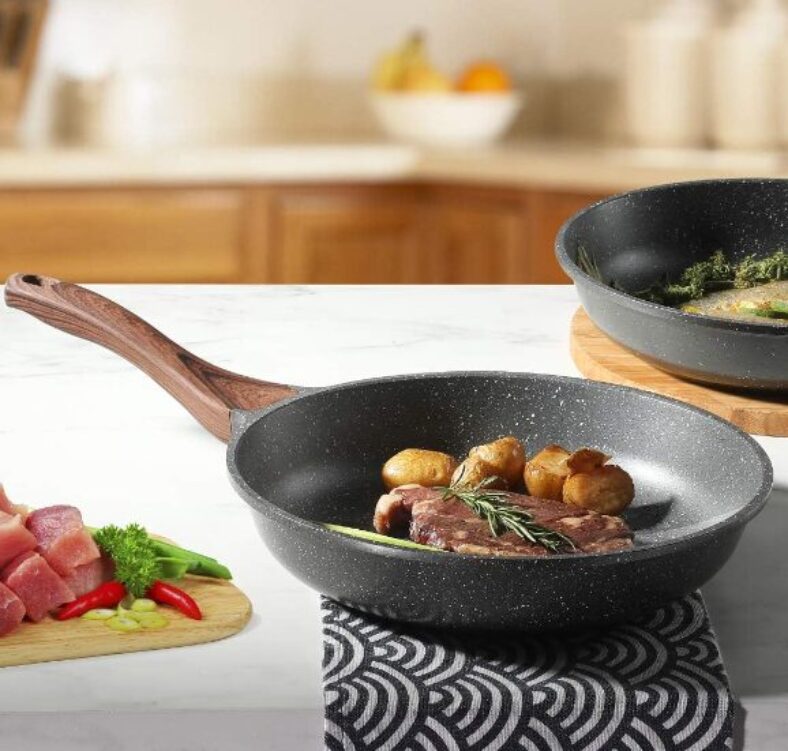
A SENSARTE pan may offer good value for people who want a simple coated skillet for daily meals. Its main benefit is easy food release with less oil and less scrubbing.
Potential benefits
- Food often releases more easily than from uncoated stainless steel.
- The aluminum body may heat quickly.
- Many sizes and designs are available.
- Some models are made for induction cooktops.
- Some models include a lid for covered cooking.
- The surface can be easier to clean than bare metal.
Limits to consider
- Nonstick coatings wear faster than many uncoated metal pans.
- High heat can shorten coating life.
- A dishwasher may reduce long-term durability.
- Exact specifications vary by model.
- Marketing terms such as “granite” do not fully explain coating chemistry.
- A coated pan is not the best tool for hard searing.
- Scratches and peeling are reasons to stop using the pan.
The most important trade-off is convenience versus lifespan. A nonstick pan is easy to use, but it needs gentler heat and tools than cast iron or stainless steel.
SENSARTE vs. Stainless Steel, Cast Iron, and Ceramic Pans
The right material depends on the task, not only the brand.
| Pan type | Best use | Strength | Trade-off |
|---|---|---|---|
| SENSARTE nonstick | Eggs, fish, pancakes, quick meals | Easy release and cleanup | Coating can wear |
| Stainless steel | Browning, sauces, high-heat cooking | Durable and uncoated | Food may stick without good technique |
| Cast iron | Searing, baking, heat retention | Very durable and heat stable | Heavy and needs seasoning care |
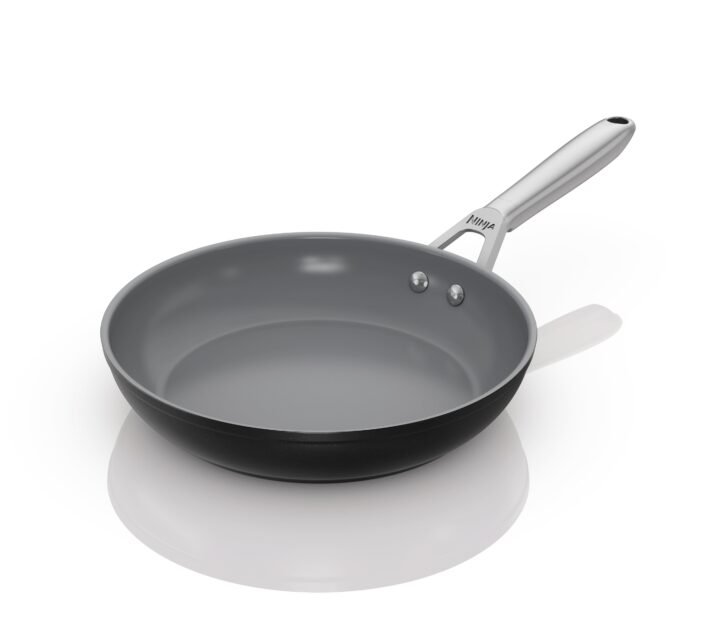
| Ceramic-coated | Low- to medium-heat cooking | Easy release when new | Release may decline with use |
This comparison is general. Individual pans can differ in construction and performance.
Choose a SENSARTE nonstick frying pan if easy release matters most and you are willing to use moderate heat. Choose stainless steel or cast iron if you want a pan for high heat and long-term use without a synthetic nonstick coating.

Common Problems and Quick Fixes
Food sticks to the surface
Possible causes include high heat, no oil, an overcrowded pan, or a worn coating.
Try lower heat, a small amount of oil, and enough cooking time before turning the food. If sticking happens across the whole pan despite careful use, the coating may be worn.
The pan smokes
Turn off the burner and move the pan away from the heat if it is safe to do so. Do not add water to a very hot pan. The likely cause is excessive heat, oil smoke, or food residue.
After the pan cools, wash it by hand. If the coating shows damage, replace the pan.
The pan is not working on induction
Confirm that the exact model is induction-compatible. Test the outer base with a magnet, but use the manual or product label as the final source. Also check that the pan sits flat and that the induction burner recognizes its size.
The base has warped
Warping can result from rapid temperature changes, an oversized burner, or overheating. A warped pan may wobble and heat unevenly. Do not try to hammer it flat. Replace it if it no longer sits level.
The handle becomes hot
Handle heat depends on burner size, flame direction, handle design, and cooking time. Keep the handle away from the flame and use an oven mitt when needed. Check the manual before placing the pan in an oven.

What to Check Before Buying
Before ordering a SENSARTE nonstick frying pan in the United States, confirm these points on the exact product page:
- Pan diameter and cooking surface size
- Total weight
- Induction compatibility
- Maximum oven temperature
- Lid temperature limit
- Dishwasher guidance
- Handle material
- Warranty terms
- Return policy
- Whether the lid is included
- Whether the listed coating is PFOA-free
- Whether replacement parts are available
Do not compare two pans by brand name alone. Compare the model number and the full specification list.
Prices and availability can change. Check the current U.S. retailer or manufacturer listing before buying, especially if the product is sold by a third-party marketplace seller.

Frequently Asked Questions
Is SENSARTE a good brand for nonstick pans?
SENSARTE can be a practical brand for buyers who want an affordable nonstick pan for low- and medium-heat cooking. The quality and features can vary by model. Check the exact construction, coating details, cooktop rating, and warranty rather than judging every pan by the brand name.
Can you use metal utensils in a SENSARTE nonstick pan?
Avoid metal utensils unless the exact manual clearly permits them. Silicone, wood, and nonstick-safe plastic tools are safer choices and can help reduce scratches.
Can a SENSARTE frying pan go in the oven?
Some models may be oven-safe, while others may have limits based on the handle, lid, or coating. Check the exact model instructions. Never assume that a pan with a metal-looking handle is safe at any oven temperature.
Is a SENSARTE pan dishwasher-safe?
Some listings may describe a model as dishwasher-safe, but hand washing is usually gentler and may help the coating last longer. Follow the care instructions supplied with the exact pan.
How long does a SENSARTE nonstick pan last?
There is no reliable single lifespan for every model. Heat, utensil choice, cleaning, storage, and frequency of use all matter. Replace the pan when the surface peels, flakes, blisters, becomes badly scratched, or loses release across most of the cooking area.
Is a granite nonstick pan made of real granite?
Usually, “granite” refers to the appearance or marketing description of the coating. It does not normally mean the cooking surface is solid granite. Read the technical product details if the coating material matters to you.
Sources and Verification
For a purchase or safety decision, check the exact model documents rather than relying on general brand descriptions:
- SENSARTE official website
- U.S. Food and Drug Administration: Food Ingredients and Packaging
- U.S. Consumer Product Safety Commission for cookware and household product safety notices
Manufacturer specifications describe intended use. They do not replace independent performance testing. For current features, confirm the model number, seller, care guide, and warranty before ordering.

Conclusion
A SENSARTE nonstick frying pan is best for everyday foods that benefit from easy release, such as eggs, pancakes, fish, and grilled sandwiches. Use low to medium heat, soft utensils, gentle cleaning, and the correct cooktop.
The key step is choosing the exact model for your needs. Confirm its size, induction rating, oven limit, lid, handle, coating information, and care instructions before you buy. If you need high-heat searing or a pan with no coating, stainless steel or cast iron may serve you better.
2 Comments