Introduction
A Kazumi coffee maker may refer to more than one machine or online listing, so the first step is to identify the exact model. Check the nameplate on the back or bottom of the unit for its model number, voltage, wattage, and serial details. This matters in the United States because a coffee maker made for another market may not be safe to plug into a standard U.S. outlet.
For most Kazumi coffee makers, the key questions are simple: Is it a drip brewer, pod machine, espresso maker, or portable unit? Does it use ground coffee or capsules? Does it require a paper filter? The answers determine setup, cleaning, brew size, and replacement parts.
This guide explains how to identify, use, clean, and troubleshoot a Kazumi coffee maker without relying on unverified specifications. Since model details can differ by seller and production run, use the product label and the original manual as the final source for exact capacity, settings, and electrical requirements.
What Is a Kazumi Coffee Maker?
A Kazumi coffee maker is a countertop or portable coffee-brewing appliance sold under the Kazumi name. The name alone does not identify one standard design. A listing may describe a drip coffee machine, single-serve brewer, espresso-style machine, or compact travel model.
Before buying or operating one, find these details:
- Exact model number
- Input voltage and wattage
- Water tank capacity
- Coffee format, such as ground coffee, pods, or capsules
- Filter type
- Brew controls
- Included accessories
- Warranty and return terms
Do not assume that two machines with the same brand name use the same filters, pods, carafe, or water tank. A replacement part must match the exact model.
Kazumi model types
| Machine type | Coffee used | Best for | Main point to check |
|---|---|---|---|
| Drip brewer | Ground coffee | Several cups at once | Filter size and carafe type |
| Single-serve brewer | Pods, capsules, or grounds | One cup at a time | Pod compatibility |
| Espresso-style machine | Fine grounds or pods | Small, strong drinks | Pressure system and cleaning |
| Portable brewer | Grounds, pods, or both | Travel and small spaces | Power source and cup size |
This classification is more useful than the brand name alone. It tells you which setup steps and care routine apply.
How to identify the right Kazumi manual
Look for a label on the bottom, rear panel, or side of the machine. The model number may contain letters, numbers, or both. Take a clear photo of the label and compare it with the seller’s listing, box, or manual.
If the manual is missing, avoid guessing about electrical limits or internal parts. Ask the seller or manufacturer for a model-specific copy. A manual for a similar-looking coffee maker may give the wrong instructions.
Kazumi Coffee Maker Setup for U.S. Use
Set up the coffee maker on a dry, level surface near a U.S. outlet. Keep the cord away from hot surfaces, water, and the edge of the counter. Before using the machine, confirm that the rating label is suitable for the electrical supply in your home.
1. Check the electrical label
Most U.S. homes use outlets supplying about 120 volts. Do not plug in the coffee maker if its label shows a different voltage unless the manufacturer clearly approves that use.
Also check the plug. A grounded plug should connect to a properly grounded outlet. Do not remove the ground pin or use a damaged adapter. Stop using the unit if the cord, plug, housing, or water tank is cracked.
2. Wash removable parts
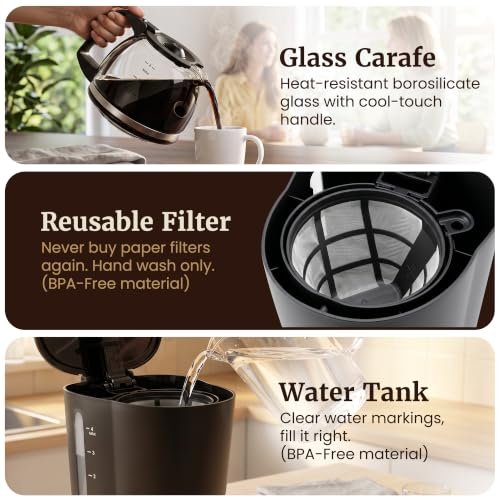
Wash the water tank, filter basket, reusable filter, lid, and carafe with warm water and mild dish soap. Do not immerse the base, power cord, or plug in water.
Rinse the parts well. Soap left in the tank can affect taste and may create excess foam.
3. Run a water-only cycle
Fill the tank with clean, cool water. Do not add coffee during the first cycle. Run the machine as directed by the manual, then discard the water.
A second water-only cycle can help remove packaging dust or a new-plastic smell. Let the machine cool if the manual calls for a pause between cycles.
4. Add coffee and water
Use the coffee format listed for your model. For a drip brewer, place the correct filter in the basket and add ground coffee. For a pod machine, use only a compatible pod or capsule.
Start with a moderate amount of coffee. If the result tastes weak, add a little more coffee next time. If it tastes bitter or harsh, use less coffee or a coarser grind. Change one variable at a time so you can see what helped.
5. Confirm a successful first brew
A normal brew should show these signs:
- Water flows without leaking.
- The machine does not make a burning smell.
- Coffee reaches the carafe or cup.
- The pump or heating system stops when the cycle ends.
- The machine does not trip the circuit breaker.
- The coffee has no strong chemical or plastic taste after the rinse cycles.
Unplug the machine and stop using it if you see smoke, sparks, melted plastic, or water near the electrical base.
How to Make Better Coffee With a Kazumi Brewer
Better coffee usually comes from four basic controls: water, coffee dose, grind size, and brew time. A new coffee maker cannot fix stale coffee or poor water by itself.
Use fresh coffee and clean water
Ground coffee loses aroma over time after grinding. Store beans or grounds in a sealed container away from heat, light, and moisture. Use clean, cold drinking water unless the manual gives different instructions.
Hard water can leave mineral scale inside the heater and water path. Filtered water may improve taste and reduce buildup, but it does not remove the need for cleaning.
Match the grind to the machine
Use a medium grind for most drip coffee makers. A very fine grind can slow the flow and create bitter coffee. A very coarse grind can make the drink taste thin.
For espresso-style machines, use the grind listed in the manual or recommended for the included basket. Do not force a large amount of coffee into a small filter basket.
Adjust one variable at a time
Use this simple method:
- Keep the water amount the same.
- Change the coffee amount slightly.
- Taste the result.
- Adjust the grind only if needed.
- Record the setting that works for you.
A useful starting point for drip coffee is about 1 to 2 level tablespoons of ground coffee for every 6 fluid ounces of water, but taste, roast level, grind, and machine design all affect the result. Treat this as a starting range, not a fixed rule.
Water and coffee example
Suppose you want a 12-fluid-ounce brew. A starting dose might be about 2 to 4 level tablespoons of coffee. If the coffee is too weak, increase the dose slightly. If it is too strong, reduce the dose or add more water after brewing.
Do not fill beyond the machine’s marked maximum line. Overfilling can cause spills or prevent the coffee maker from working correctly.
Kazumi Coffee Maker Troubleshooting
Troubleshoot from the safest and simplest checks first. Unplug the machine before opening, removing stuck parts, or cleaning around the base.
The coffee maker will not turn on
Possible causes include:
- The plug is not fully inserted.
- The outlet has no power.
- A circuit breaker has tripped.
- The power button needs a longer press.
- The cord or plug is damaged.
- The machine is not assembled correctly.
Test the outlet with another safe appliance. If the outlet works but the Kazumi coffee maker remains inactive, do not open the housing. Contact the seller or a qualified appliance technician.
The machine does not brew
Check the water level, filter basket, lid position, and carafe placement. Some brewers will not start if a safety switch is not engaged.
For a pod machine, confirm that the pod holder is closed correctly. For a drip brewer, make sure the filter has not collapsed and blocked the outlet.
If the machine hums but no water moves, mineral scale or an air lock may be restricting the water path. Follow the manual’s cleaning instructions before trying another brew.
Water leaks from the machine
First identify where the water appears:
- Around the tank: The tank may be misaligned, overfilled, or have a damaged seal.
- From the filter basket: The filter may be folded, overfilled, or blocked.
- Around the carafe: The lid or drip-stop area may not be positioned correctly.
- From the base: Unplug the machine and stop using it.
Never continue operating a coffee maker that leaks into its electrical base.
Coffee tastes weak
Try these changes:
- Use more coffee.
- Use a finer grind, but not an espresso-fine grind in a drip machine.
- Check that the water is reaching the correct temperature and volume.
- Use fresher coffee.
- Clean mineral buildup from the water path.
A clogged or scaled machine may pass water too slowly or unevenly, which can change extraction.
Coffee tastes bitter
Reduce the coffee dose or use a slightly coarser grind. Also check whether the coffee is sitting on a hot plate for too long. Long holding times can create a burnt or bitter taste even when the original brew was fine.
The machine makes unusual noise
Some sound is normal during heating or pumping. A sudden loud rattle, grinding sound, repeated clicking, or burning smell is not a sign to ignore.
Unplug the coffee maker and inspect it for an empty tank, loose removable part, blockage, or visible damage. If the sound continues, request service rather than opening the machine.
How to Clean and Descale a Kazumi Coffee Maker
Clean removable parts after regular use and descale the internal water path when mineral buildup appears or the manual recommends it. Cleaning removes coffee oils and residue. Descaling removes mineral deposits. They are not the same task.
After each use
- Turn off and unplug the machine.
- Let hot parts cool.
- Empty the filter basket and grounds.
- Rinse the carafe, tank, and removable basket.
- Wipe the outside with a damp cloth.
- Leave parts open so they can dry.
Do not store wet grounds in the basket. They can grow mold and create a stale smell.
Descaling steps
Use the descaling product and dilution listed in the manual. If the manual does not name a product, choose one labeled for coffee makers and follow its instructions.
A general process is:
- Empty the machine.
- Add the approved descaling solution.
- Run the cycle without coffee.
- Discard the solution.
- Rinse the tank.
- Run one or more full cycles with clean water.
- Confirm that no odor or taste remains.
Do not mix cleaning chemicals. Do not use bleach in the water tank. Vinegar may be unsuitable for some machines because it can leave odor, affect seals, or conflict with the manufacturer’s instructions.
How often should you descale?
The correct interval depends on water hardness and use. A household that brews several times each day with hard water may need more frequent descaling than a household that brews once a week with soft water.
Descale sooner if:
- Brewing takes longer than usual.
- The machine sounds louder.
- Water flow becomes weak.
- The coffee tastes different.
- White mineral flakes appear.
- The machine shows a cleaning warning.
What to Check Before Buying a Kazumi Coffee Maker
Buy the exact machine that fits your coffee routine, not only the lowest listed price. Product listings can omit key information, especially for lesser-known brands or imported models.
Use this buying checklist
| Check | Why it matters |
|---|---|
| Model number | Prevents confusion between similar versions |
| U.S. voltage rating | Helps avoid unsafe electrical use |
| Coffee format | Determines whether you need grounds, pods, or capsules |
| Cup capacity | Shows how much coffee the machine can make |
| Filter availability | Affects long-term operating cost |
| Replacement parts | Helps with carafes, tanks, baskets, and seals |
| Warranty location | Determines where service claims are handled |
| Return policy | Protects you if the unit arrives damaged |
| Cleaning instructions | Shows how much care the machine needs |
| Safety certification | Look for marks that can be verified, not only seller claims |
Consider ongoing costs
A low purchase price may not remain low if the machine needs special pods, unusual filters, or imported parts. Before buying, search for the exact replacement carafe, filter basket, water tank, and pod holder.
For a pod machine, calculate the cost per cup. For a drip machine, include paper filters and coffee grounds. A reusable filter may reduce waste, but only if it fits the model and can be cleaned well.
Treat unclear listings with caution
Be careful when a listing:
- Shows no model number.
- Gives no voltage information.
- Uses stock photos only.
- Promises features not shown in a manual.
- Has no clear return address.
- Claims certification without naming the certifying body.
- Offers replacement parts that do not match the machine.
A missing specification is not proof that the machine is unsafe, but it is a reason to ask questions before purchase.
Kazumi Coffee Maker vs. Other Brewing Options
A Kazumi coffee maker may suit you if the exact model meets your needs and has clear support. It should not be selected only because the brand name appears in a search result.
Choose a drip Kazumi model if you want:
- Several cups in one brew
- Simple controls
- Ground coffee
- Lower cost per cup
- A carafe for shared use
Choose a single-serve model if you want:
- One cup at a time
- Fast portion control
- Minimal measuring
- Pod or capsule convenience
The trade-off is the cost and waste of single-use pods, plus possible limits on pod compatibility.
Choose an espresso-style model if you want:
- Small, concentrated drinks
- Espresso-based beverages
- More control over grind and dose
These machines usually need more cleaning and practice. A coffee maker described as “espresso style” may not provide the same results or controls as a dedicated espresso machine.
Choose another brand if support is unclear
A different coffee maker may be the better choice if you cannot find a manual, replacement parts, warranty details, or verified U.S. electrical information. Brand familiarity matters less than clear documentation and safe long-term support.
Common Mistakes to Avoid
Several small mistakes can shorten the life of a coffee maker or produce poor coffee.
- Do not exceed the maximum water line.
- Do not run the machine without the required water.
- Do not use the wrong pod size.
- Do not pack grounds tightly into a drip filter.
- Do not immerse the electrical base.
- Do not descale with an unapproved chemical mix.
- Do not leave wet grounds in the basket.
- Do not use a damaged cord or cracked carafe.
- Do not remove a stuck pod with a sharp tool while the machine is plugged in.
- Do not assume a foreign-voltage model is safe on a U.S. outlet.
If the machine has a recall notice, repeated electrical fault, or damaged heating area, stop using it. Check the U.S. Consumer Product Safety Commission recall database or contact the seller for next steps.
Key Takeaways
- Identify the exact Kazumi model before setup, cleaning, or buying parts.
- Confirm the voltage and wattage for use in the United States.
- Match the coffee format, filter, and pod to the model.
- Run a water-only cycle before the first brew.
- Clean coffee residue often and descale mineral buildup as directed.
- Stop using the machine if it leaks into the base, smokes, sparks, or has a damaged cord.
- Choose a different model if the seller cannot provide basic safety, warranty, and replacement-part information.
FAQs About Kazumi Coffee Makers
Is Kazumi a reliable coffee maker brand?
Reliability cannot be judged from the Kazumi name alone. It depends on the exact model, build quality, warranty, replacement parts, and seller support. Check the model number, return policy, manual, and long-term maintenance needs before buying.
Can I use a Kazumi coffee maker with U.S. outlets?
Only if the rating label shows that the machine is designed for the electrical supply in your area. Many U.S. homes use about 120 volts, but you should rely on the appliance label rather than appearance. Never remove the ground pin or use an unsafe adapter.
What coffee does a Kazumi coffee maker use?
The answer depends on the model. Some units use ground coffee, while others use pods, capsules, or both. Check the filter basket, pod holder, manual, and product label. Do not force an incompatible pod into the machine.
Why does my Kazumi coffee maker leak?
Common causes include an overfilled tank, a misaligned water reservoir, a blocked filter basket, a poorly seated carafe, or a worn seal. If water reaches the electrical base, unplug the machine and stop using it until it has been inspected.
How often should I clean a Kazumi coffee maker?
Rinse removable parts after each use and clean coffee residue regularly. Descale the internal water path when the manual recommends it or when flow, sound, brew time, or taste changes. Water hardness and brewing frequency affect the schedule.
Conclusion
A Kazumi coffee maker can be easy to use when you match the instructions to the exact model. Start with the rating label, identify the coffee format, complete a water-only rinse, and follow a regular cleaning routine.
For a safe purchase, look beyond the brand name. Confirm U.S. electrical compatibility, replacement-part access, warranty support, and clear operating instructions. If those details are missing, a better-documented coffee maker may offer more dependable value over time.