Use a vacuum head, hose, and filter to lift debris off the pool floor.
Keeping your pool clear is not hard once you know the steps. In this guide, I show you how to vacuum an above ground pool the right way. I’ll share pro tips, real mistakes I’ve made, and simple fixes. Follow along and learn How to Vacuum an Above Ground Pool like a seasoned pool tech.
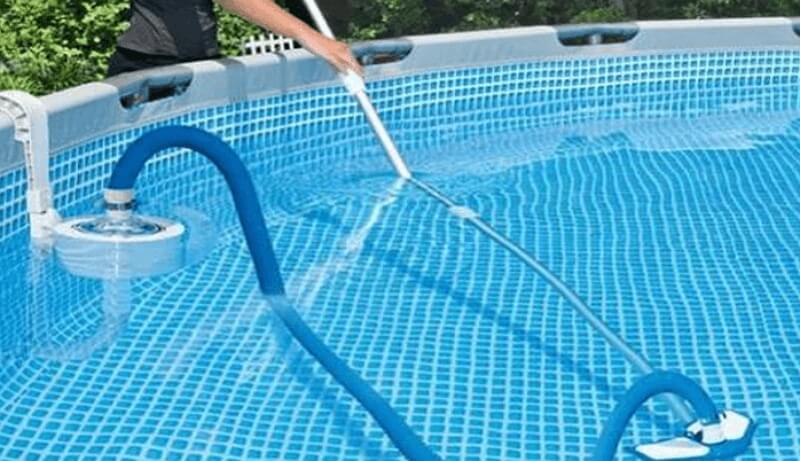
What You Need to Vacuum an Above Ground Pool
Gather the right tools before you start. It saves time and avoids do-overs.
- Manual vacuum head made for vinyl liners to protect the surface.
- Telescoping pole long enough to reach the center with ease.
- Vacuum hose that matches your skimmer and head size.
- Skimmer vacuum plate or adapter for your model.
- Pool brush to loosen fine dirt and algae.
- Leaf rake or skimmer net to remove large debris first.
- Working pump and filter: sand, cartridge, or DE.
- Water test kit or test strips to check pH and chlorine.
- Optional extras: hose weight, clarifier, flocculant, and a second hose for backwash.
Automatic options can also help:
- Suction-side cleaner uses the skimmer line. Good for daily light work.
- Robotic cleaner uses a power supply and filter basket. Great for fine dust and ease of use.
If you want to master How to Vacuum an Above Ground Pool, start with the right gear and a plan.

Understand How Your Pool Vacuum System Works
A manual vacuum uses your pump to pull water and dirt from the floor. The flow goes from the vacuum head, through the hose, into the skimmer, then the pump and filter. The filter traps the dirt and returns clean water to the pool.
Key points to know:
- Prime the hose so no air enters the pump. Air cuts suction fast.
- A skimmer vacuum plate lets you attach the hose without removing the skimmer basket.
- On a sand or DE filter, the multiport has settings like Filter, Waste, Backwash, and Rinse. Filter keeps water in the pool. Waste sends it out of the system, which is best for heavy algae or floc.
- On a cartridge filter, there is no Waste setting. You must use a drain line on the pump or a bypass if you need to vacuum to waste.
Once you see how it flows, How to Vacuum an Above Ground Pool feels simple and safe.
Prep Before You Vacuum
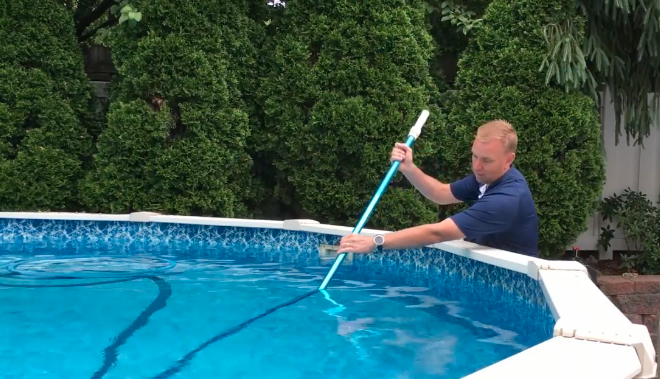
Good prep gives you a faster clean and a clearer pool.
- Skim leaves and bugs from the top. Big debris can clog the hose.
- Brush the walls and floor to lift fine dirt. Let it settle for 10 to 20 minutes.
- Check water levels. Fill to mid-skimmer for steady suction.
- Test water. Keep pH at 7.2 to 7.6 and free chlorine in the safe range.
- Backwash or clean the filter if pressure is high. A clean filter pulls better.
- Aim returns slightly down. This helps push dirt toward the vacuum path.
- Switch off a heater while vacuuming to avoid flow alarms.
This base work is part of How to Vacuum an Above Ground Pool with less stress.
Step-by-Step: How to Vacuum an Above Ground Pool Manually
Follow these steps for a thorough clean.
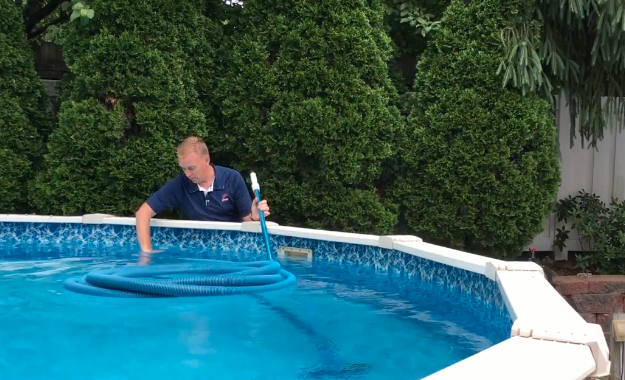
- Assemble the vacuum. Clip the head to the pole and connect one end of the hose to the head.
- Prime the hose. Hold the head under water. Feed the hose straight down into the water so it fills and all bubbles stop. Or hold the free end in front of a return jet to push water through until no air is left.
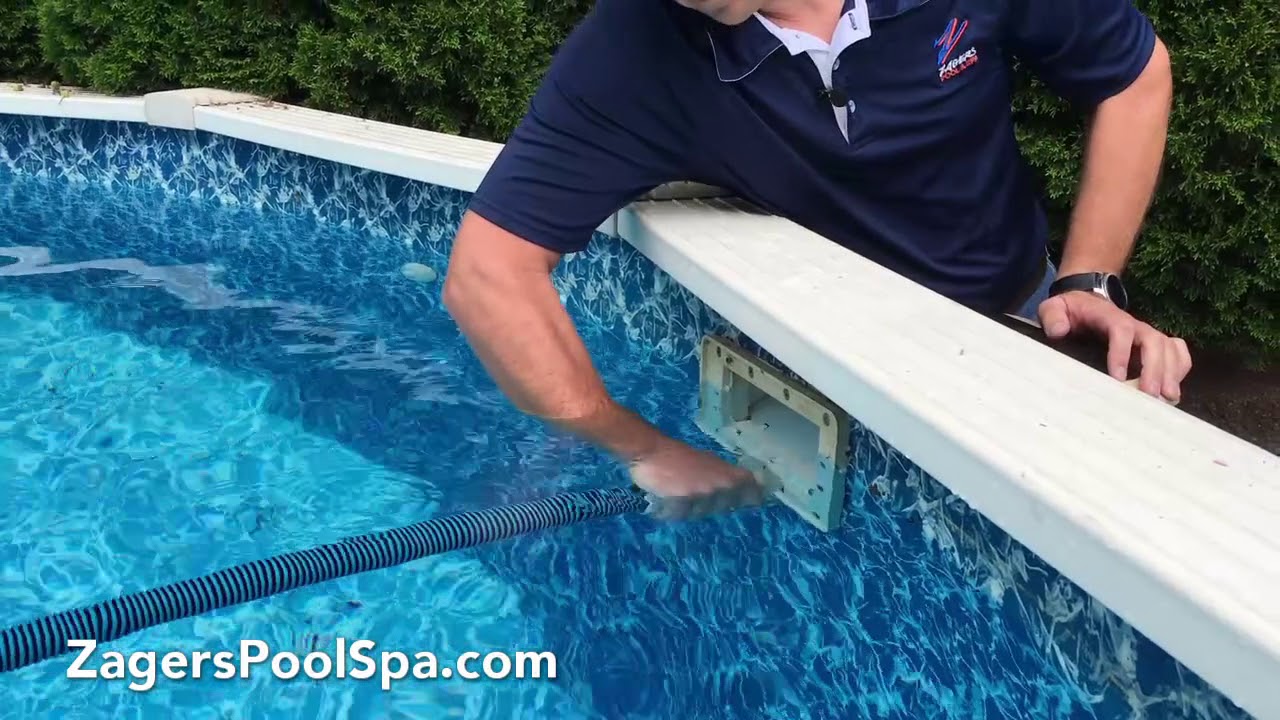
- Attach to the skimmer. Place the skimmer vacuum plate over the basket. Keep the hose end under water and plug it into the plate. The pump should stay primed and the head should grab the floor.
- Choose the right setting. Use Filter for light dirt. Use Waste for heavy algae, floc, or fine silt. If you use Waste, watch the water level and top up as needed.
- Start slow passes. Move the head at a slow walking pace. Overlap each pass by a few inches. Do not rush. Fast moves stir dirt and cloud the water.
- Work from the shallow end to the deep area. In round pools, spiral inward to drive dirt to the center.
- Watch the pressure gauge. If it climbs 8 to 10 psi over clean baseline, stop to backwash or clean the cartridge.
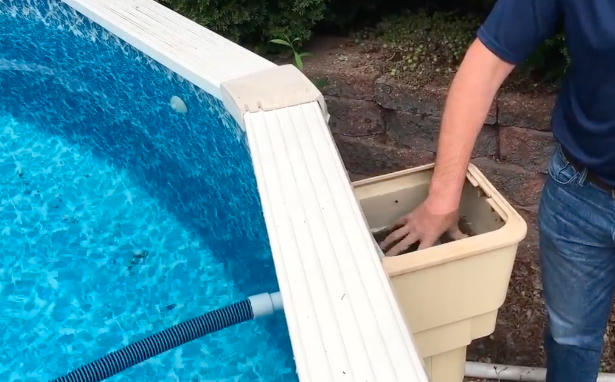
- Clear the pump basket if flow drops. Leaves and pine needles can jam it fast.
- Finish and clean up. Remove the hose from the skimmer. Backwash or rinse as needed. Top the water to mid-skimmer. Test and balance chlorine and pH.
Pro tips from the field:
- Keep the head flat. If you tilt, you lose suction and kick up dust.
- Use a hose weight if the head wants to float.
- If you vacuum algae, use Waste and add fresh water after. Then shock the pool.
- If your hose sucks flat, it may be old or too soft. Replace it.
Practice this way a few times and How to Vacuum an Above Ground Pool will feel second nature.
Using an Automatic Cleaner or Robotic Vacuum
You can blend manual and automatic cleaning for easy care.
- Suction-side cleaners connect to the skimmer or a dedicated line. They roam and pick up daily dirt. Empty the pump basket and check filter pressure more often.
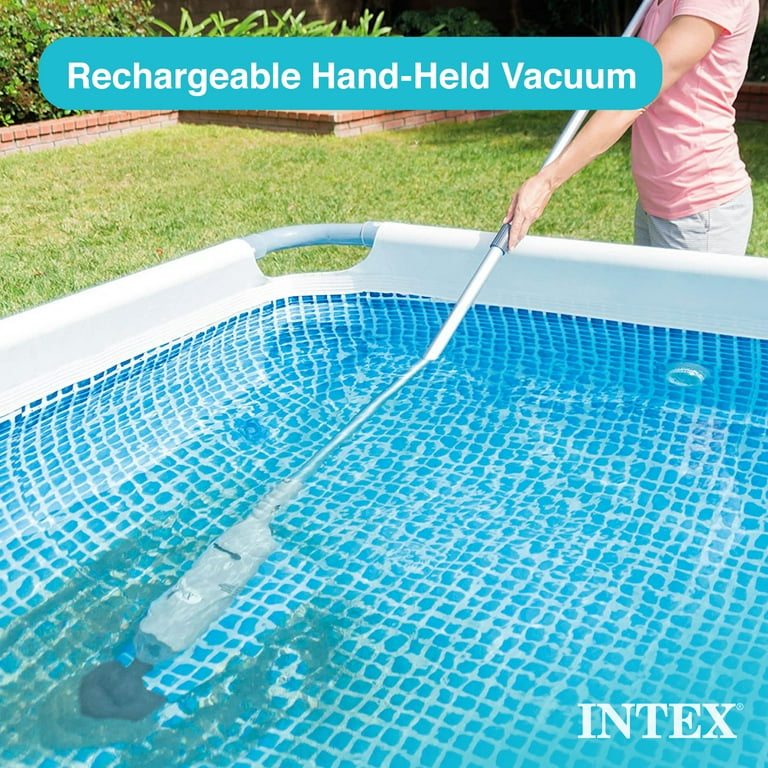
- Robotic cleaners plug into a GFCI outlet and run on low voltage. They have their own filter basket. They shine on fine dust and routine work and cut strain on your pool filter.
Set the cleaner in after you skim and brush. Run a cycle for 1 to 2 hours. Clean the bag or basket when done. For heavy algae or storms, switch back to manual mode with Waste. That is a key part of How to Vacuum an Above Ground Pool during tough weeks.

Troubleshooting: Suction, Cloudiness, and Algae
Fix common issues fast with these checks.
- Loss of suction. Look for air at hose joints, a loose plate seal, or low water. Clean the pump basket and filter. Prime the hose again.
- Hose floats or kinks. Warm the hose in the sun to relax coils. Use a swivel cuff or a hose weight.
- Cloudy water after vacuum. You moved too fast or the filter needs service. Add clarifier, run the pump for 24 hours, and brush again.
- Algae keeps returning. Balance chlorine, brush daily, and shock based on need. For green blooms, vacuum to Waste and replace some water. Then filter and backwash.
- Pump cavitation noise. That is air in the system. Raise the water level and seal all joints.
When I started, I forgot to prime the hose more than once. The pump gulped air and lost grab. Now I take 30 seconds to flood the hose every time. It is the smallest habit with the biggest payoff in How to Vacuum an Above Ground Pool.
Maintenance Schedule and Pro Tips
A simple plan keeps your pool clean all season.
Weekly
- Skim, brush, and vacuum light debris.
- Test and balance water. Adjust pH and chlorine as needed.
- Backwash or clean the filter when pressure rises 8 to 10 psi.
After storms or heavy use
- Net big debris first.
- Brush and vacuum to Waste if lots of silt or fine dust.
Monthly
- Deep clean the cartridge or backwash and rinse a sand or DE filter well.
- Inspect hoses, O-rings, and the vacuum head wheels or brushes.
Seasonal
- At opening, vacuum to Waste if the pool is very dirty.
- At closing, brush, vacuum, and balance the water to protect the liner.
Mistakes to avoid
- Do not rush the head. Slow and steady wins.
- Do not let the water drop below the skimmer. You will pull air.
- Do not skip brushing. Dirt bonds to walls and returns fast if you do.
With this schedule, How to Vacuum an Above Ground Pool becomes easy and quick each week.

Safety and Water Chemistry Essentials
Stay safe and protect your pool gear.
- Use a GFCI outlet for any robot or pump. Keep cords dry and away from the water edge.
- Never leave kids or pets near an open pool while you vacuum.
- Store chemicals in a cool, dry spot. Read labels and use gloves if needed.
- Keep chlorine in range. Match free chlorine to your cyanuric acid level for strong kill power.
- Keep pH near 7.2 to 7.6 for comfort and clear water. Low pH can hurt the liner and metal parts.
Sound chemistry and safe steps are part of How to Vacuum an Above Ground Pool that lasts for years.
Frequently Asked Questions of How to Vacuum an Above Ground Pool
How often should I vacuum an above ground pool?
Vacuum once a week in normal use. After storms, heavy swim days, or visible dirt, add an extra session.
Should I vacuum on Filter or Waste?
Use Filter for normal dust and light debris. Use Waste for algae, floc, or heavy silt to avoid clogging the filter.
How do I prime a pool vacuum hose?
Hold the vacuum head under water. Push the hose down into the water until all bubbles stop, or use a return jet to flood the hose.
Can I use a shop vac to vacuum my pool?
No, unless it is rated for pool use and you can bypass the filter waste line. Standard shop vacs are not safe or practical for pool volume.
Why does my vacuum lose suction after a few minutes?
The filter may be dirty, the pump basket clogged, or air is getting in at a hose joint. Clean the filter, check water level, and reseal or replace worn cuffs.
Will a robotic vacuum replace manual vacuuming?
Robots handle daily dust well, but manual vacuuming still helps after algae, storms, or floc. Use both for best results.
What is the best way to vacuum algae?
Brush first, then vacuum to Waste so spores and fine silt leave the pool. Refill and shock based on the pool size and test results.
Conclusion
A clean pool starts with simple, steady habits. You now know How to Vacuum an Above Ground Pool, from tools and setup, to prime steps, to fixes when things go wrong. Go slow, keep your filter clean, and match your method to the mess.
Set a weekly time, follow the steps, and enjoy clear water all season. Want more tips? Subscribe, ask a question, or share your own vacuum win so others can learn too.