
The right coffee cup size depends on more than how much coffee you can drink. For a typical U.S. workday, choose a cup that matches your caffeine needs, refill access, commute, meeting schedule, and preferred drink. For many people, an 8- to 12-ounce cup works well for one serving, while a 16-ounce travel mug suits workers who want fewer refills.
A larger cup does not always mean more caffeine. Coffee strength, roast, brew method, milk, ice, and the amount of coffee used all affect caffeine levels. The best choice is the smallest cup that gives you enough coffee for your next work block without creating waste, spills, or sleep problems.

Quick Takeaways
- Choose 6 to 8 ounces for espresso drinks or a short coffee break.
- Choose 8 to 12 ounces for a typical morning brewed coffee.
- Choose 12 to 16 ounces if you have a long commute or limited refill access.
- Treat 20 ounces or more as a large serving, not an automatic daily target.
- Check caffeine, not just cup volume.
- A travel mug should fit your car holder, desk, bag, and office coffee machine.
- Stop increasing cup size if it causes jitters, heart pounding, stomach upset, or poor sleep.
Coffee Cup Sizes Explained
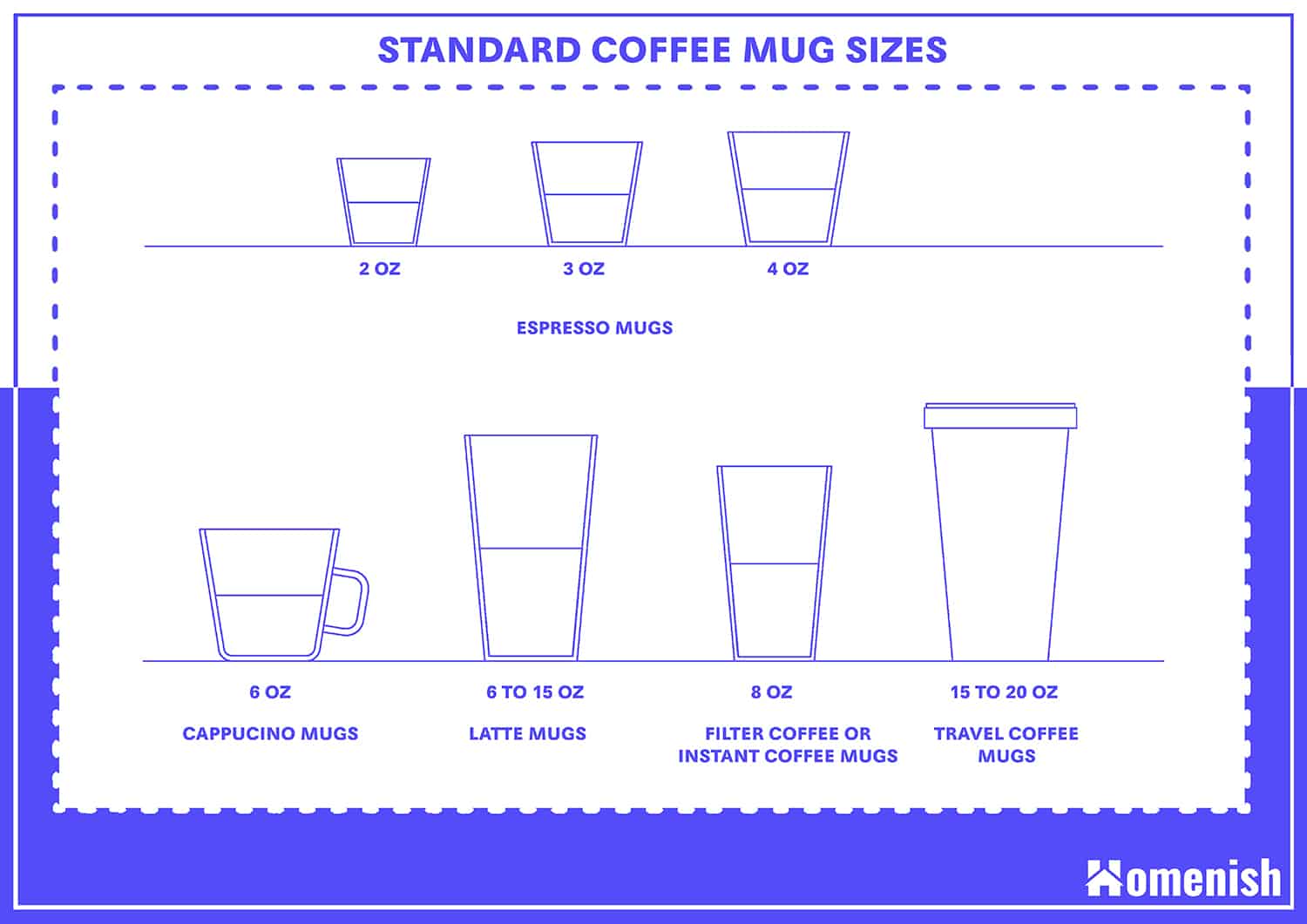
Coffee cup sizes are not fully standardized in the United States. A “cup” on a coffee maker may mean about 5 fluid ounces, while a café may use 8, 12, 16, or more ounces for its menu sizes.
This difference can make a normal coffee serving seem larger or smaller than expected. When comparing cups, use fluid ounces (fl oz) rather than labels such as small, medium, or large.
| Cup size | Approximate volume | Often useful for |
|---|---|---|
| Demi cup | 2–4 fl oz | Espresso or a small espresso drink |
| Small coffee cup | 6–8 fl oz | Short coffee breaks |
| Standard mug | 8–10 fl oz | One morning coffee |
| Medium travel mug | 12–16 fl oz | A longer work block or commute |
| Large travel mug | 18–20 fl oz | Limited refill access |
| Extra-large tumbler | 24 fl oz or more | Multiple servings, usually with caution |
These are practical ranges, not universal rules. A 12-ounce latte may contain one or two espresso shots and may have less caffeine than a 12-ounce brewed coffee. A 16-ounce cold brew may also be much stronger than a 16-ounce drip coffee.
The key question is not, “What is the biggest cup?” It is, “How much coffee do I need before my next planned refill or break?”

How Much Coffee Should You Bring to Work?
For most adults, start with 8 to 12 ounces of brewed coffee for the first serving. This size gives you enough coffee for a normal morning without making it harder to track your caffeine.
Choose a smaller cup when you:
- Drink coffee slowly.
- Add a large amount of milk or cream.
- Have easy access to refills.
- Want to reduce caffeine.
- Drink coffee later in the day.
- Often leave part of your drink unfinished.
Choose a larger cup when you:
- Have a long commute.
- Work away from a coffee station.
- Need one drink to last through a long meeting block.
- Prefer a travel mug that stays warm.
- Want to avoid several small trips for refills.
A useful starting point is to count your usual servings:
Daily coffee volume = number of servings × ounces per serving
For example, two 10-ounce coffees equal 20 ounces of coffee volume. That does not mean they contain the same caffeine as one 20-ounce coffee. The recipe and brew strength may differ.
If you usually drink only half of a large coffee, a smaller cup may be the better fit. It can reduce waste and help you see how much caffeine you actually consume.
A simple workday example
Imagine a worker who:
- Drinks coffee at 8:00 a.m.
- Takes lunch at noon.
- Has no reliable coffee refill after 10:00 a.m.
- Wants to avoid caffeine late in the day.
A 12-ounce mug may be more useful than a 20-ounce mug. It covers the morning work block without encouraging one very large serving. If the worker prefers a second drink, a smaller 6- to 8-ounce cup at lunch may offer better control.
Match Cup Size to Your Coffee Drink
The ideal cup size changes with the type of coffee you drink. Milk, foam, ice, and water all take up space, so the drink size does not show caffeine content by itself.
Drip coffee
An 8- to 12-ounce cup is a practical range for brewed coffee. Use 12 to 16 ounces if you drink slowly or cannot refill easily.
A larger drip coffee may contain more caffeine because it often uses more ground coffee or more water. However, the exact amount varies by bean, grind, brew time, and recipe.
Espresso
Espresso is usually served in a much smaller vessel. A single shot is often around 1 ounce, though café recipes vary.
For espresso, focus on the number of shots, not the cup size. A 12-ounce latte may contain one shot, while a smaller drink may contain two. Ask the café or check its menu if caffeine matters to you.
Latte, cappuccino, and flat white
Milk-based drinks need room for espresso, steamed milk, and foam. A 6- to 12-ounce cup often preserves the coffee flavor better than a very large cup.
If you order a 16-ounce latte, ask whether it includes extra espresso. Some cafés increase milk rather than coffee when the size goes up.
Cold brew and iced coffee
Cold drinks can be deceptive. Ice takes up part of the cup, but cold brew may still contain a high caffeine concentration.
Check whether the drink is served as a concentrate, diluted cold brew, or ready-to-drink coffee. A 16-ounce cup is not automatically equal to 16 ounces of regular drip coffee.
Specialty drinks
Flavored coffees, mochas, and blended drinks may contain added sugar and calories. Cup size affects the amount of the whole drink, but it does not tell you how much caffeine or sugar it contains.
Read the café’s nutrition information when available. If it does not list caffeine, ask how many espresso shots or how much concentrate the drink contains.

Use Caffeine as the Main Safety Check
Cup volume is only a rough guide to caffeine. The U.S. Food and Drug Administration says that, for most healthy adults, up to 400 milligrams of caffeine per day is an amount not generally linked with dangerous negative effects. Individual sensitivity varies, and the FDA notes that caffeine levels in coffee can vary widely.
A typical 8-ounce brewed coffee may contain roughly 80 to 100 milligrams of caffeine, but it can be lower or much higher. Treat that range as an example, not a guaranteed value.
Caffeine can also come from:
- Tea
- Energy drinks
- Cola
- Chocolate
- Pre-workout products
- Caffeine tablets
- Some medicines and supplements
Add these sources when estimating your total daily intake.
Signs your cup may be too large
Your serving may be too large, too strong, or too late if you notice:
- Restlessness or shaky hands
- Anxiety or irritability
- A fast or pounding heartbeat
- Headache
- Nausea or stomach discomfort
- Trouble falling asleep
- Waking during the night
If these symptoms are severe, new, or persistent, contact a health professional. Seek urgent care for serious symptoms such as chest pain, fainting, severe shortness of breath, or a sustained irregular heartbeat.
Timing matters
The FDA reports that caffeine’s half-life is commonly about 4 to 6 hours, although it can vary. Half-life means the time your body may take to reduce the caffeine level by half.
As a result, a large coffee at 3:00 p.m. may still affect sleep at night. If sleep is a concern, reduce the cup size, choose a lower-caffeine drink, or move your last coffee earlier.
People who are pregnant or breastfeeding, take certain medicines, or have a condition that makes caffeine difficult to tolerate should ask a qualified health professional about a suitable limit. The FDA’s general adult guidance is not a personal medical recommendation.
Choose the Best Cup Size for Your Work Routine
The best work coffee mug must fit your routine as well as your drink.
Consider your refill schedule
If your office has a coffee machine nearby, an 8-ounce mug may be enough. Smaller servings let you adjust your intake and keep each drink fresh.
If you work in a warehouse, clinic, classroom, vehicle, or remote location, a 12- to 16-ounce insulated mug may be more practical. You can carry enough coffee for a work block without needing a refill.
Consider your commute
A cup that works at your desk may not work in your car. Before buying a travel mug, check:
- The cup-holder diameter in your vehicle
- The lid design
- Whether the mug seals when tipped
- The height under your car’s controls
- Whether you can open it with one hand
- Whether it fits your work bag
Do not fill a cup so high that hot coffee reaches the lid opening. Leave room for movement and pressure changes, especially when carrying it on public transit or in a bag.
Consider your desk and meetings
A large mug can be useful at a desk but awkward in a meeting. It may also be easier to knock over.
For shared workspaces, a 10- to 12-ounce cup with a secure lid is often a balanced choice. For meeting rooms, choose a cup that is easy to hold and does not block your view or require constant handling.
Consider heat retention
A large insulated mug may keep coffee hot longer, but insulation does not make very hot coffee safe to drink immediately. Let freshly brewed coffee cool to a comfortable temperature before drinking.
A smaller cup may also taste better because you finish it before it becomes cold. If you often throw out the last few ounces, reduce the size rather than overfilling your mug.

A Workday Coffee Cup Decision Table
Use this table as a starting point, then adjust it to your caffeine response and refill access.
| Your work pattern | Suggested cup size | Why it may fit |
|---|---|---|
| One short morning coffee | 6–8 fl oz | Limits waste and caffeine |
| One normal desk coffee | 8–10 fl oz | Balanced daily serving |
| Long morning with no refill | 12–16 fl oz | Fewer interruptions |
| Long commute | 12–16 fl oz | Enough for travel and arrival |
| Several small coffee breaks | 6–8 fl oz | Better portion control |
| Espresso-based drink | 6–12 fl oz | Leaves room for milk and foam |
| Cold brew | 8–12 fl oz to start | Helps avoid an unexpectedly high caffeine dose |
| Caffeine-sensitive drinker | 4–8 fl oz | Easier to control total intake |
| Shared office or meeting use | 8–12 fl oz | Easier to handle and less likely to spill |
The table gives volume guidance, not medical advice. If you do not know the caffeine level of a drink, start smaller. You can add coffee later, but you cannot remove caffeine after drinking it.
Common Mistakes When Choosing a Coffee Cup
Mistake 1: Assuming a bigger cup has the same strength
A 16-ounce drink may contain twice the coffee of an 8-ounce drink, or it may contain more water and milk. Ask how the drink is made before comparing sizes.
Mistake 2: Counting a coffee maker “cup” as 8 ounces
Many home coffee makers use a smaller measurement for one programmed cup. Check the machine manual or measure the carafe markings.
Mistake 3: Ignoring other caffeine
Coffee is only one source. Tea, soda, energy drinks, chocolate, and supplements can raise your total without adding much liquid to your workday.
Mistake 4: Using a large mug to finish coffee faster
A bigger cup can encourage you to drink more than you planned. If you feel pressure to finish it before a meeting or commute, switch to a smaller cup.
Mistake 5: Choosing a cup that is hard to clean
Coffee oils and milk residue can build up in lids, seals, and straws. Choose a mug you can fully take apart and wash. Clean it often, especially when it holds milk-based drinks.
Mistake 6: Forgetting the lid and spill risk
A wide-open ceramic mug may work at a fixed desk. It is a poor choice for a moving car or crowded train. Match the lid to where you will carry the cup.

How to Test Your Ideal Coffee Cup Size
You can find your best size with a simple one-week trial.
- Record your current drink. Write down the cup volume, drink type, number of espresso shots if known, and time of day.
- Track your response. Note energy, focus, jitters, stomach comfort, and sleep.
- Measure what you actually drink. If you leave coffee behind, record the amount.
- Try one smaller or larger size. Change only one factor at a time.
- Compare waste and comfort. The best size should meet your needs without frequent leftovers or unwanted symptoms.
- Check your full caffeine day. Include tea, soda, energy drinks, chocolate, supplements, and medicines when relevant.
Signs of a good fit include finishing most of the drink, staying comfortable, having enough energy for the next work block, and sleeping normally.
If the test fails, do not simply buy a larger cup. First check the brew strength, shot count, drinking time, sleep schedule, and other caffeine sources. A stronger recipe may be the cause rather than an undersized mug.
Frequently Asked Questions
Is a 12-ounce coffee too much for one workday serving?
Not automatically. A 12-ounce coffee may be reasonable for many adults, but caffeine varies by brew and brand. Check the recipe when possible and count your total caffeine for the day.
Is an 8-ounce cup enough for coffee at work?
Yes, for many people. An 8-ounce cup can provide a full coffee serving while making caffeine and intake easier to track. It also works well when you have regular access to refills.
Does a larger coffee cup mean more caffeine?
No. A larger cup often contains more coffee, but it may also contain more water, milk, or ice. Caffeine depends on the beans, brew method, concentration, and number of espresso shots.
What cup size is best for a travel mug?
A 12- to 16-ounce travel mug is a useful starting range for many commuters. Confirm that it fits your car holder, closes securely, and can be cleaned fully.
What is the best cup size for people sensitive to caffeine?
Start with 4 to 8 ounces or choose a lower-caffeine drink. Drink it earlier in the day and monitor symptoms. Ask a health professional for personal guidance if caffeine causes strong or ongoing reactions.
Final Recommendation
For a typical U.S. workday, begin with an 8- to 12-ounce coffee cup. Move to 12 to 16 ounces only when your commute, job site, or refill schedule truly requires it.
Then adjust for caffeine, not volume alone. A smaller cup is often the smarter choice when you drink slowly, feel sensitive to caffeine, or want better sleep. The right cup should support your workday like a well-sized tool: enough for the task, easy to carry, and not more than you need.

2 Comments