A microwave grill pan is a microwave-safe cooking pan made to brown, crisp, or grill food faster than a standard microwave dish. It often uses a metal cooking plate with a special microwave-safe heating layer, called a susceptor, that gets hot inside the microwave.
These pans work best for foods such as bacon, grilled sandwiches, quesadillas, burgers, pizza, and frozen snacks. They do not replace a full-size oven or outdoor grill, and not every metal pan is safe for microwave use. Always follow the pan maker’s directions and your microwave manual.
What Is a Microwave Grill Pan?
A microwave grill pan is a cooking tool designed for use inside a microwave oven. It usually has a flat or ridged surface that transfers heat to food from below.
Many models have three parts:
- A microwave-safe outer body
- A heating plate or browning layer
- A lid, handle, or cover, depending on the design
The heating layer may contain a susceptor. This material absorbs microwave energy and changes it into heat. The pan then sears or crisps the food where it touches the hot surface.
This is different from normal microwave cooking. A microwave mainly heats water inside food. A grill pan adds direct surface heat, so the outside can become more brown or crisp.
Microwave grill pan vs. regular grill pan
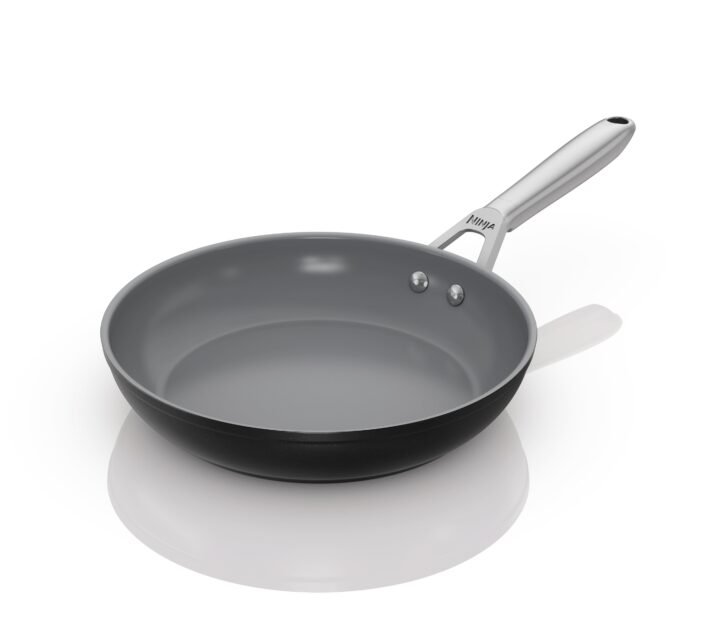
A regular grill pan is made for a stovetop, oven, or outdoor grill. It can reach high heat and may have deep ridges. A microwave grill pan is made for a specific microwave setting and temperature range.
Do not assume that a cast-iron, aluminum, or stainless-steel grill pan can go in a microwave. Metal can reflect microwave energy and may cause arcing, damage, or fire in some microwave designs.
A microwave grill pan is safe only when the manufacturer clearly says it is microwave-compatible and gives instructions for that use.
What foods work well?
A microwave grill pan is most useful for foods that benefit from a hot surface:
- Grilled cheese sandwiches
- Quesadillas
- Bacon
- Sausage
- Burgers or thin patties
- Chicken cutlets
- Fish fillets
- Pizza slices
- Hash browns
- Frozen breaded foods
- Vegetables cut into thin pieces
Thin foods usually work better than thick foods. Microwaves may heat the center before the surface becomes well browned. Thick meat may need another cooking method to reach a safe internal temperature.
How Does a Microwave Grill Pan Work?
A microwave grill pan works by combining microwave heating with contact heat. The microwave heats the pan’s special heating layer, and the hot surface cooks the food.
The process is simple:
- Microwaves activate the pan’s heating layer.
- The pan surface becomes hot.
- Food touching the surface receives direct heat.
- Moisture leaves the food’s outer layer.
- Browning or crisping may occur.
Browning happens through surface reactions that need enough heat and low surface moisture. A wet food may steam before it browns. Patting food dry and avoiding overcrowding can improve the result.
Why the surface gets hot
The exact temperature depends on the model, food, microwave power, cooking time, and pan design. Some products heat more strongly than others. The pan may become hot enough to burn skin, even when the food does not look very hot.
Use oven mitts or heat-resistant gloves when removing the pan. Do not touch the cooking plate right after a cycle.
Why results vary
Microwave ovens do not all heat in the same way. A microwave rated at 1,200 watts may cook food faster than one rated at 700 watts. Food size, starting temperature, moisture, and placement also affect the result.
A pan that works well in one kitchen may brown food more slowly in another. Start with the maker’s suggested time, then adjust in short steps.
Does it really “grill” food?
It can create grill-like browning or sear marks when the cooking surface is ridged and hot. However, it does not create smoke, radiant heat, or airflow like an outdoor grill.
The result is closer to pan browning than charcoal grilling. It may improve texture, but it will not give food the same smoke flavor or deep crust as a traditional grill.
How to Use a Microwave Grill Pan Safely
Use a microwave grill pan only after checking the product instructions and your microwave manual. Safe use depends on the exact pan design.
Step 1: Check the pan and microwave
Look for clear instructions that say the pan is made for microwave use. Check for:
- Maximum cooking time
- Maximum microwave wattage
- Preheating rules
- Required lid position
- Food limits
- Cleaning instructions
- Cooling time
- Whether the pan can be used under a grill or broiler
Never use a pan that has a cracked coating, damaged heating plate, loose parts, or melted areas.
Step 2: Prepare the food
Cut food into even pieces. Thin pieces cook more evenly than thick ones.
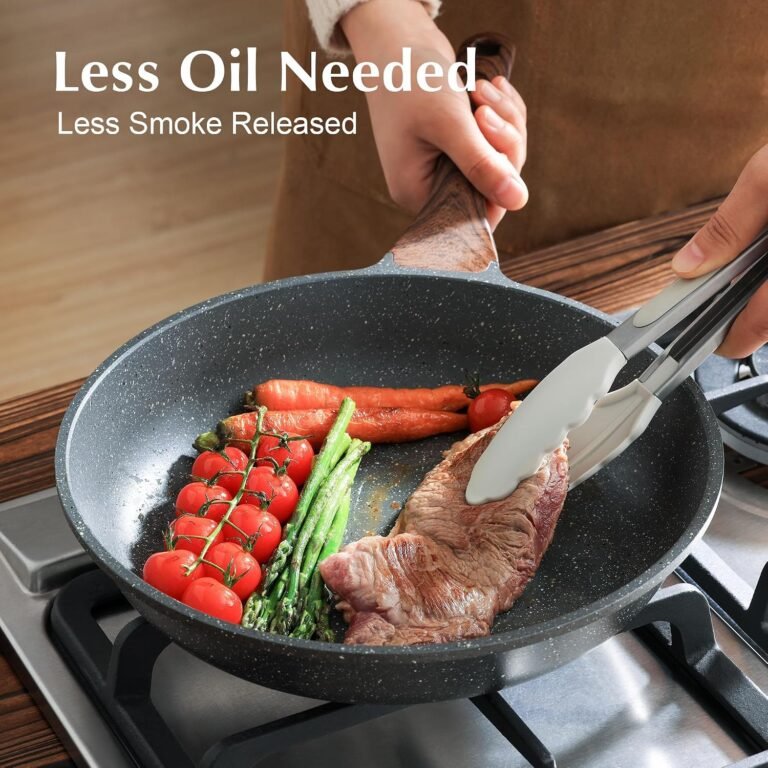
Remove excess moisture with a paper towel when crisping matters. Use only the amount of oil listed in the instructions. Too much oil can smoke or splatter.
Do not place food in a large pile. Food needs contact with the hot surface.
Step 3: Preheat only if the instructions allow it
Some microwave grill pans require preheating. Others must contain food during heating. Follow the product guide.
If preheating is allowed:
- Place the empty pan in the microwave.
- Use the stated power and time.
- Open the door carefully.
- Add food with heat-resistant tools.
Never guess at a long preheat time. An empty heating pan may overheat.
Step 4: Place food on the cooking surface
Arrange food in a single layer. Keep it away from the pan’s edge if the maker gives that instruction.
Close the lid only if the pan is designed for one. A sealed container can trap steam and pressure. A vented lid is not the same as an airtight lid.
Step 5: Cook in short stages
Use the recommended setting first. If the food needs more color or heat, add short intervals.
Turn or rearrange food when the instructions call for it. This can help with uneven microwave heating.
For meat, poultry, and fish, use a food thermometer. Color and texture do not prove that food is safe to eat. The USDA recommends checking internal temperature with a thermometer and using its current safe-temperature guidance.
Step 6: Remove and cool the pan
Use oven mitts. Place the pan on a dry, heat-resistant surface.
Let the pan cool before washing it. Sudden contact with cold water may damage some coatings or materials. Clean it as directed, especially if the pan has a nonstick surface.
Signs of proper use
The pan is likely being used as intended when:
- The food touches the cooking surface
- The pan heats without sparks
- The food browns or crisps as the instructions describe
- The pan remains intact
- No smoke or burning smell develops
Stop the microwave at once if you see sparks, smoke, flames, or damage.
Microwave Grill Pan Safety Rules
The biggest safety rule is simple: use only a pan labeled and documented for microwave use.
The U.S. Food and Drug Administration explains that microwave-safe cookware should be designed for microwave heating. Metal cookware can reflect microwaves, which may cause uneven cooking or arcing. Some microwave products are made with metal parts, but that does not make all metal cookware safe.
Follow these boundaries:
- Do not use an ordinary metal grill pan.
- Do not use foil unless your microwave manual permits it for a specific purpose.
- Do not operate the microwave when it is empty.
- Do not exceed the pan’s stated time or power limit.
- Do not leave the microwave unattended during the first use.
- Do not use a damaged pan.
- Do not touch the hot plate with bare hands.
- Do not block vents in the pan lid.
- Do not use a pan under a broiler unless the instructions clearly allow it.
- Do not heat sealed food containers.
Can a microwave grill pan catch fire?
It can create a fire risk if it is misused, overheated, damaged, or placed in a microwave that is not compatible with it. Grease can also smoke or ignite at high heat.
If a fire starts inside the microwave, keep the door closed and turn off or unplug the appliance if you can do so safely. Do not open the door until the fire is out. Call 911 if the fire does not stop or spreads.
Can you use cooking spray?
Only use cooking spray if the product instructions allow it. Some sprays can leave residue on nonstick coatings. Too much oil can also smoke during heating.
A small amount of oil may help food release from the surface, but it cannot fix a damaged coating.
Is a microwave grill pan safe for raw meat?
It may be used for raw meat only if the pan instructions allow it and the meat can reach a safe internal temperature. The microwave may leave cold spots, so turn the food and check the thickest part with a food thermometer.
For thick chicken, large burgers, roasts, or dense cuts, a conventional oven or stovetop may give more predictable results.
Microwave Grill Pan vs. Other Cooking Methods
A microwave grill pan is useful when speed and a browned surface matter. It is less useful when you need strong searing, large portions, or precise control.
| Cooking method | Main strength | Main limit |
|---|---|---|
| Microwave grill pan | Fast browning for small portions | Uneven heating can occur |
| Standard microwave dish | Quick heating and reheating | Food may stay soft or pale |
| Stovetop grill pan | Strong surface heat and control | Needs a burner and more cleanup |
| Oven broiler | Good top browning | Requires preheating and close watching |
| Outdoor grill | Smoke flavor and high heat | Weather, setup, and cleanup |
A microwave grill pan makes sense for one or two servings, quick lunches, and small frozen foods. A stovetop or oven is often better for large cuts, family-size meals, and foods that need a deep crust.
Microwave grill pan vs. microwave crisper pan
The terms often overlap. A crisper pan focuses on making food crisp. A grill pan may have ridges or a surface shaped to leave grill marks.
The names do not prove how the product works. Read the label and manual. The important details are the microwave rating, heating method, time limit, and food guidance.
Microwave grill pan vs. air fryer
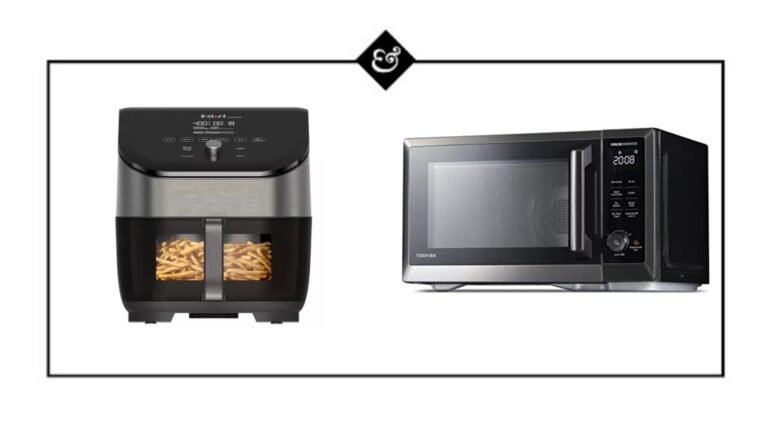
An air fryer moves hot air around food. A microwave grill pan uses microwave energy and a heated contact surface.
An air fryer often gives better dry crisping, while a microwave grill pan may be faster for small items. The better choice depends on the food, portion size, kitchen space, and cleanup needs.
How to Choose a Microwave Grill Pan
Choose the pan based on your microwave, cooking goals, and cleaning needs. Do not choose by the word “grill” alone.
Check these features
Microwave compatibility: The package or manual should clearly state that the pan is designed for microwave use.
Power and time limits: Make sure the limits match your appliance and typical recipes.
Size: Measure the microwave turntable and interior height. The pan must rotate freely and leave enough room for the door and walls.
Cooking surface: Ridges may create marks, while a flat surface may brown more evenly.
Lid design: A vented lid can reduce splatter. An airtight lid is not suitable for microwave pressure.
Handle design: A cool-touch handle may make removal easier, but it can still become warm.
Cleaning method: Confirm whether the pan is dishwasher-safe. Some coatings last longer with hand washing.
Replacement parts: A removable handle, lid, or tray may be useful if one part wears out.
A simple decision guide
Choose a microwave grill pan if you want:
- Quick browning for small portions
- Less stovetop use
- A crisp or toasted surface
- A tool for sandwiches, bacon, or snacks
Choose a different tool if you need:
- Large-batch cooking
- Strong steakhouse-style searing
- Smoke flavor
- Reliable cooking of thick meat
- Precise temperature control
Common Problems and Fixes
Most problems come from wrong settings, excess moisture, poor contact, or unrealistic expectations.
The food is hot but not brown
Possible causes include a wet surface, short cooking time, low microwave power, or a pan that was not preheated when required.
Pat the food dry. Use a single layer. Confirm the microwave wattage and add time in small steps.
The food sticks
Food may stick because the surface is damaged, the pan was not prepared as directed, or the food contains melted sugar or cheese.
Do not scrape with metal tools. Let the pan cool, then use the cleaning method in the manual. Replace the pan if the coating is peeling.
The food cooks unevenly
Microwave energy can create hot and cold spots. Food thickness and placement also matter.
Turn or rearrange the food when allowed. Leave space between pieces. Check meat in several areas, focusing on the thickest part.
The pan sparks
Stop the microwave immediately. Sparks may mean the pan is damaged, the microwave setting is wrong, or the product is not compatible.
Do not continue testing the pan. Check the manual and contact the manufacturer if the instructions are unclear.
The pan smells or smokes
Grease, food residue, excess oil, or overheating may cause smoke. Stop the cycle and let the pan cool.
Clean the pan fully. If the smell continues or the coating changes color, stop using it.
The pan is hard to clean
Soak it only if the instructions permit. Avoid steel wool, harsh abrasives, and metal utensils unless the manufacturer says they are safe.
Food residue can affect later heating and may produce smoke, so clean the cooking surface after each use.
Frequently Asked Questions
Can you put a microwave grill pan in any microwave?
No. Check both the pan instructions and the microwave manual. Size, power, turntable design, and microwave features can affect compatibility.
Do microwave grill pans need oil?
Not always. Some foods release enough fat on their own. Use oil only as directed, and avoid adding more than needed because excess oil may smoke.
Can you cook frozen food in a microwave grill pan?
Often, yes, if the pan instructions allow it. Frozen food may release water as it heats, so the result may be less crisp than expected. Follow the package directions and the pan’s time limits.
Can you use a microwave grill pan to cook steak?
You can use some models for thin steak, but the result may not match stovetop or outdoor grilling. Thick steak can cook unevenly. A thermometer is needed to check doneness.
How long does a microwave grill pan last?
There is no universal service life. Use, cleaning, coating wear, overheating, and care all matter. Replace the pan when it cracks, warps, sparks, loses its coating, or no longer follows the maker’s safety instructions.
Key Takeaways
- A microwave grill pan adds contact heat for browning and crisping.
- It is not the same as a stovetop grill pan or outdoor grill.
- Use only a product clearly made for microwave use.
- Follow the exact time, power, preheat, and cleaning instructions.
- Use a food thermometer for meat, poultry, and fish.
- Stop using the pan if it sparks, smokes, cracks, or shows coating damage.
Conclusion
A microwave grill pan can improve the texture of small foods that would otherwise turn soft in a microwave. It works by heating a special cooking surface, not by turning the microwave into a full grill.
The safest choice is a model with clear microwave instructions, a suitable size, and limits that match your appliance. Start with the maker’s directions, cook in short stages, handle the pan with care, and use another method when you need large portions or strong, even searing.