
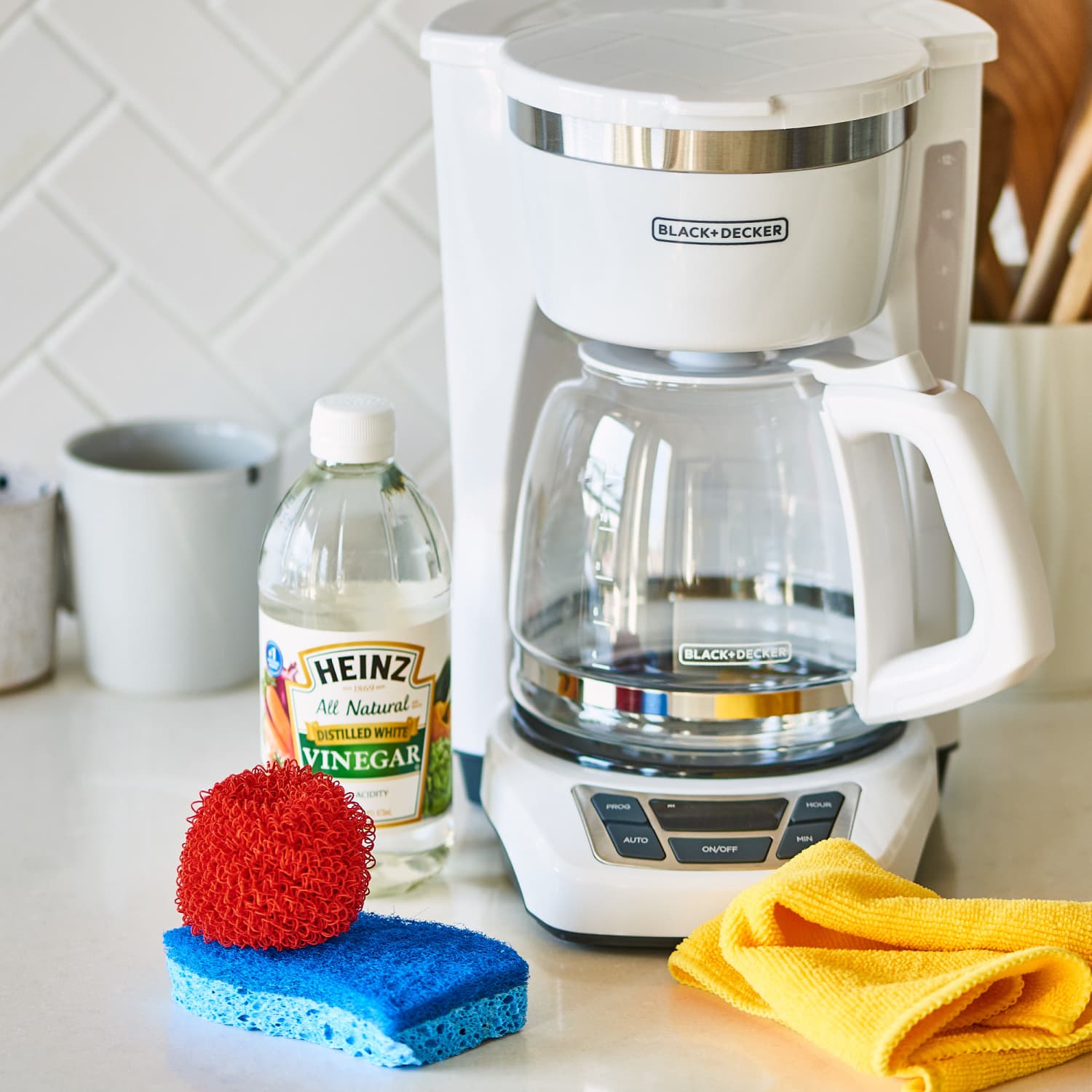
Fill the reservoir with equal parts vinegar and water, brew, then rinse well.
If your morning cup tastes off, this guide is for you. I’ll show you how to clean a coffee pot with simple steps I use at home and in busy cafés. You’ll learn safe cleaners, time-saving tricks, and a routine that keeps your brewer spotless and your coffee bright.
Why a Clean Coffee Pot Matters
Coffee oils cling to surfaces. Mineral scale builds up inside the machine. Both mute flavors, slow brew speed, and harbor odors. Knowing how to clean a coffee pot keeps oils and scale from ruining taste and helps your machine last longer.
Clean gear is also a food safety habit. Warm, wet parts can let microbes grow. Regular cleaning lowers that risk. You will notice a brighter aroma and more stable brew times after a deep clean.
In my café days, a weekly descale cut service calls and kept pours fast. The coffee spoke for itself.

What You Need Before You Start
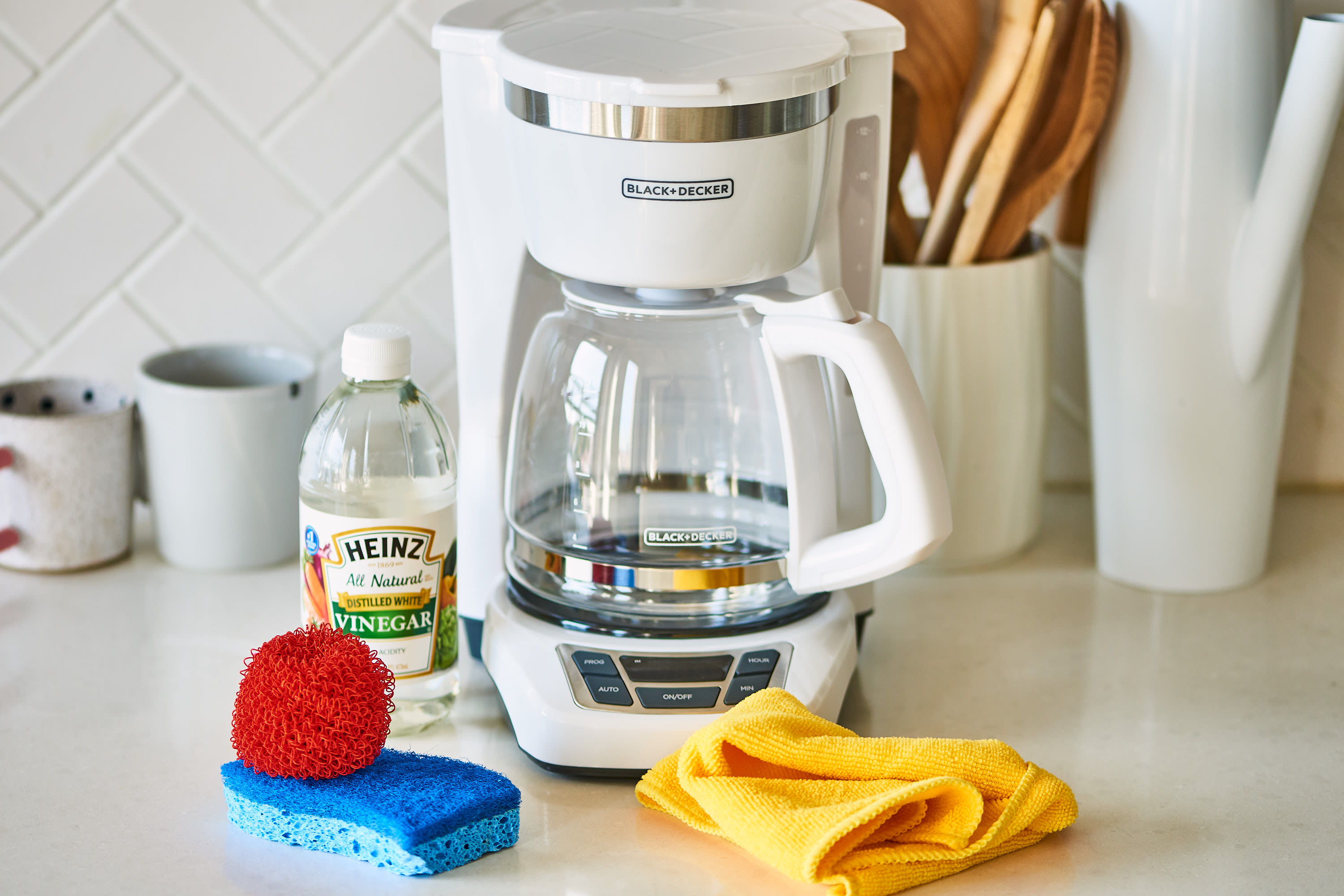
To master how to clean a coffee pot, gather these simple tools. Most are in your kitchen already.
- White vinegar or citric acid for descaling
- Dish soap for daily cleaning
- Baking soda for stain removal on glass and stainless steel
- Soft sponge or microfiber cloth
- Bottle brush for carafes and spouts
- Paper filters or reusable filter basket
- Clean water, filtered if possible
- Optional: commercial coffee descaler, rubber gloves
Keep abrasive pads away from glass markings and nonstick parts. Always check the manual if unsure.
Daily and Weekly Routine: How to Clean a Coffee Pot Fast
Here is how to clean a coffee pot after each brew. It takes a few minutes and prevents buildup.
- Step 1: Discard used grounds and rinse the basket. Wipe away coffee oils with a soapy sponge. Rinse well.
- Step 2: Wash the carafe with warm water and dish soap. Use a bottle brush to reach the bottom. Rinse and air-dry upside down.
- Step 3: Wipe the machine’s exterior and warming plate once cool. Use a damp cloth. Dry to prevent rust spots.
- Step 4: Empty and rinse the water reservoir if it is removable. If not, leave the lid open to air out.
Do this simple plan for how to clean a coffee pot without harsh chemicals once a day. Add a weekly deeper wash for parts like the showerhead, lid, and filter basket. Soak them in warm, soapy water for 10 minutes, scrub, and rinse.

Deep Clean and Descale: Vinegar, Citric Acid, or Descaler
Mineral deposits restrict water flow and flatten flavor. A monthly descale is standard in most homes. If you have hard water, do it more often. This is how to clean a coffee pot when brew times slow or coffee tastes dull.
Vinegar method
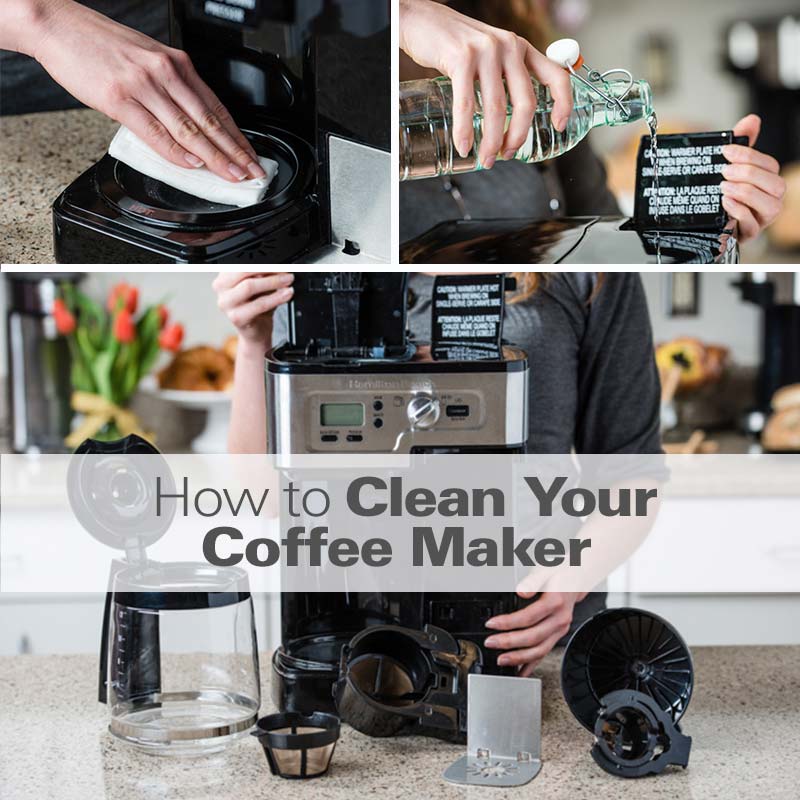
- Step 1: Fill the reservoir with equal parts white vinegar and water.
- Step 2: Run a brew cycle without coffee. Stop halfway and let it sit 20–30 minutes.
- Step 3: Finish the cycle. Dump the carafe.
- Step 4: Run 2–3 cycles with fresh water until the vinegar smell is gone.
Citric acid method
- Step 1: Dissolve 1–2 tablespoons citric acid in a full reservoir of warm water.
- Step 2: Brew, then flush with 2–3 tanks of fresh water.
Commercial descaler
- Step 1: Follow the product label for dose and contact time.
- Step 2: Rinse as directed. Manufacturers often prefer this route for warranty safety.
If you wonder how to clean a coffee pot with vinegar, start here. It is cheap, fast, and works well. If odors linger, add one more rinse. A tiny hint of vinegar will fade after a cycle or two.
:max_bytes(150000):strip_icc()/clean-coffee-maker-with-vinegar-1907384-Final-e47a97b1dd8e4e8a9d3655cf9e87e9c6.jpg)
Methods for Different Coffee Makers and Pots
Different brewers need small tweaks. Use these tips to apply how to clean a coffee pot across styles.
Drip coffee maker with glass carafe
- Remove and wash basket, lid, and carafe daily.
- Descale monthly using vinegar, citric acid, or descaler.
Thermal carafe
- Hand-wash only unless the manual says dishwasher safe.
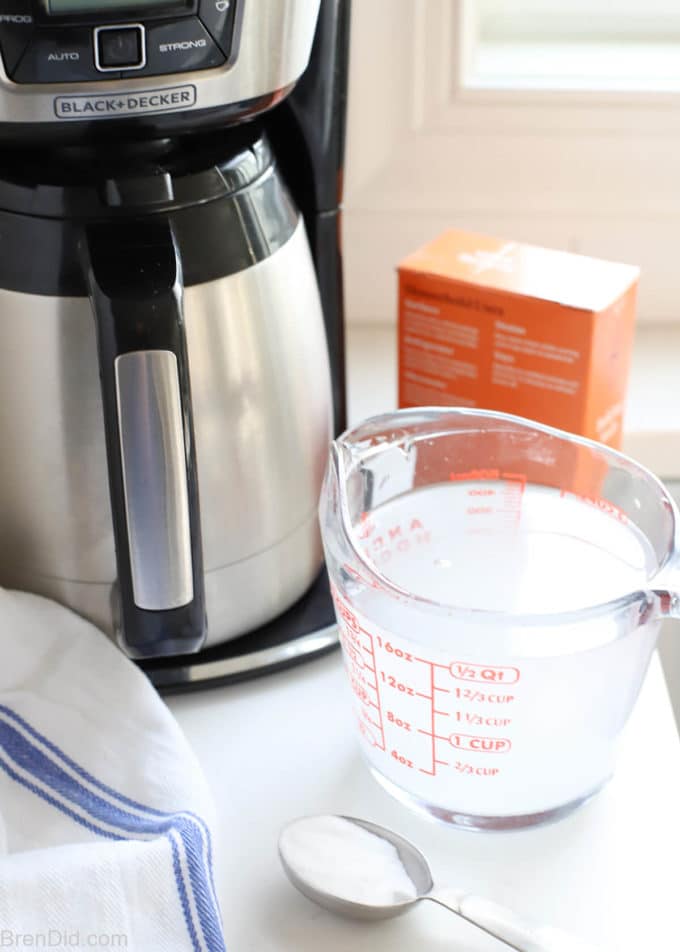
- For odors, fill with warm water and 1 teaspoon baking soda. Soak 30 minutes, then rinse.
Single-serve pod machine
- Clean the pod holder and exit needle carefully. Use a small brush or paper clip if the manual allows.
- Descale with the brand’s mode. Run several water-only cycles after.
Percolator or stovetop moka
- Do not use soap on aluminum moka pots. Rinse and dry well.
- Descale with citric acid. Rinse many times to remove any taste.
French press
- Disassemble the plunger. Wash screens and seals. Dry each part before reassembly.
:strip_icc()/How_to_clean_coffeemaker_0220-Primary-d0c8d75c767a4d04a5b92b77d6db808c.jpg)
Stain and Odor Removal for Carafes
Coffee can tint glass and leave a film. Try these safe, fast fixes. This is how to clean a coffee pot that looks cloudy or smells stale.
- Ice and salt scrub: Add a handful of ice and 1 tablespoon coarse salt to the empty carafe. Swirl for 30–60 seconds. Rinse.
- Baking soda wash: Add warm water and 1 teaspoon baking soda. Soak 15 minutes. Brush and rinse.
- Rice and soap: Add a little warm soapy water and 2 tablespoons uncooked rice. Swirl to scrub corners. Rinse.
- For stubborn film on glass: Mix 1 cup warm water with 1 tablespoon baking soda and 1 tablespoon 3% hydrogen peroxide. Soak 20 minutes, then rinse. Do not use peroxide on aluminum.
Avoid bleach. It can pit metal, weaken seals, and leave residue.
/clean-coffee-maker-with-vinegar-1907384-Final-e47a97b1dd8e4e8a9d3655cf9e87e9c6.jpg)
Water Quality, Filters, and a Simple Maintenance Schedule
Great maintenance starts with water. Scale grows faster with hard water. A basic plan makes it easy to stay ahead.
- Daily: Rinse parts, wash the carafe, wipe the warming plate.
- Weekly: Soak removable parts in warm, soapy water. Clean the showerhead if accessible.
- Monthly: Descale. Replace charcoal water filters if your machine has them.
- Every 3–6 months: Replace reusable basket filters or gaskets as needed.
Using filtered water reduces scale. It also evens out flavor. That means fewer deep cleans and a smoother cup.
This small routine is how to clean a coffee pot and keep it running like new.
Common Mistakes to Avoid
A few habits can cause damage or bad tastes. Skip these and you will save time and money.
- Mixing cleaners: Never mix vinegar and bleach or any oxidizers. It is unsafe.
- Skipping rinses: Incomplete rinsing leaves odors and off flavors.
- Using abrasives: Steel wool can scratch carafes and strip coatings.
- Washing hot glass in cold water: That can crack the carafe.
- Forgetting the lid and showerhead: Oils hide there and go rancid.
Learn how to clean a coffee pot the safe way, and your machine will thank you.
Troubleshooting: When Coffee Still Tastes Off
If flavor is flat after a clean, check a few simple things. This is how to clean a coffee pot and fix stubborn issues.
- Vinegar taste remains: Run more water-only cycles. Leave the lid open to air out.
- Slow brew persists: Descale again with a fresh batch. Scale can be heavy in hard water.
- Oily film returns fast: Wash parts with hotter, soapy water. Switch to a stronger dish soap.
- Musty smell: Dry every part fully. Store with lids open to prevent trapped moisture.
If problems persist, consult the manual. Some machines have hidden check valves or needles that need special care.
Frequently Asked Questions of how to clean a coffee pot
How often should I deep clean and descale?
Descale monthly for average water and daily use. In hard water areas or with heavy use, plan every 2–3 weeks.
Can I use apple cider vinegar instead of white vinegar?
Yes, but it can leave more odor. White vinegar is cleaner and cheaper, and the smell rinses out faster.
Is bleach safe for cleaning a coffee pot?
No. Bleach can damage metal, seals, and finishes. It can also leave residue that affects taste and safety.
What is the fastest way to remove carafe stains?
Use ice and coarse salt and swirl for 30–60 seconds. For stubborn film, soak with warm water and baking soda, then brush.
Does filtered water reduce how often I need to descale?
Yes. Filtered or soft water slows scale growth. You will still need to descale, but less often.
Can I put my carafe or parts in the dishwasher?
Check your manual. Many glass carafes are top-rack safe, but thermal carafes and some lids should be hand-washed.
What is the best method for how to clean a coffee pot if I hate vinegar smell?
Use citric acid or a commercial descaler. Rinse well with 2–3 tanks of fresh water afterward.
Conclusion
A clean pot is the start of a great cup. Wash parts daily, descale on a schedule, and use simple, safe cleaners. Your coffee will taste brighter, and your machine will run longer with fewer hassles.
Pick one method today and try it. Set a reminder for next month’s descale. If this guide helped, share it, subscribe for more kitchen tips, or leave a comment with your results.