
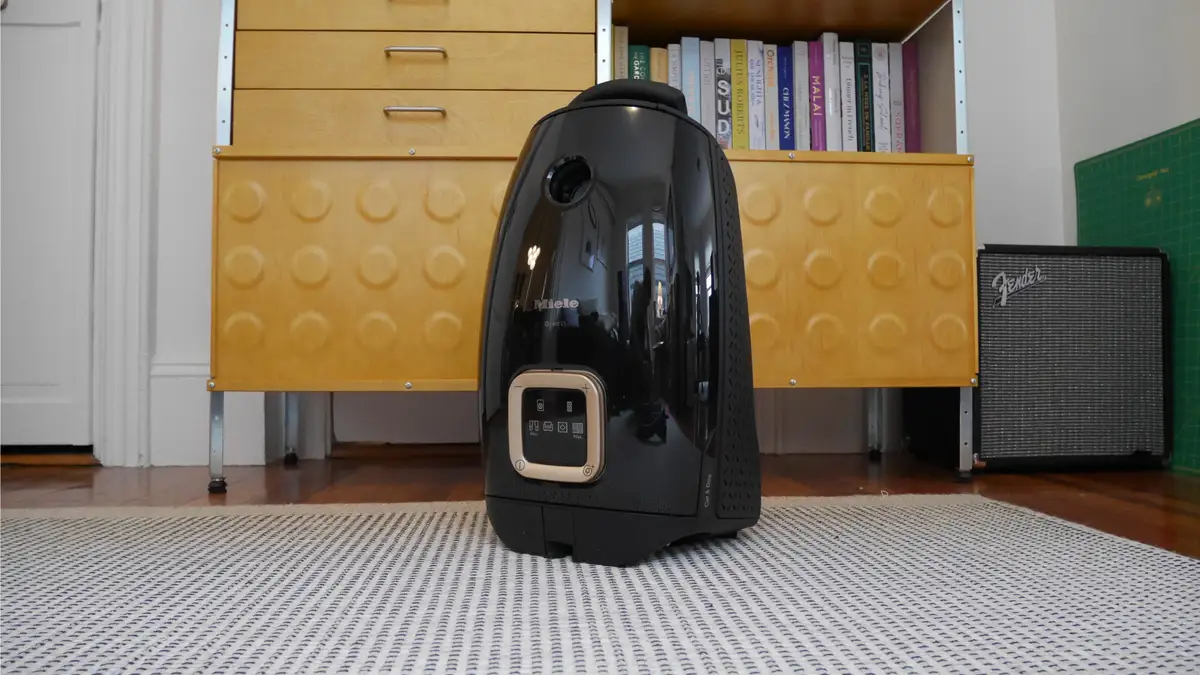
For U.S. homes with cats, dogs, or both, the Miele Guard L1 Cat & Dog canister vacuum cleaner is designed to collect pet hair, fine dust, and tracked-in dirt while helping reduce pet odors. Its main strengths are a sealed bagged system, a motorized pet brush, and Miele’s replaceable filter and dustbag design.
It is a good fit for shoppers who want strong floor cleaning, quiet operation, and less contact with dust during emptying. It may be less suitable if you want a cordless vacuum, a large dust cup, or a low-cost supply system.

What Is the Miele Guard L1 Cat & Dog?
The Miele Guard L1 Cat & Dog is a corded canister vacuum made for homes with pets. It uses a disposable dustbag rather than a bagless dust bin. The vacuum connects to floor tools through a hose, wand, and cleaning head.
The “Cat & Dog” version is different from a standard floor-care model because it includes tools meant to lift pet hair from carpets, rugs, upholstery, and other surfaces. It also uses a filter intended to help manage household odors.
Miele sells several Guard L1 configurations. Package contents, color, filter type, and pricing can vary by U.S. retailer and model number. Check the exact listing before buying, especially if you need a specific brush or filter.
Key features at a glance
| Feature | What it means for a U.S. home |
|---|---|
| Bagged canister design | Dust stays inside a sealed bag until replacement |
| Pet-focused floor tool | Helps lift hair and debris from carpets |
| Odor-control filter | Can help reduce smells from pet-related dust |
| Adjustable suction | Useful when moving between rugs, carpet, and hard floors |
| Long cord and hose system | Lets you clean a larger area without carrying a heavy upright |
| Replaceable bags and filters | Requires ongoing maintenance purchases |
| Compact canister format | Easier to store than many full-size uprights |
The exact specifications depend on the U.S. version. Look for the model number on the product page, box, or rating label rather than relying only on the name “Guard L1 Cat & Dog.”

How Well Does It Handle Pet Hair?
The Miele Guard L1 Cat & Dog is built for routine pet-hair cleaning, but results depend on the floor type, hair length, and how deeply hair is pressed into the surface.
The motorized or turbo-style pet brush agitates the carpet. Agitation matters because suction alone may not remove hair that is wrapped around carpet fibers. The brush loosens the hair, and the vacuum airflow carries it into the dustbag.
Where it should work best
The vacuum is most useful for:
- Low- and medium-pile carpet
- Area rugs
- Upholstered furniture, when the correct tool is used
- Pet beds
- Stairs, with careful hose handling
- Hard floors when the brush setting is adjusted or a suitable floor head is used
Long pet hair can wrap around a brush roll. This is normal for many powered or rotating brushes. Check the brush regularly, especially if your pet sheds long hair.
What affects cleaning results?
Several factors can change performance:
- Hair length: Long hair may wrap around the roller more quickly.
- Carpet depth: Thick carpet may need slower passes and the correct suction setting.
- Dustbag fill level: A full bag can reduce airflow.
- Filter condition: A loaded filter may restrict air.
- Tool choice: A hard-floor head is usually better for delicate floors than a rotating carpet brush.
- Cleaning speed: Slow, overlapping passes often collect more embedded hair than one fast pass.
A pet vacuum is not a substitute for regular grooming. If hair is heavily matted into a rug, loosen it first with an appropriate rake or brush that will not damage the fabric.

Bagged Versus Bagless: Is the Miele System Better for Pet Owners?
A bagged vacuum can be easier for allergy-sensitive households because the collected dust remains enclosed during normal use and bag replacement. The Miele Guard L1 also avoids the cloud of dust that can occur when a bagless bin is emptied.
The trade-off is ongoing cost. You must buy compatible replacement bags and filters. A bagless vacuum does not need dustbags, but its bin, prefilter, and other parts may need more frequent cleaning.
Benefits of the bagged design
- Less direct contact with collected dirt
- A larger enclosed dust-storage system than many cordless vacuums
- No dust cup to wash after every major cleaning session
- Consistent airflow when the bag and filters are changed on time
- Useful for homes with fine dust, litter particles, and pet dander
Limitations
- Replacement bags are a recurring expense
- The vacuum may lose airflow if the bag is overfilled
- You need to keep spare bags at home
- A full bag should not be forced past its intended capacity
- The bag and filter system must match the vacuum model
Do not use a generic bag unless it is clearly listed as compatible with the exact Miele model. An incorrect bag may fit poorly or affect airflow and filtration.

Floor Cleaning: Carpet, Rugs, and Hard Floors
The best floor tool depends on the surface. Pet owners often need two different cleaning approaches: agitation for carpet and gentle pickup for hard floors.
Carpet and rugs
Use the pet-focused brush on rugs and carpet when the surface allows it. Start with a moderate suction setting. If the tool feels difficult to move, reduce suction or adjust the floor setting.
Move the brush slowly. One slow pass in each direction can work better than repeated fast strokes. On delicate rugs, follow the rug maker’s care instructions. Avoid using a rotating brush on surfaces that may snag, fray, or discolor.
Hardwood and other hard floors
Hard floors often need a tool with soft bristles or a setting that stops the rotating brush. Use the lower-suction setting if the tool is hard to push.
Before cleaning a finished wood floor, check for grit trapped in the tool head. Small stones or hard debris can scratch a floor when dragged across it. Do not use a powered brush on a surface unless the tool instructions allow it.
Stairs
A canister vacuum can be useful on stairs because you handle the hose and wand instead of lifting the full machine onto each step. Still, keep the canister stable on a flat landing. Do not leave it where it can fall down the stairs.

Setup and First-Use Guide
Setting up the Miele Guard L1 Cat & Dog is simple, but using the correct tool makes a clear difference.
- Check the model and included tools. Confirm that the box includes the pet tool and the floor head you need.
- Insert the dustbag correctly. The bag collar should sit in its holder. Do not operate the vacuum without the bag and required filters.
- Attach the hose. Push it into the canister inlet until it locks or seats correctly.
- Connect the wand and floor tool. Make sure each connection is secure.
- Set the suction level. Start at a middle setting.
- Choose the correct floor setting. Use carpet agitation only when the surface can handle it.
- Test a small area. Check that the tool moves well and does not pull at the surface.
- Inspect the brush after use. Remove visible hair before it becomes tightly wrapped.
A successful setup produces steady airflow, normal motor sound, and a tool that moves without excessive resistance. A sudden change in sound or suction is a reason to stop and check the bag, hose, filter, and brush.

Maintenance: Bags, Filters, and Brush Roll
Regular maintenance protects airflow and helps the vacuum perform well with pet hair.
Replace the dustbag when indicated
Miele canister vacuums commonly use a bag-change indicator. Replace the bag when the indicator shows that airflow is restricted or when suction drops and the bag is full.
Do not wait until the bag is packed tightly. Fine dust can reduce airflow before the bag looks completely full.
Clean the pet brush
After each few uses, inspect the brush for:
- Wrapped hair
- Thread
- String
- Carpet fibers
- Debris blocking the intake
Turn off and unplug the vacuum before working on the brush. Do not put your fingers near a moving brush. Follow the tool instructions for removing hair or opening an access cover.
Replace filters on schedule
Filters are not permanent. The correct replacement interval depends on the filter type, household dust, pet shedding, and the instructions for the exact model.
Replace a filter if it is damaged, heavily loaded, or past its service period. Do not wash a filter unless Miele specifically says that filter is washable. A wet filter can damage the vacuum and may support mold growth.
Keep the hose and wand clear
A clog may occur when a sock, toy, paper, or clump of hair enters the hose. Disconnect the hose and inspect it with the vacuum unplugged. Never push a sharp object through the hose.

Common Problems and Safe Troubleshooting
The fastest way to troubleshoot is to start with airflow and blockages before assuming the motor has failed.
| Symptom | Likely causes | First checks |
|---|---|---|
| Weak suction | Full bag, blocked hose, dirty filter, tool blockage | Check the bag, hose, wand, floor head, and filter |
| Brush does not rotate | Hair wrap, belt issue, electrical connection, switch setting | Turn off the vacuum and inspect the brush |
| Burning smell | Hair wrapped around brush, blockage, motor strain | Unplug it and stop using it until the cause is found |
| Vacuum is hard to push | Suction too high or wrong floor setting | Lower suction and select the correct surface mode |
| Dust escapes | Bag not seated, damaged bag, missing filter, loose cover | Refit the bag and check all seals |
| Vacuum shuts off | Overheating from restricted airflow | Turn it off, unplug it, clear blockages, and let it cool |
If the vacuum smells hot after the brush is cleared, or if it trips a breaker, stop using it. Contact Miele or an authorized service provider. Do not open the motor housing unless you are qualified to do so and the service instructions permit it.

Miele Guard L1 Cat & Dog vs. Other Vacuum Types
The right choice depends on how you clean and what matters most in your home.
| Vacuum type | Main advantage | Main drawback | Best fit |
|---|---|---|---|
| Miele Guard L1 Cat & Dog | Enclosed bag system and pet-focused tools | Corded and requires bags | Homes wanting strong, contained cleaning |
| Cordless stick vacuum | Quick, light, and easy for daily pickup | Smaller dust bin and limited run time | Small messes and fast cleanups |
| Upright pet vacuum | Large cleaning head and simple push design | Heavier to carry on stairs | Mostly carpeted homes |
| Bagless canister | No dustbag purchases | More dust exposure during emptying | Shoppers who prefer washable bins |
| Robot vacuum | Automated daily maintenance | Limited deep cleaning and tool range | Homes needing frequent surface pickup |
The Guard L1 is not automatically better than every alternative. It makes the most sense when you value a bagged system, want a corded machine for longer cleaning sessions, and need a dedicated pet tool.
Choose a cordless stick vacuum if convenience matters more than long cleaning sessions. Choose an upright if most of your home has carpet and you prefer an all-in-one floor head.

What Does the Miele Guard L1 Cat & Dog Cost to Own?
The purchase price is only part of the cost. Add replacement bags, filters, and possible brush or hose parts over time.
A simple ownership estimate is:
Estimated yearly supply cost = bags used per year × bag price + annual filter cost
For example, if a household uses four bags per year, the yearly bag cost is the price of one compatible bag pack divided by the number of bags in that pack, multiplied by four. This is only a planning example, not a fixed cost.
Your usage may be higher if you have:
- Several pets
- A shedding breed
- Frequent litter tracking
- Renovation dust
- A large carpeted home
- Household members with strong dust sensitivity
Check the current U.S. Miele product page and retailer listings for the latest price, warranty terms, included accessories, and replacement-part availability. Those details can change by model and seller.

Who Should Buy It?
The Miele Guard L1 Cat & Dog is worth considering if you want:
- A corded vacuum for whole-home cleaning
- A bagged system that keeps dust contained
- A pet brush for carpet and upholstery
- Adjustable suction for different surfaces
- A canister design that is easier to pull than a heavy upright
- A replaceable filter system
It may not be the best match if you need:
- Cordless cleaning
- A handheld vacuum for quick spills
- A very low purchase price
- No recurring bag cost
- A self-emptying robot
- A lightweight tool for frequent overhead cleaning
The deciding question is not simply whether you own a pet. It is whether your home benefits from a full-size, corded, bagged cleaner with dedicated pet tools.
How to Check the Exact U.S. Model Before Buying
Miele product names can look similar. Confirm these details before placing an order:
- Model number: Match the model number on the listing with the manual or product label.
- Included pet tool: Confirm whether the package includes a powered brush, turbo brush, or another pet attachment.
- Filter type: Check whether the filter is designed for odor control, fine-particle filtration, or another purpose.
- Dustbag type: Confirm the correct Miele bag family for that model.
- Floor tool: Make sure the included head suits your mix of carpet and hard flooring.
- U.S. warranty: Read who provides warranty service and whether the seller is authorized.
- Replacement parts: Check that bags, filters, belts, and brush parts are available in the United States.
This step prevents a common buying mistake: comparing two products with the same family name but different accessories or filter packages.

Frequently Asked Questions
Is the Miele Guard L1 Cat & Dog good for long pet hair?
It can be a good option for long pet hair because the pet brush agitates carpet and upholstery. However, long hair may wrap around the brush roll. Inspect and clean the brush often.
Does the Miele Guard L1 Cat & Dog use a HEPA filter?
Do not assume that every Guard L1 Cat & Dog listing includes the same filter. Check the exact U.S. model number and product specification. Filter names and package contents may vary.
Can it vacuum cat litter?
It can collect small amounts of dry cat litter, but large amounts of heavy grit should be picked up carefully. Empty or replace the bag when needed, and avoid vacuuming damp litter or wet material.
Is a bagged vacuum better for allergies?
A sealed bagged system may reduce contact with collected dust during disposal. It does not remove every allergen from a home, and filter performance depends on the exact configuration and proper maintenance.
Can I use it on hardwood floors?
Yes, when the correct hard-floor tool or setting is used. Check the floor head for trapped grit, and avoid a rotating brush on delicate flooring unless the manufacturer permits it.
Final Verdict
The Miele Guard L1 Cat & Dog canister vacuum cleaner is best for U.S. pet owners who want a corded, bagged vacuum with dedicated hair-cleaning tools and a contained dust system. Its main trade-offs are the need to buy replacement bags and filters, plus the lack of cordless convenience.
Before buying, verify the exact model number, filter, pet tool, floor head, warranty, and current U.S. price. If those match your home, the Guard L1 Cat & Dog can be a practical choice for regular carpet, rug, hard-floor, upholstery, and pet-hair cleaning.