
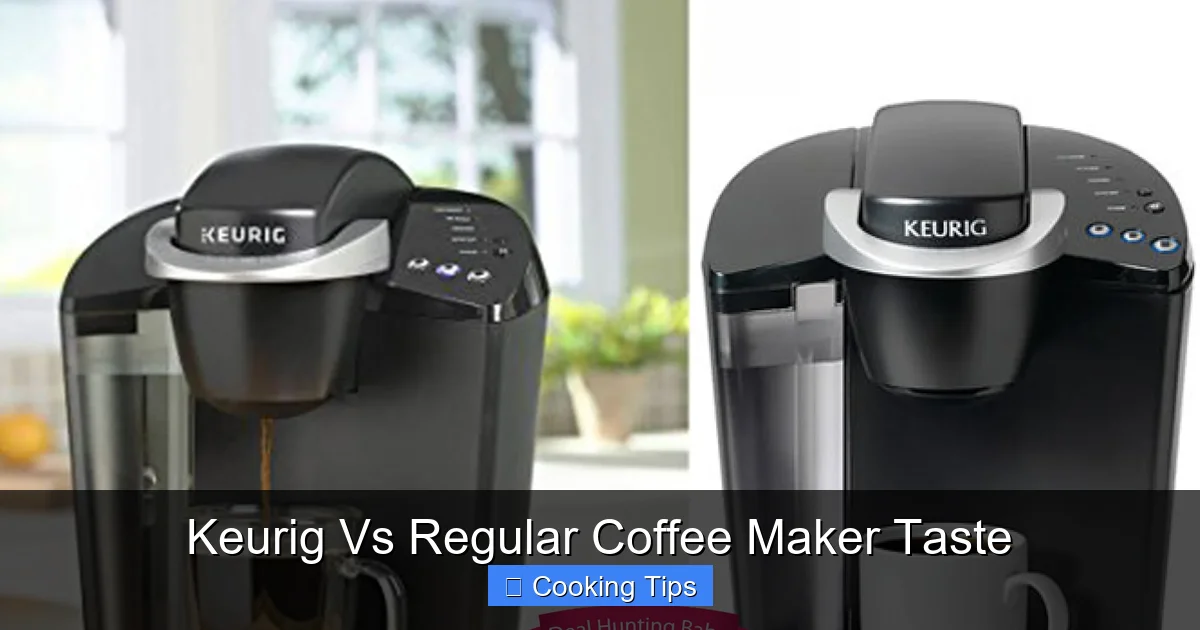
For most U.S. homes, Keurig is better for fast, single-cup brewing, while Mr. Coffee is usually better for making a full pot at a lower cost. The right choice depends on how much coffee you drink, whether you prefer pods or grounds, and how much you care about speed, variety, waste, and long-term cost.
Keurig is mainly known for its K-Cup pod system. Mr. Coffee offers a wider mix of drip, programmable, espresso-style, and some single-serve coffee makers. Because both brands sell many models, this comparison looks at the main machine types rather than treating every model as identical.
This guide focuses on products sold in the United States. Prices, features, warranties, and model availability can change during 2026, so check the exact model page before buying.

Keurig vs. Mr. Coffee: Quick Answer
Choose Keurig if you want:
- One cup at a time
- Fast brewing with little cleanup
- Many coffee, tea, and hot cocoa pod choices
- Easy drink changes for different people
- A compact machine for an office, apartment, or guest room
Choose Mr. Coffee if you want:
- A full 10- to 12-cup pot
- Lower coffee cost when serving several people
- Fresh grounds instead of single-use pods
- A simple programmable drip brewer
- More control over coffee strength and batch size
A Keurig is like a snack-sized kitchen tool: quick, neat, and made for one person. A Mr. Coffee drip maker is more like a shared kitchen pot: slower to prepare, but better for a group.

Keurig and Mr. Coffee: What Is the Main Difference?
The main difference is the brewing format.
Keurig machines use pre-portioned K-Cup pods or, on compatible models, ground coffee through a reusable filter. Mr. Coffee is best known in the U.S. for traditional drip coffee makers that use ground coffee and paper or permanent filters.
| Feature | Keurig | Mr. Coffee |
|---|---|---|
| Main format | Single-serve pods | Drip coffee grounds |
| Typical use | One cup at a time | Several cups per brew |
| Brew speed | Usually fast for one cup | Often slower for a full pot |
| Coffee storage | Pods stay fresh in sealed packs | Grounds or beans need separate storage |
| Cleanup | Remove the pod and rinse parts | Empty grounds and clean the carafe |
| Drink variety | High, if compatible pods are available | Depends on the coffee you buy |
| Cost per serving | Often higher | Often lower |
| Best for | One or two coffee drinkers | Families, offices, and batch brewing |
This distinction matters more than the brand name. A Mr. Coffee single-serve model may compete more directly with a Keurig than a Mr. Coffee 12-cup drip brewer does.
Keurig vs. Mr. Coffee Cost in 2026
Mr. Coffee usually costs less per cup when you brew regular ground coffee. Keurig can cost less in time and convenience, but pods often cost more per serving.
The true cost has four parts:
- The coffee maker
- Coffee, pods, or filters
- Electricity and water
- Maintenance and replacement parts
Illustrative coffee cost comparison
The figures below are examples, not current product prices. They show how to compare your own costs.
| Brewing choice | Example serving cost | 2 cups per day | Approximate yearly coffee cost |
|---|---|---|---|
| Ground coffee in a Mr. Coffee drip maker | $0.25 | $0.50 per day | About $183 |
| K-Cup pod in a Keurig | $0.60 | $1.20 per day | About $438 |
| Premium pod or specialty drink | $1.00 or more | $2.00 or more per day | $730 or more |
The calculation is simple:
Cost per day × 365 = estimated yearly coffee cost
For example, two $0.60 pods per day would cost about $438 per year before tax, electricity, and machine cost.
Actual costs vary with brand, package size, discounts, coffee strength, and waste. A reusable Keurig filter can reduce pod use, but it adds a small step: measuring grounds, removing the filter, and washing it after use.
When Keurig may be the better value
Keurig may make financial sense when:
- You drink only one cup a day.
- You often throw away half a pot of coffee.
- Several people want different drinks.
- You value speed more than the lowest cup price.
- You use store promotions or buy pods in bulk.
When Mr. Coffee may be the better value
Mr. Coffee is often the better value when:
- Two or more people drink coffee each morning.
- You brew a full pot most days.
- You buy ground coffee in larger bags.
- You want to avoid the recurring cost of pods.
- You already own a grinder or prefer standard filters.
The machine with the lower purchase price is not always the lower-cost choice. Your daily coffee habit usually matters more than the initial price.

Brewing Speed and Daily Convenience
Keurig usually wins for one cup, while Mr. Coffee wins when you need several cups ready at once.
A Keurig lets you insert a pod, choose a brew size if the model supports it, and start brewing. There is no coffee scoop, filter basket, or carafe to set up for each cup.
A drip Mr. Coffee requires more preparation. You add water, measure grounds, place a filter, and wait for the pot to brew. Once it finishes, however, you have several cups ready.
Keurig convenience
Keurig is useful for:
- Early morning coffee made in a hurry
- People who wake at different times
- Guests who want different flavors
- Small kitchens
- Break rooms and home offices
Its main trade-off is that every cup requires a new pod unless you use a compatible reusable filter.
Mr. Coffee convenience
Mr. Coffee drip models are useful for:
- A couple or family with the same coffee preference
- Weekend breakfasts
- Work groups
- Anyone who likes to pour a second cup
- People who prepare coffee with a timer
Many programmable drip models include features such as an automatic start time, a pause-and-serve function, or a warming plate. Exact features differ by model.
A full pot may take longer than one Keurig cup, but it can save repeated brewing when several cups are needed.

Coffee Taste and Drink Choices
Taste depends more on the coffee, water, dose, freshness, and brew method than on the brand name alone.
Keurig pods offer consistent portions. That can help produce a similar cup each time. The downside is that a pod contains a limited amount of coffee, and some users find the flavor lighter than coffee brewed from a larger dose of fresh grounds.
Mr. Coffee drip makers give you more control over:
- Coffee amount
- Grind size
- Roast level
- Water-to-coffee ratio
- Batch size
- Filter type
A common starting point is about 1 to 2 tablespoons of ground coffee for every 6 ounces of water, then adjusting to taste. This is a starting range, not a fixed rule. Coffee density, roast, grind, and personal preference all affect the result.
Keurig drink variety
K-Cup pods are available in many styles, including:
- Light, medium, and dark roast coffee
- Flavored coffee
- Decaf coffee
- Tea
- Hot cocoa
- Some specialty beverages
Compatibility can vary. Some pods are designed for specific Keurig features, such as stronger brew settings or larger cup sizes. Always check the machine and pod packaging.
Mr. Coffee drink variety
A traditional Mr. Coffee drip machine works with nearly any ground coffee. You can buy whole beans and grind them at home, use pre-ground coffee, or mix blends.
However, a basic drip brewer does not automatically make espresso, milk foam, or café-style drinks. Mr. Coffee espresso and specialty models are separate product types and should not be compared with a standard 12-cup brewer as if they work the same way.

Waste and Environmental Considerations
Neither option is waste-free, but the type of waste is different.
Keurig creates a used pod after each serving. Some K-Cup pods use polypropylene plastic and may be recyclable in certain areas, but local recycling rules and collection systems differ. A recyclable label does not guarantee that your local facility accepts the item.
Before placing pods in a recycling bin, check:
- Your city or county recycling rules
- Whether the pod material is accepted
- Whether the lid and coffee grounds must be removed
- Whether the local program accepts small plastic containers
A Mr. Coffee drip maker usually creates used paper filters and coffee grounds. Some users compost coffee grounds and use a permanent filter, where suitable. Paper filters may or may not be accepted in local compost programs.
Practical waste comparison
| Concern | Keurig | Mr. Coffee drip |
|---|---|---|
| Main daily waste | Used pod | Grounds and filter |
| Reusable option | Compatible reusable pod filter | Permanent filter on some models |
| Compost potential | Coffee inside pod may be compostable after separation | Grounds and some paper filters may be compostable |
| Local recycling dependence | High for pod components | Lower for basic paper filters |
| Best waste reduction step | Use a reusable filter when practical | Avoid brewing more coffee than needed |
The cleanest option depends on how you use the machine. Brewing a full pot and throwing most of it away can waste more coffee than making one pod at a time.

Cleaning and Maintenance
Both brands need regular cleaning, but the cleaning tasks differ.
Coffee oils, mineral deposits, and old water can affect flavor. They can also reduce performance over time.
Keurig cleaning
Routine Keurig care may include:
- Remove the used pod after brewing.
- Rinse the removable water reservoir and drip tray as directed.
- Clean the pod holder and needle area according to the manual.
- Replace the water filter if the model uses one.
- Run the manufacturer’s descaling process when needed.
Descaling removes mineral buildup from water. The correct schedule depends on water hardness and use. Follow the instructions for your exact model rather than assuming every Keurig has the same process.
Never place electrical parts in water. Unplug the machine before cleaning areas that require handling or wiping.
Mr. Coffee cleaning
Routine Mr. Coffee care may include:
- Empty the grounds after brewing.
- Rinse the filter basket and carafe.
- Wipe the warming plate after it cools.
- Wash removable parts according to the manual.
- Run a cleaning or descaling cycle when mineral buildup appears.
Do not use a cracked glass carafe. A damaged carafe can break under heat and cause burns or cuts.
Signs that cleaning may be needed
Look for:
- Slower brewing
- A weaker or unusual taste
- Strange noise
- Reduced water flow
- Visible scale
- Leaks
- Coffee that is not staying hot as expected
If cleaning does not fix a leak, electrical smell, damaged cord, or repeated shutdown, stop using the machine and contact the manufacturer or a qualified repair service.

Size, Counter Space, and Water Use
Keurig is often easier to fit into a small space, but a large-reservoir model may take more room than a basic drip brewer.
Measure the machine in its normal position and with enough overhead space to open the lid. This matters for both brands.
Check these dimensions before buying:
- Width
- Depth
- Height
- Height with the lid open
- Clearance for the water reservoir
- Space needed to remove the carafe
- Cord location
A Keurig with a removable reservoir may reduce refilling. A compact model may save counter space but require water added for each cup.
A Mr. Coffee drip maker may have a wider footprint because it includes a carafe and warming plate. It can still be practical if you brew a full pot once rather than several single cups.
Water quality also matters. Hard water can create mineral scale faster. Filtered water may improve taste and reduce buildup, but follow the machine manual because some manufacturers specify water conditions or filter types.

Which Is Better for Offices, Families, and Small Kitchens?
The best choice changes with the setting.
For one person
Choose Keurig if you want one quick cup and do not want leftover coffee. Choose Mr. Coffee if you drink several cups or want the lowest regular coffee cost.
For two people
A Keurig works well when each person wants a different drink. A Mr. Coffee drip maker is usually more efficient when both people drink the same coffee.
For families
A full-pot Mr. Coffee model often makes more sense for a family that drinks coffee together. Keurig may be more flexible if family members drink at separate times.
For a home office
Keurig is convenient for occasional cups and different drink choices. Mr. Coffee may be better for a workday with repeated cups, especially if you want to brew once and refill your mug.
For a dorm, apartment, or small kitchen
A compact Keurig can be useful where storage and cleanup matter. Check housing rules first, especially in dorms or shared buildings with restrictions on hot appliances.
For guests
Keurig offers easy drink choice with little measuring. A programmable Mr. Coffee maker is better when you expect several guests to drink the same coffee.
Keurig vs. Mr. Coffee: Pros and Cons
Keurig pros
- Fast single-cup brewing
- Simple operation
- Broad pod selection
- Little measuring
- Easy to serve different drinks
- Useful for one-cup households
Keurig cons
- Pods can cost more than ground coffee
- Used pods create regular waste
- Some features are model-specific
- Reusable filters require extra cleanup
- Larger cup settings may produce weaker coffee if the pod contains a small dose
Mr. Coffee pros
- Often lower cost per cup
- Good for full pots
- Works with many ground coffees
- Familiar controls
- Useful for families and offices
- Less dependence on proprietary pod formats
Mr. Coffee cons
- More setup for each pot
- Leftover coffee may go to waste
- Glass carafes can break
- Basic drip models do not provide the same pod variety
- Large machines may take more counter space

How to Choose the Right Model
Use this checklist before buying either brand:
-
Decide how much coffee you make.
One cup favors Keurig. Several cups favor a drip Mr. Coffee. -
Choose pods or grounds.
Pods are simpler. Grounds are usually more flexible and less costly per cup. -
Check cup-size settings.
Do not assume every Keurig supports the same sizes. -
Check the water reservoir.
A larger reservoir means fewer refills but may increase machine size. -
Look for programmable features.
These matter more on a Mr. Coffee drip brewer. -
Review cleaning instructions.
A machine is easier to own when its removable parts are simple to wash. -
Confirm the warranty and return policy.
Keep the receipt and packaging until you know the machine works properly. -
Compare the exact model, not only the brand.
A premium Mr. Coffee specialty machine and a basic Keurig have different purposes.
Common Buying Mistakes
Avoid these errors when comparing Keurig and Mr. Coffee:
- Comparing a 12-cup drip maker with a single-serve machine without considering serving size
- Assuming every K-Cup pod works with every Keurig feature
- Buying a large brewer for one daily cup
- Ignoring the yearly cost of pods
- Brewing a full pot and wasting most of it
- Forgetting to measure counter height with the lid open
- Treating “12 cups” as twelve large mugs
- Using a reusable filter without checking model compatibility
- Skipping descaling in a hard-water area
- Buying based only on the lowest sale price
“Cup” ratings on coffee makers often refer to smaller coffee-maker measurements, not the size of a typical U.S. mug. Compare the actual carafe capacity and your usual serving size.
FAQ: Keurig vs. Mr. Coffee
Is Keurig coffee better than Mr. Coffee coffee?
Not automatically. Keurig offers consistent single servings and many pod choices. Mr. Coffee gives you more control over grounds, dose, and batch size. Fresh coffee and correct brewing often matter more than the logo on the machine.
Is Mr. Coffee cheaper to use than Keurig?
Usually, a Mr. Coffee drip maker is cheaper per serving when you use ground coffee. Keurig may still be worthwhile if you brew only one cup and would otherwise waste a full pot.
Can you use K-Cup pods in a Mr. Coffee machine?
Only if the specific Mr. Coffee model is designed to accept them. Do not force a pod into a drip brewer. Check the product manual and packaging for compatibility.
Can you use ground coffee in a Keurig?
Many Keurig models support a compatible reusable ground-coffee filter, but not all models work the same way. Confirm the correct accessory for your machine before using it.
Which one is better for a family?
A Mr. Coffee drip maker is often better for a family that drinks the same coffee at the same time. Keurig is more useful when people want separate drinks or wake up at different times.
Key Takeaways
- Choose Keurig for speed, single cups, and drink variety.
- Choose Mr. Coffee for full pots, ground coffee, and lower cost per serving.
- Compare the exact model because both brands sell different machine types.
- Include pods, filters, coffee, maintenance, and waste in the total cost.
- A reusable filter can reduce Keurig pod use, but it requires more cleanup.
- A drip brewer may waste coffee if you regularly brew more than you drink.
- Clean and descale either machine according to its model instructions.
Sources and Verification Notes
This comparison is based on documented product categories, manufacturer support guidance, and general coffee-cost calculations. Model features and prices can change, so verify the exact product before purchase.
Useful U.S. sources include:
- Keurig official website
- Keurig support
- Mr. Coffee official website
- Mr. Coffee support
- U.S. Environmental Protection Agency recycling guidance
- U.S. Food and Drug Administration food safety information
Conclusion
For most U.S. buyers in 2026, the choice is simple: buy a Keurig for quick single cups, or buy a Mr. Coffee drip maker for affordable batch brewing.
Keurig is the better match for speed, variety, and low daily effort. Mr. Coffee is the better match for families, offices, and coffee drinkers who want to use regular grounds and reduce the cost of each cup. Before you buy, write down how many cups you drink each day, then compare the exact model’s capacity, cleaning needs, compatibility, and ongoing coffee cost.


2 Comments