
Costa Rican coffee is easy to make in a U.S. kitchen with fresh beans, clean water, and a simple pour-over setup. For the closest traditional method, use a chorreador—a wooden stand with a reusable cloth filter. A standard drip brewer, pour-over cone, or French press also works well.
For a balanced cup, use 22 grams of medium-ground Costa Rican coffee with 350 grams of water heated to 195–205°F. Pour the water slowly, let the coffee drip, and serve it fresh.
Key Takeaways
- Use fresh, 100% Costa Rican coffee when possible.
- Start with a coffee-to-water ratio near 1:16.
- A chorreador gives the most traditional preparation.
- Use medium-fine grounds for pour-over coffee.
- Keep the cloth filter clean and fully dry between uses.
- Add sugar, milk, or panela only after tasting the brewed coffee.

What Makes Costa Rican Coffee Different?
Costa Rican coffee is known for its bright flavor, clean finish, and mild sweetness. Many coffees from the country have notes of citrus, berries, stone fruit, honey, chocolate, or brown sugar.
The flavor comes from several factors:
- High growing areas: Coffee grown at higher elevations often develops slowly. This can create more complex flavors.
- Arabica varieties: Costa Rica mainly grows Arabica coffee, which is often prized for its aroma and acidity.
- Volcanic soils: Many coffee regions have rich volcanic soil.
- Washed processing: Washed coffee is cleaned of most fruit before drying. This often produces a clear and crisp cup.
- Light to medium roasting: These roasts help preserve fruit and floral notes.
“Acidity” in coffee does not mean the coffee is spoiled. It describes a lively taste, such as lemon, orange, apple, or other fruit. If you prefer a deeper and less bright cup, choose a medium or medium-dark roast.
Costa Rican coffee is not one fixed flavor. Beans from Tarrazú, West Valley, Central Valley, Brunca, Orosi, and Turrialba may taste different because of changes in soil, elevation, climate, variety, processing, and roasting.

Ingredients and Equipment
You need only a few items to make Costa Rican coffee.
Ingredients
For about two 8-ounce cups, use:
- 22 grams Costa Rican coffee beans
- 350 grams or milliliters filtered water
- Optional: sugar, milk, cream, or panela
A kitchen scale gives the most consistent results. If you do not have one, use about 4 level tablespoons of ground coffee as a starting point. Spoon sizes vary, so adjust the amount to taste.
Equipment
Choose one of these brewing methods:
- Chorreador with a cloth filter
- Pour-over dripper with a paper filter
- Automatic drip coffee maker
- French press
- Moka pot or espresso machine
You will also benefit from:
- Burr grinder
- Kettle
- Timer
- Coffee mug or serving pot
- Thermometer, if your kettle does not show temperature
A burr grinder is useful because it produces more even grounds than a blade grinder. Even grounds help water pass through the coffee at a steady rate.

How to Make Traditional Costa Rican Coffee With a Chorreador
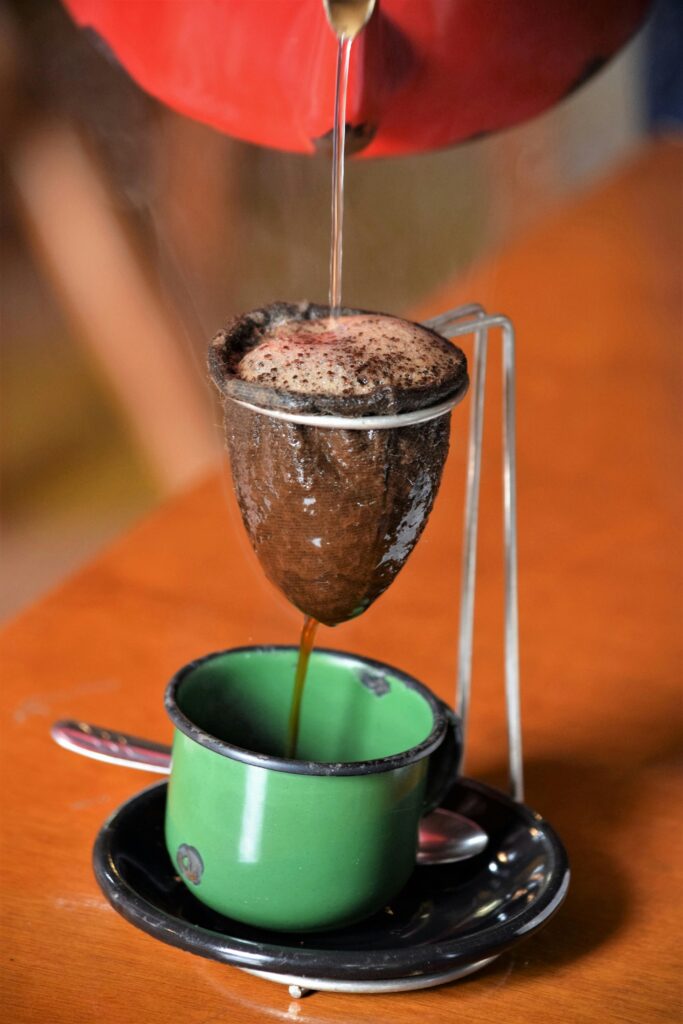
A chorreador is the traditional Costa Rican coffee brewer. It usually has a wooden or metal frame that holds a cloth filter, called a bolsita. The brewed coffee drips into a cup or small serving pot below.
Follow these steps.
1. Heat the water
heat about 400 grams of filtered water to 195–205°F. This gives you enough water for brewing and for warming the brewer.
If you do not have a thermometer, bring the water to a boil and let it rest for about 30 seconds. This is only an estimate because room temperature, kettle type, and altitude affect cooling.
Do not pour boiling water directly over the coffee. Water that is too hot can produce harsh flavors, especially with lighter roasts.
2. Rinse and warm the cloth filter
Rinse the clean cloth filter with hot water. This removes loose fibers and warms the filter.
Make sure the cloth has no soap smell or old coffee odor. If it smells sour, musty, or oily, clean it before brewing.
3. Grind the coffee
Grind the beans to a medium-fine texture. The grounds should be finer than those used for a French press but slightly coarser than espresso grounds.
Grind the coffee just before brewing. Fresh grinding helps protect the coffee’s aroma.
4. Add the coffee
Place the cloth filter in the chorreador and add 22 grams of coffee.
Shake the filter gently so the grounds form a level bed. Do not press them down.
5. Wet the grounds
Pour about 50 grams of hot water over the coffee. Start in the center and move outward in small circles.
Wait about 30–45 seconds. This step, called blooming, lets trapped carbon dioxide escape. The grounds may rise and foam slightly.
6. Pour the remaining water
Slowly pour the rest of the water in small circles. Try not to pour directly onto the sides of the cloth filter.
Add the water in two or three pours. Keep the coffee bed wet, but do not flood it.
The full brew should usually take about 3–4 minutes. The exact time depends on the grind, roast, filter, and coffee type.
7. Serve the coffee
Remove the chorreador when the dripping slows to a few drops. Stir the brewed coffee gently before serving.
Taste it plain first. Then add sugar, milk, or panela if you prefer a sweeter or richer drink.
A note about the cloth filter
Wash the cloth filter with warm water after each use. Avoid scented soap unless the filter maker allows it. Soap residue can change the flavor.
Let the filter dry fully in a clean place. A damp cloth left in a closed container can develop mold or unpleasant odors. Replace the filter if it stays stained, smells bad after washing, or begins to weaken.
How to Make Costa Rican Coffee With a Pour-Over Dripper
A paper-filter pour-over is the easiest U.S. substitute for a chorreador. It produces a clean cup and allows you to control the brew.
Use the same basic formula:
| Coffee | Water | Approximate servings |
|---|---|---|
| 15 grams | 240 grams | 1 large cup |
| 22 grams | 350 grams | 2 small cups |
| 30 grams | 480 grams | 2–3 cups |
| 45 grams | 720 grams | 4 cups |
Method
- Heat filtered water to 195–205°F.
- Place a paper filter in the dripper.
- Rinse the filter with hot water.
- Add the ground coffee.
- Pour in about twice the coffee’s weight in water. For 22 grams of coffee, use about 44–50 grams.
- Wait 30–45 seconds.
- Pour the remaining water slowly and evenly.
- Let the coffee drain fully.
- Swirl the brewed coffee before serving.
Aim for a total brew time of about 2½–4 minutes. A fast brew often tastes thin or sour. A very slow brew may taste bitter or dry.
A gooseneck kettle gives you more control, but it is not required. A regular kettle can work if you pour slowly.

How to Make Costa Rican Coffee in an Automatic Drip Machine
An automatic drip machine is a practical choice when you want several cups with little effort.
For a standard 12-cup U.S. coffee maker, start with:
- 60 grams of coffee
- 1 liter, or about 34 fluid ounces, of water
This is close to a 1:16 ratio. Many coffee machines label a “cup” as 5 or 6 fluid ounces, not a full 8-ounce mug, so the machine’s cup markings may look different from the serving size.
Use a medium grind. If the coffee tastes weak, add more coffee before making the grind finer. If it tastes bitter or dry, use a slightly coarser grind or reduce the amount of coffee.
Clean the machine often. Old coffee oils in the basket or carafe can make fresh Costa Rican beans taste stale.
How to Make Costa Rican Coffee With a French Press
A French press makes a fuller and heavier cup because the metal filter allows more oils and fine particles into the drink.
Use:
- 30 grams coarse-ground coffee
- 500 grams hot water
- A brewing time of about 4 minutes
Steps
- Add the coarse coffee to the French press.
- Pour in the hot water.
- Stir gently to wet all the grounds.
- Place the lid on the press without plunging.
- Wait 4 minutes.
- Press the plunger slowly.
- Pour the coffee into a separate mug or serving pot.
French press coffee can hide some of the clean citrus notes found in a washed Costa Rican coffee. It may be a better fit if you like body, chocolate flavors, and a rich mouthfeel.

The Best Coffee-to-Water Ratio for Costa Rican Coffee
A ratio near 1:16 is a useful starting point. This means one part coffee to 16 parts water by weight.
Here are simple examples:
- 15 grams coffee × 16 = 240 grams water
- 22 grams coffee × 16 = 352 grams water
- 30 grams coffee × 16 = 480 grams water
Use less water for a stronger cup. For example, a 1:14 ratio gives more concentration. Use more water for a lighter cup. A 1:17 ratio gives a more diluted drink.
The best ratio depends on roast level, grind size, water quality, and personal taste. Change one variable at a time so you can tell what caused the difference.

How Grind Size Changes the Flavor
Grind size controls how quickly water moves through the coffee.
| Flavor or brew problem | Likely cause | Useful adjustment |
|---|---|---|
| Sour, sharp, or thin coffee | Water moved too fast or did not extract enough flavor | Grind finer or pour more slowly |
| Bitter, dry, or harsh coffee | Water extracted too much flavor | Grind coarser or shorten the brew |
| Weak coffee with a normal brew time | Too little coffee or too much water | Increase coffee or use less water |
| Muddy or heavy coffee | Grounds are too fine or the filter lets through many fines | Grind coarser or use a paper filter |
| Uneven flavor | Water did not wet all grounds | Pour in slow circles and level the coffee bed |
Light-roasted Costa Rican beans often work well with a medium-fine grind in pour-over brewing. Darker roasts may taste better with a slightly coarser grind and a lower brewing temperature.
These are starting points, not strict rules. Your grinder may use different settings from another grinder.

Choosing Water for Costa Rican Coffee
Use fresh, clean water with a neutral taste. Filtered tap water is often a good choice in the United States, but the best option depends on your local water.
Water that is very hard can make coffee taste dull or chalky. Water that is extremely soft or distilled may produce a flat cup because it lacks minerals that help extract flavor.
Do not use water that smells of chlorine or has an unpleasant taste. Coffee contains a large amount of water, so water quality has a direct effect on the final drink.
Use hot water for brewing, but do not store brewed coffee on a hot plate for a long time. Heat can make the coffee taste bitter and stale. If you need to hold it, use an insulated carafe.

Common Mistakes When Making Costa Rican Coffee
Using pre-ground coffee for too long
Ground coffee loses aroma faster than whole beans. Buy smaller amounts and store them in an airtight container away from heat, light, and moisture.
Packing the grounds down
Do not tamp coffee in a chorreador or standard pour-over. Pressing the grounds can slow the flow and cause uneven extraction.
Pouring too fast
A fast pour can leave some grounds dry while sending water through only a small part of the coffee bed. Use a slow, steady stream.
Ignoring the filter
Old coffee oils and damp cloth can ruin the flavor. Rinse paper filters and clean reusable filters after every use.
Adding sugar before tasting
Sweeteners can cover useful flavor clues. Taste the coffee plain first, then adjust it.
Chasing a fixed brew time
Time helps diagnose a problem, but taste matters more. A coffee that drains in three minutes is not automatically better than one that drains in four.

Troubleshooting Costa Rican Coffee
The coffee tastes sour
Sourness often means under-extraction. Try a finer grind, a slower pour, or slightly hotter water within the recommended range.
If the coffee has a pleasant lemon or berry note, that may be normal acidity rather than a brewing fault.
The coffee tastes bitter
Bitterness can result from over-extraction, very hot water, a fine grind, or an overly dark roast. Try a coarser grind or a shorter brew.
Also check whether old coffee is trapped in the grinder or brewer.
The coffee tastes weak
Use more coffee or less water. A weak cup can also result from a grind that is too coarse or water that moves through the grounds too quickly.
The coffee tastes stale
Stale flavor often comes from old beans, poor storage, or a dirty machine. Buy beans with a roast date when possible and keep them in an airtight container.
The cloth filter smells musty
Stop using it until it is thoroughly cleaned and dried. If the smell remains, replace the filter. Do not drink coffee brewed through a moldy or visibly damaged filter.

Should You Add Sugar or Milk?
You can drink Costa Rican coffee black, with sugar, or with milk. There is no single correct choice.
A light-roasted coffee with fruit notes may taste best without additions. A medium roast can work well with a small amount of sugar. A darker roast may pair well with milk or cream.
Panela, an unrefined cane sugar common in parts of Latin America, adds a deeper molasses-like sweetness. In the United States, brown sugar can provide a similar direction, though it is not identical.
For an iced drink, brew the coffee slightly stronger, cool it, and pour it over ice. Do not leave brewed coffee at room temperature for an extended period. Refrigerate leftovers in a sealed container and use them soon for the best flavor.

Frequently Asked Questions
What is the traditional Costa Rican coffee maker?
The traditional brewer is the chorreador. It uses a cloth filter held by a stand, often made from wood. Hot water passes through the coffee and drips into a cup or serving pot.
What roast is best for Costa Rican coffee?
A light or medium roast is a good starting point because it can show fruit, floral, honey, and citrus notes. Choose a medium-dark roast if you prefer chocolate, caramel, and lower acidity.
Can I make Costa Rican coffee without a chorreador?
Yes. A paper-filter pour-over, automatic drip machine, or French press can make good Costa Rican coffee. Use the brewing method that matches the body and clarity you prefer.
How much Costa Rican coffee should I use for one cup?
Start with 15 grams of coffee and 240 grams of water for one large cup. Adjust the amount after tasting.
Is Costa Rican coffee always acidic?
No. Some Costa Rican coffees have bright fruit-like acidity, while others taste sweet, nutty, chocolatey, or smooth. Roast level, region, variety, processing, and brewing method all affect the cup.
Final Recommendation
For a traditional experience, make Costa Rican coffee with a chorreador, medium-fine grounds, filtered water, and a 1:16 coffee-to-water ratio. Begin with 22 grams of coffee and 350 grams of water, then adjust the grind before changing the recipe.
If you do not have a chorreador, use a pour-over dripper. The most important factors are fresh beans, clean equipment, suitable water, and a steady pour. Start with the coffee black, taste it carefully, and make one small change at a time.