
Introduction
Blonde espresso is espresso made from lightly roasted coffee beans. In the United States, the term often refers to Starbucks Blonde Espresso Roast, but it can also describe any light-roast coffee used for espresso. It usually has a brighter taste than dark espresso, with notes such as citrus, fruit, flowers, or toasted grain.
The word “blonde” describes the roast level, not the coffee species, country of origin, or brewing method. Any coffee roast can be used to make espresso. The main trade-off is simple: blonde espresso can taste lively and sweet, but it often needs more careful brewing to avoid a sour cup.

What Is Blonde Espresso?
Blonde espresso is coffee roasted to a light level and then brewed as espresso. The beans usually stay lighter in color because they spend less time in the roaster than medium- or dark-roasted beans.
The term can mean two different things:
- A general style: A light-roast coffee prepared as espresso.
- A brand name: Starbucks uses “Blonde Espresso Roast” for one of its espresso products.
These meanings are related but not identical. A café may call its light espresso “blonde” without using the Starbucks product.
Espresso is a brewing method. It uses finely ground coffee, pressure, and a short brew time. Blonde is a roast description. Keeping these terms separate helps explain why blonde espresso can come from many bean types and regions.
Blonde espresso vs. light-roast coffee
Most blonde espresso is light roast, but roast labels are not fully standardized. One roaster’s “blonde” may look or taste like another roaster’s light roast. Roast color also changes with the bean type and roasting process.
For this reason, use the label as a starting point. The bean’s origin, variety, processing method, and recipe also shape the final cup.
How Is Blonde Espresso Different From Dark Espresso?
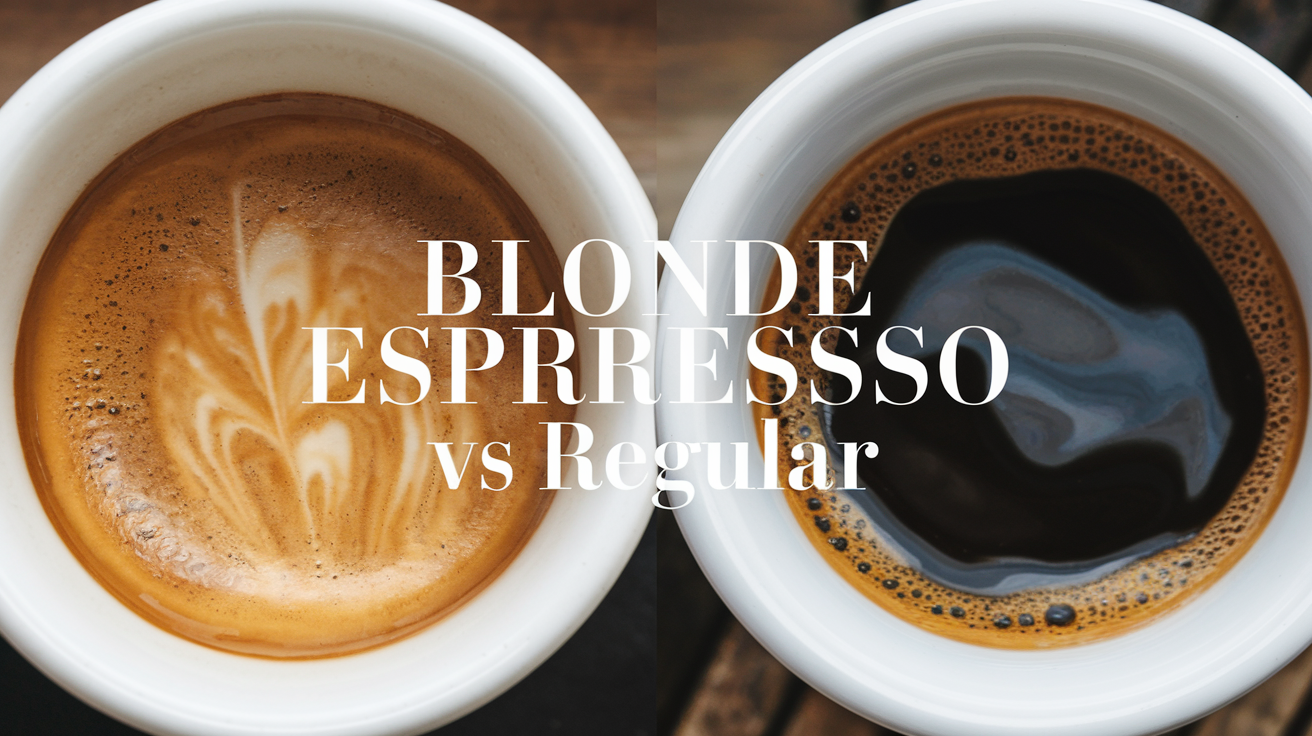
Blonde espresso is usually brighter, lighter-bodied, and less smoky than dark espresso. Dark espresso tends to have deeper roast flavors, such as cocoa, caramel, toasted nuts, or bittersweet chocolate.
The key difference comes from the roast. Longer roasting drives more moisture from the bean and creates more roast flavors. Shorter roasting preserves more of the bean’s original traits.
| Feature | Blonde espresso | Dark espresso |
|---|---|---|
| Roast color | Light brown | Dark brown |
| Common flavors | Citrus, fruit, flowers, grain | Cocoa, smoke, spice, dark caramel |
| Acidity | Often more noticeable | Often softer |
| Body | Light to medium | Medium to full |
| Roast bitterness | Usually lower | Often higher |
| Brewing challenge | Can taste sour if under-extracted | Can taste bitter if over-extracted |
These are broad patterns, not strict rules. A well-made dark roast may taste smooth and sweet. A poorly brewed blonde espresso may taste sharp and thin.
Is blonde espresso stronger?
“Strong” can mean several things. It may describe taste, body, bitterness, or caffeine. Blonde espresso may taste sharper because its acidity stands out. That does not always mean it has more caffeine or a higher caffeine concentration.
A dark roast can taste more intense because roasting creates strong bitter and smoky notes. A blonde roast can have a more vivid flavor even when the drink feels lighter.

What Does Blonde Espresso Taste Like?
Blonde espresso often tastes bright, sweet, and clean. Common tasting notes include:
- Lemon or orange
- Berries
- Stone fruit
- Honey
- Brown sugar
- Floral notes
- Toasted grain
- Light nuts
The exact taste depends on the coffee. Beans from different regions can taste very different, even at the same roast level.
Blonde espresso made from a high-elevation washed coffee may taste crisp and floral. A light-roast natural coffee may taste more fruit-forward. A blend may taste smoother and more balanced.
Why can blonde espresso taste sour?
A sour or sharp taste often means the coffee is under-extracted. Under-extraction happens when the water does not pull enough flavor from the ground coffee.
Common causes include:
- A grind that is too coarse
- Water that flows too quickly
- Water that is too cool
- Too little contact time
- A low brew ratio
Not every bright flavor is a flaw. Citrus-like acidity can be pleasant. Sourness usually feels harsh, thin, or mouth-puckering rather than sweet and lively.
Is blonde espresso less bitter?
It often has less roast bitterness than dark espresso. However, a blonde shot can still taste bitter if the coffee is over-extracted or roasted more deeply than the label suggests.
Bitter taste can come from:
- A grind that is too fine
- A shot that runs too slowly
- Excessive brew time
- Water that is too hot
- Coffee that is over-roasted
Taste matters more than color alone. Use the flavor of the shot to guide changes.
Does Blonde Espresso Have More Caffeine?
Blonde espresso does not always have more caffeine. The caffeine in a drink depends mainly on the coffee dose, serving size, bean blend, and brewing method.
Roasting changes bean density. Light-roasted beans are denser, while dark-roasted beans lose more mass and volume during roasting. As a result, the answer can change depending on whether you measure coffee by weight or by scoop.
- By weight: A light and dark roast use similar amounts of caffeine from the same beans when the dose is the same.
- By volume: A scoop of light roast may contain more beans because the beans are denser.
- By drink size: A larger latte or a double shot usually contains more caffeine than a smaller serving.
The roast label alone cannot tell you the exact caffeine amount. Coffee shops may also use different doses and blends.
For healthy adults, the U.S. Food and Drug Administration cites up to 400 milligrams of caffeine per day as an amount not generally linked with negative effects. Individual limits vary. Pregnancy, certain medicines, heart conditions, anxiety, and caffeine sensitivity may change what is suitable. If you have a health concern, ask a qualified health professional.

How to Brew Blonde Espresso at Home
Blonde espresso often needs a little more extraction than dark espresso. A useful starting point is slightly hotter water, a fine grind, and a shot that runs long enough to develop sweetness.
A practical starting recipe
For a standard home espresso machine, try:
- Coffee dose: 18 grams
- Espresso yield: 36 to 45 grams
- Water temperature: About 200 to 205°F
- Brew time: About 25 to 35 seconds
- Grind: Fine, adjusted to control flow
This is a starting point, not a fixed rule. The right recipe depends on the coffee, machine, grinder, basket, and freshness.
Step-by-step method
- Use fresh beans. Check the roast date when possible. Coffee often needs several days after roasting before it works well in espresso.
- Weigh the coffee. A scale gives better control than a scoop.
- Grind just before brewing. Light roasts can need a capable burr grinder because they are dense and hard.
- Distribute the grounds evenly. Uneven grounds can create fast channels for water.
- Tamp level and firm. The goal is a flat coffee bed, not a specific amount of force.
- Start the shot and weigh the output. Stop near your target yield.
- Taste the espresso. Change one variable at a time.
How to adjust the shot
| Taste or flow problem | Likely cause | First change |
|---|---|---|
| Sharp, sour, and thin | Under-extraction | Grind finer or increase brew time |
| Bitter, dry, or harsh | Over-extraction | Grind coarser or shorten the shot |
| Runs very fast | Grind too coarse or poor puck prep | Grind finer and improve distribution |
| Runs very slowly | Grind too fine or too much coffee | Grind coarser or lower the dose |
| Tastes bright but sweet | Balanced acidity | Keep the recipe or adjust only slightly |
| Tastes flat | Low freshness or poor extraction | Check bean age, temperature, and grind |
If the shot tastes sour but already runs slowly, the issue may not be grind size. The coffee may need a higher temperature, a longer ratio, or better puck preparation.
Making blonde espresso with milk
Milk softens acidity and can bring out sweetness. Blonde espresso works well in:
- Lattes
- Cappuccinos
- Flat whites
- Americanos
- Iced espresso drinks
For a milk drink, a slightly longer shot may help the coffee stay noticeable. For a straight shot, a shorter ratio may preserve more body. Taste both styles before changing the recipe too much.

Is Blonde Espresso Better Than Dark Espresso?
Neither roast is better for everyone. Blonde espresso is often a good fit if you enjoy fruit, citrus, floral notes, and a lighter body. Dark espresso may suit you better if you prefer smoky, bold, bitter, or chocolate-like flavors.
Choose blonde espresso when you want:
- A bright morning drink
- More visible fruit or floral flavor
- Less smoky roast taste
- A lighter espresso with milk
- A coffee that highlights bean origin
Choose dark espresso when you want:
- A heavy body
- Traditional roast flavor
- Low perceived acidity
- Chocolate or toasted notes
- A strong flavor in a large milk drink
Your water and equipment also matter. Hard water can make coffee taste dull or harsh. A grinder that produces many uneven particles can make a light roast taste both sour and bitter in the same cup.
Common Myths About Blonde Espresso
Myth 1: Blonde espresso is made from blonde-colored beans
Coffee beans are green before roasting. “Blonde” refers to the roast color after roasting. It does not describe a special bean color before roasting.
Myth 2: Blonde espresso is always sweet
Light roasts can show natural sweetness, but poor brewing can make them sour. Sweetness depends on the coffee and the extraction.
Myth 3: Blonde espresso is always stronger
Blonde espresso may taste bright or intense, but flavor strength is not the same as caffeine strength. Dose and serving size matter more.
Myth 4: Espresso must use dark-roasted beans
Any roast can be used for espresso. Dark beans are common because they traditionally produce a rich body and familiar flavor, but light-roast espresso is also widely brewed.
Myth 5: A lighter roast is always healthier
Roast level does not turn coffee into a health product. Caffeine response, added sugar, cream, and total intake matter more to most daily choices.
Frequently Asked Questions
Is blonde espresso the same as light roast?
Usually, yes. In most café settings, blonde espresso means a light-roast coffee prepared as espresso. The exact roast level can vary because roast labels are not standardized.
Can you use blonde espresso in a regular coffee maker?
Yes. You can brew the same beans as drip coffee, pour-over coffee, French press, or espresso. Change the grind and recipe for the brewing method. Espresso requires a fine grind and pressure, while drip coffee uses a coarser grind and longer contact time.
Why does my blonde espresso taste watery?
A watery shot may have a low dose, a fast flow, an overly large yield, or poor puck preparation. Weigh the coffee and liquid. Then try a finer grind or a shorter yield.
Is blonde espresso good in an iced latte?
Yes. Its bright flavor can stand out against cold milk and ice. A concentrated shot or double shot may work better if the drink contains a lot of milk.
Can I make blonde espresso without an espresso machine?
You can make a strong coffee with an AeroPress, moka pot, or manual brewer, but these methods do not produce the same pressure and texture as true espresso. Use a coffee labeled for espresso if you want a similar flavor profile, not because the beans require a special machine.
Final Takeaway
Blonde espresso is light-roasted coffee brewed as espresso. It often tastes brighter, fruitier, and less smoky than dark espresso, but it may need careful extraction to avoid sourness.
The roast does not determine the exact caffeine level. Dose, serving size, bean type, and brewing method matter more. If you prefer lively flavors, try blonde espresso as a straight shot, Americano, latte, or iced drink. Start with a measured recipe, taste the result, and adjust one brewing step at a time.



4 Comments