
The Miele Classic C1 vacuum cleaner is a compact, bagged canister vacuum made for homes in the United States. It is a strong fit for hard floors, low-pile rugs, stairs, and homes that prefer quiet, contained dust disposal. The right Classic C1 model depends on your floors: choose a suction-only version for hard floors, a turbo model for area rugs, or an electric-brush model for thick carpet and pet hair.
The Classic C1 is not a cordless stick vacuum or an upright. It uses a power cord, a flexible hose, replaceable dust bags, and separate floor tools. That design gives it steady suction and a large dust capacity, but it also means you must buy bags and store the canister.

What Is the Miele Classic C1?
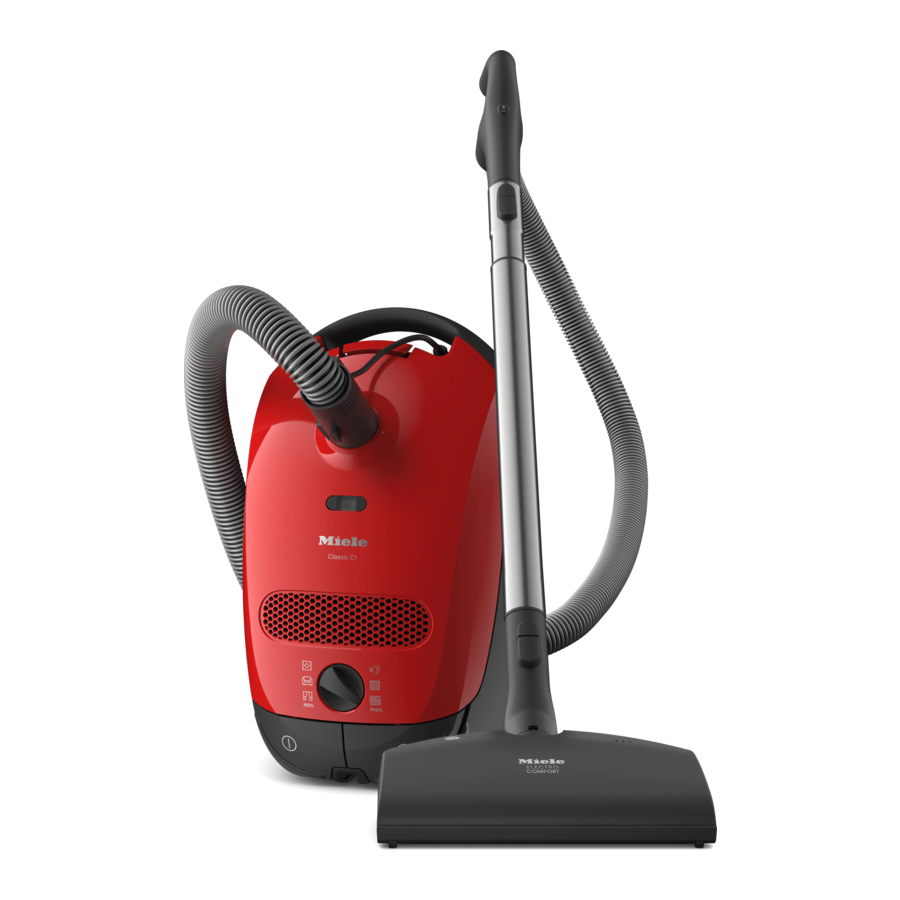
The Miele Classic C1 is a bagged canister vacuum cleaner. The motor sits in a small canister that rolls behind you. A hose connects the canister to a wand and floorhead.
The word “bagged” means dirt goes into a sealed disposable bag rather than a clear plastic dust bin. When the bag is full, you remove it and install a new one. This can reduce contact with dust during emptying.
Most U.S. Classic C1 models use Miele’s AirClean 3D Efficiency dust bags. Check the label on your machine before buying bags, filters, or tools. Miele models can look similar while using different parts.
Main parts
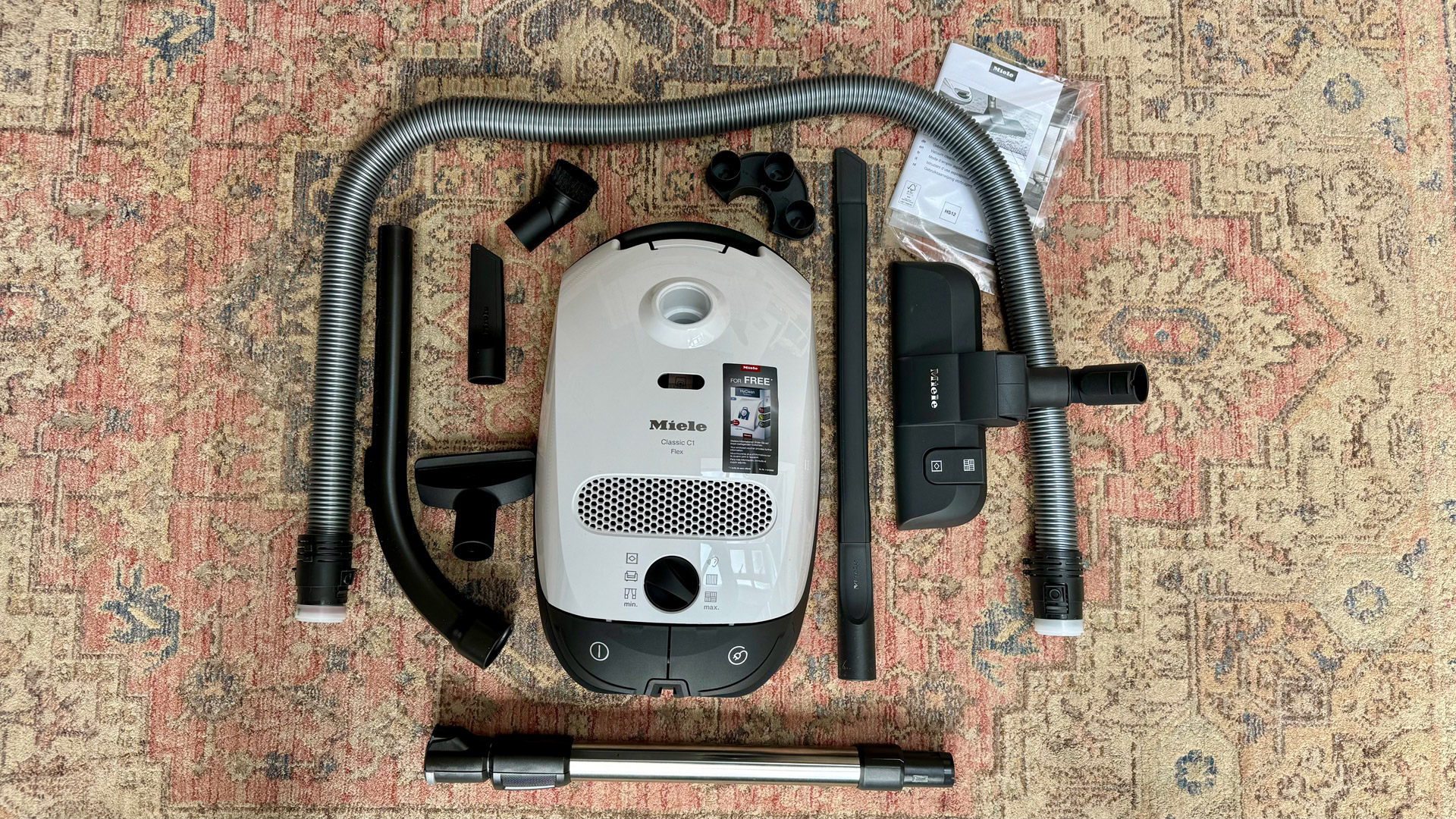
A typical Classic C1 includes:
- Canister body and motor
- Flexible suction hose
- Telescoping metal wand
- Floorhead
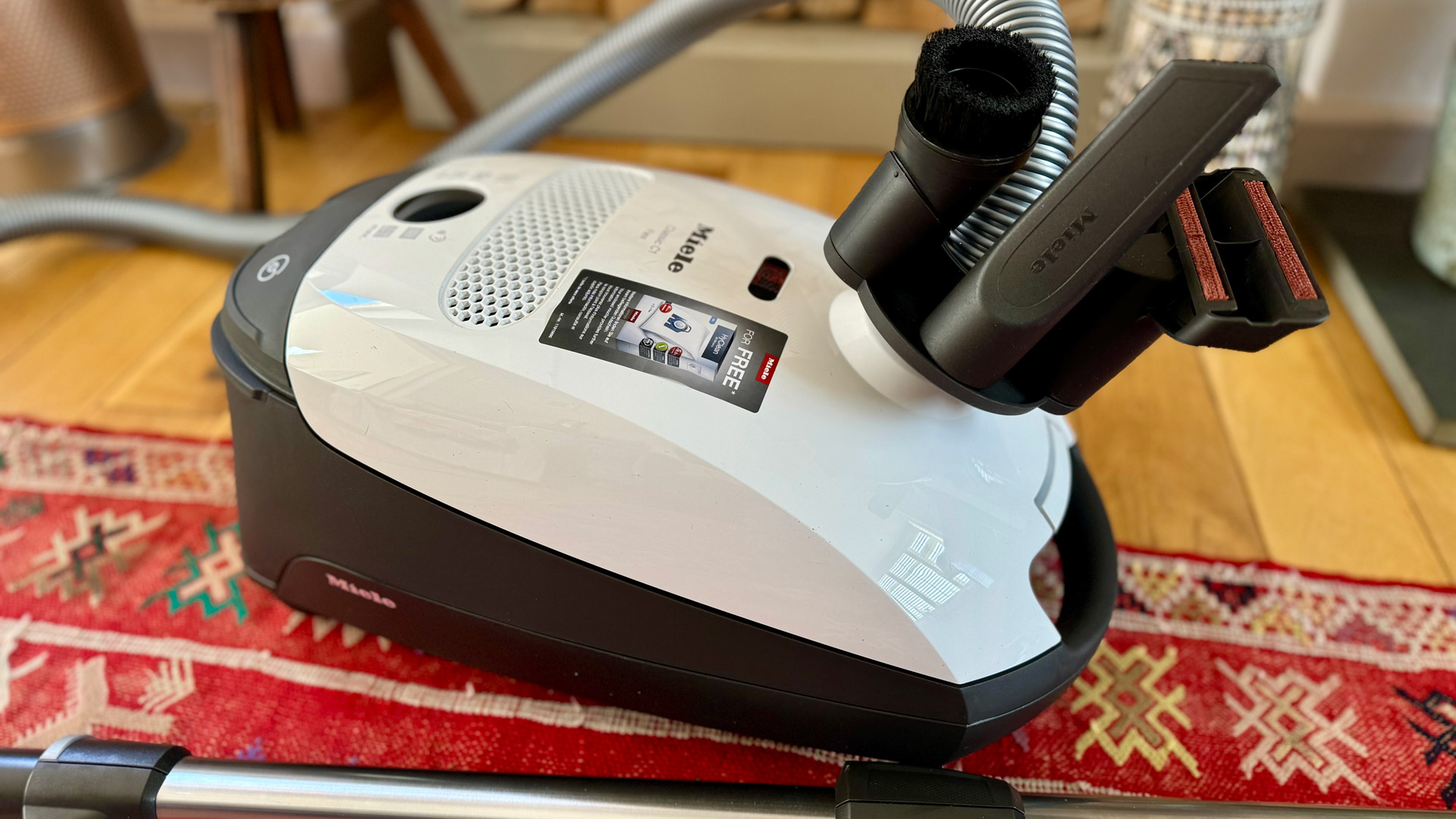
- Dusting brush
- Upholstery tool
- Crevice tool
- Disposable dust bag
- Motor protection filter
- Exhaust filter
The exact floorhead and filter can change by model. A suction-only floorhead is not the same as a powered carpet brush.
Which Classic C1 Model Should You Choose?
Choose the model based on your floor type and cleaning needs, not only on the name “Classic C1.”
| Home type | Better Classic C1 setup | Why |
|---|---|---|
| Mostly hardwood, tile, or laminate | Pure suction model | A soft floor tool can clean hard floors without a powered brush |
| Hard floors with some low-pile rugs | Turbo Team model | A turbine brush helps lift surface dirt from rugs |
| Thick carpet or heavy pet hair | Cat & Dog or another electric-brush model | A powered brush agitates carpet fibers more strongly |
| Stairs and small rooms | Any Classic C1 with the right tools | The light canister and hose are easy to move between steps |
| Allergy-sensitive home | Bagged model with a suitable exhaust filter | Sealed bags can limit dust exposure during disposal |
Classic C1 Pure Suction
The Pure Suction version is aimed at hard floors and low-pile surfaces. It usually comes with a floor tool designed for smooth flooring rather than a motorized carpet head.
This model may be the simplest and least costly choice if your home has wood, vinyl, tile, or laminate floors. It is less suitable for thick carpet because the basic floorhead may not groom deep fibers well.
Classic C1 Turbo Team
A Turbo Team model adds a turbine floorhead. The brush spins from the vacuum’s airflow. It does not need a separate electrical connection.
A turbo brush can improve cleaning on area rugs and low- to medium-pile carpet. It may not perform as well as an electric brush on dense carpet or large amounts of embedded pet hair.
Classic C1 Cat & Dog
Cat & Dog versions are built around pet-focused tools, often including an electrically powered brush. The powered brush can help remove hair from carpet and upholstery.
This does not mean the vacuum removes every allergen or replaces regular pet care. It also does not make the machine ideal for every floor. A rotating brush can scatter debris on some delicate hard floors if the tool is not designed for them.

Is the Classic C1 Good for Carpet and Pet Hair?
The Classic C1 can clean carpet well when you select the correct floorhead. The key difference is brush power.
A suction-only head relies mainly on airflow. It works well on smooth floors and some thin rugs. A turbo head uses airflow to spin a brush. An electric floorhead uses a separate motor to drive the brush, which can provide stronger agitation.
For carpet and pet hair, use this order:
- Match the floorhead to the carpet.
- Set the suction level so the tool moves smoothly.
- Make slow passes over hair-heavy areas.
- Clean the brush roll when hair builds up.
- Replace the bag before it becomes tightly packed.
What about hardwood floors?
The Classic C1 is well suited to sealed hardwood when used with a proper hard-floor tool. Keep grit from being dragged across the finish. Large debris should be picked up first if it could scratch the surface.
Do not assume every Classic C1 attachment is safe for every floor. A stiff rotating brush may be too aggressive for delicate surfaces. Follow the tool and flooring maker’s care instructions.
What about stairs?
The canister format can work well on stairs because you can place the vacuum on a stable lower step or floor and use the hose and wand. Keep the machine secure. Never let the canister fall or hang from the hose.
Use one hand to steady the wand and keep the hose clear of your feet. A compact handheld tool may still be easier for quick stair cleanups.

How to Set Up and Use a Classic C1
Before the first use, confirm that the bag, filters, hose, wand, and floorhead are seated correctly. A loose connection can reduce airflow and make the vacuum seem weak.
Basic setup
- Insert the hose into the canister until it locks.
- Attach the wand to the hose handle.
- Attach the correct floorhead.
- Check that a dust bag is installed.
- Plug the vacuum into a grounded U.S. wall outlet.
- Adjust the suction control for the surface.
- Start with slow, overlapping passes.
Use the lowest useful suction on delicate rugs, curtains, and upholstery. High suction can make some tools stick to the surface.
How to vacuum efficiently
Start at the edges of the room. Then work in straight, overlapping lines. Move the floorhead slowly enough to give airflow time to lift dirt.
Vacuum high areas before floors. Clean furniture, stairs, and corners before the main floor so falling dust is picked up last.
Do not use the vacuum to collect hot ashes, wet spills, sharp glass, flammable liquids, or fine construction dust unless the manual specifically allows it. A household vacuum is not a wet/dry shop vacuum.

Classic C1 Bags, Filters, and Maintenance
Regular maintenance protects airflow. A full bag, blocked filter, or tangled brush can make a powerful vacuum feel weak.
When should you replace the bag?
Replace the bag when the bag-full indicator shows a restriction or when suction drops after you rule out a clog. Do not wait until the bag is packed hard against the opening.
The actual replacement time depends on:
- Home size
- Cleaning frequency
- Pet hair
- Fine dust
- Carpet amount
- Bag capacity
- Whether the bag was used for a renovation cleanup
Use the correct Miele bag type listed for your exact U.S. model. Generic bags may fit poorly, leak, or restrict airflow.
Filter care
The Classic C1 has filters that need periodic replacement. Some filters may be changed at set intervals, while others depend on use and condition. Follow the manual for your model.
Do not wash a filter unless Miele states that it is washable. A wet or damaged filter can restrict airflow and harm the motor.
Brush-roll care
Turn off and unplug the vacuum before clearing a brush roll. Remove hair, thread, and string with scissors or a suitable tool. Do not cut the bristles.
If a powered brush makes an unusual noise, stops spinning, or smells hot, stop using it. Check for a jam only after disconnecting power.
Hose and wand care
A partial clog can occur in the floorhead, wand, hose, or canister inlet. Inspect each part in order. A broom handle should not be forced through the hose because it can puncture the hose or damage internal parts.
Classic C1 Troubleshooting Guide
Check simple airflow problems before assuming the motor has failed.
| Symptom | Likely causes | Safe first checks |
|---|---|---|
| Weak suction | Full bag, blocked filter, clog, leaking hose | Replace bag, inspect filters, check hose and floorhead |
| Vacuum shuts off | Overheating, blocked airflow, electrical fault | Turn it off, unplug it, let it cool, then check for blockage |
| Brush will not spin | Hair jam, belt or drive issue, tool connection problem | Unplug, clear brush, reconnect tool |
| Loud whistling | Air leak or obstruction | Check hose seals, bag opening, and attachments |
| Dust escapes | Wrong bag, damaged bag, loose filter, seal problem | Stop use and install the correct parts |
| Burning smell | Jammed brush, motor problem, electrical issue | Unplug at once and do not continue testing |
If suction is weak
Follow this sequence:
- Remove the floorhead and test suction at the hose.
- If suction is strong at the hose, inspect the floorhead.
- If suction is weak at the hose, check the bag and filters.
- Inspect the wand and hose for a blockage.
- Look for cracks or loose seals.
- Stop using the vacuum if the motor smells hot or sounds abnormal.
A full bag can reduce airflow even when it does not look completely full. Fine dust can also block the bag’s inner surface.
If the vacuum overheats
Turn the vacuum off and unplug it. Let it cool fully. Then check the bag, filters, hose, wand, and floorhead.
Do not keep turning the machine on to “see if it works.” Repeated operation with blocked airflow can worsen the fault. If the machine still overheats after basic checks, contact Miele or a qualified repair service.
Classic C1 vs. Upright and Cordless Vacuums
The Classic C1 has a different set of trade-offs from upright and cordless vacuums.
| Feature | Classic C1 canister | Upright vacuum | Cordless stick |
|---|---|---|---|
| Dust system | Disposable bag | Bag or dust bin | Usually dust bin |
| Power source | Wall outlet | Wall outlet | Rechargeable battery |
| Runtime | Not limited by battery | Not limited by battery | Limited by charge |
| Storage | Hose and canister need space | Upright body stores easily | Usually compact |
| Stairs | Hose can help | May be awkward | Often convenient |
| Pet-hair carpet work | Depends on floorhead | Often strong | Depends on model and battery |
| Dust disposal | Low-contact bag removal | Varies | Emptying can release dust |
The Classic C1 makes the most sense when you want steady corded power, a bagged system, and a canister that can reach under furniture. A cordless model may be better for quick spills, small apartments, or users who dislike plugging in.
An upright may be easier for large carpeted areas. A canister may be easier for mixed floors, stairs, furniture, and narrow spaces. There is no single best body style for every U.S. home.

Important Buying Checks Before You Order
Check the exact model number and included tools. Product names can be similar, while the floorhead and filter system may differ.
Before buying a new or used Classic C1, confirm:
- It is a U.S.-market model with the correct voltage and plug.
- The included floorhead matches your flooring.
- Replacement bags are available for that model.
- Filters are available from a reliable source.
- The hose, wand, and tools are included.
- The cord retracts correctly.
- The bag door closes and seals.
- The brush rolls spin freely, if included.
- There is no burning smell or motor rattle.
- The seller states the return and warranty terms.
Do not import a lower-voltage or region-specific version without checking electrical compatibility. A plug adapter does not change voltage.
For a used vacuum, ask for a photo of the model label and the bag compartment. Also ask whether the motor, cord reel, hose, and powered brush have been tested.

Common Mistakes to Avoid
Using the wrong floorhead
A turbo head is not the same as an electric head. A suction-only tool may leave more hair in thick carpet. Match the tool to the floor.
Waiting too long to change the bag
A packed bag can reduce airflow and raise motor strain. Change it when the indicator shows a restriction or suction falls.
Washing non-washable filters
Moisture can damage filters and create airflow problems. Replace filters unless the manual clearly permits washing.
Vacuuming wet material
The Classic C1 is a dry household vacuum. Wet debris can damage the bag, filters, and motor.
Pulling the canister by the hose
The hose is for airflow, not lifting or towing the machine over stairs. Use the handle and keep the canister stable.
Ignoring a burning smell
Stop the vacuum, unplug it, and inspect for a jam only when safe. Continued use can turn a small brush problem into a motor or electrical repair.

Frequently Asked Questions
Does the Miele Classic C1 use bags?
Yes. Classic C1 models use disposable vacuum bags. The exact bag type depends on the model, so confirm the model number before buying replacements.
Is the Classic C1 good for allergies?
A bagged vacuum can reduce exposure to collected dust during disposal. Allergy performance also depends on the filter, seals, cleaning habits, and the condition of the machine. It should not be treated as a medical device.
Can the Classic C1 vacuum pet hair?
Yes, but performance depends on the floorhead. A model with a powered electric brush is generally more suitable for heavy pet hair in carpet than a suction-only model.
Can I use a Classic C1 on hardwood floors?
Yes, use the appropriate hard-floor tool and avoid dragging grit across the finish. Follow the flooring manufacturer’s care instructions.
How often should I replace Classic C1 filters?
The correct schedule depends on the filter type, model, and use. Follow the owner’s manual rather than using one fixed schedule for every Classic C1.
Why is my Classic C1 losing suction?
The most common checks are the bag, filters, hose, wand, floorhead, and seals. Test suction at the hose to determine whether the blockage is in the vacuum body or the attachment path.
Final Recommendation
The Miele Classic C1 vacuum cleaner is a sensible choice for U.S. households that want a compact, corded canister with a bagged dust system. Pick a suction-only version for mostly hard floors, a Turbo Team model for rugs and light carpet, or a Cat & Dog model with an electric brush for thicker carpet and pet hair.
Before buying, verify the exact model, included floorhead, bag type, voltage, and replacement-filter availability. Those details matter more than the Classic C1 name alone.




One Comment