Kirby vacuum cleaner bags are disposable filter bags made for Kirby upright vacuums sold in the United States. The right bag depends on your Kirby model, bag system, and the connection at the end of the fill tube. Most newer Kirby models use a disposable paper filter bag with a cardboard collar, but bags are not automatically interchangeable across every Kirby vacuum.
To choose correctly, find the model name on your vacuum, compare the bag design with the product description, and buy from Kirby or a seller that clearly lists model compatibility. Replace the bag when it is full, airflow drops, the vacuum smells dusty, or the bag shows damage.

Which Kirby Vacuum Bags Fit Your Model?
The best way to match Kirby vacuum bags is to identify the exact model first. Model names can look similar, and some third-party bags use broad terms such as “fits most Kirby vacuums.”
Common Kirby upright models include:
- Kirby Avalir and Avalir 2
- Kirby Sentria and Sentria II
- Kirby Diamond
- Kirby Ultimate G
- Kirby G6
- Kirby G5
- Kirby Generation 3 and earlier models
Many newer Kirby uprights use a bag often marketed as a Style F, Type F, or HEPA filtration bag. However, naming can vary between sellers. Some listings group several Kirby models together, while others list only the models confirmed by the manufacturer.
Older Kirby machines may use a different bag setup or a different fill-tube connection. Do not rely on the phrase “universal Kirby bag” unless the listing gives a clear fit list and the bag collar matches your vacuum.
How to identify your Kirby vacuum
Look for the model label in one of these places:
- On the front or side of the main vacuum body.
- Near the handle or power cord.
- On the metal plate under the vacuum.
- In the owner’s manual.
- On the original purchase or service paperwork.
If the model label is missing, compare the bag chamber, cardboard collar, and fill tube with the photos in the bag listing. When these parts do not match, contact Kirby support or a local authorized service center before ordering several bags.
A simple compatibility check
Before buying, confirm all four points:
| Check | What to look for |
|---|---|
| Model | Your exact Kirby model is listed |
| Bag collar | The cardboard or plastic opening matches |
| Fill tube | The tube enters the bag in the same way |
| Bag chamber | The bag is long and wide enough to sit without folds |
A bag that is slightly different in shape may not seal well. Poor sealing can let dust enter the outer bag compartment and reduce the benefit of the filter bag.

Kirby HEPA and Micron Filter Bags Explained
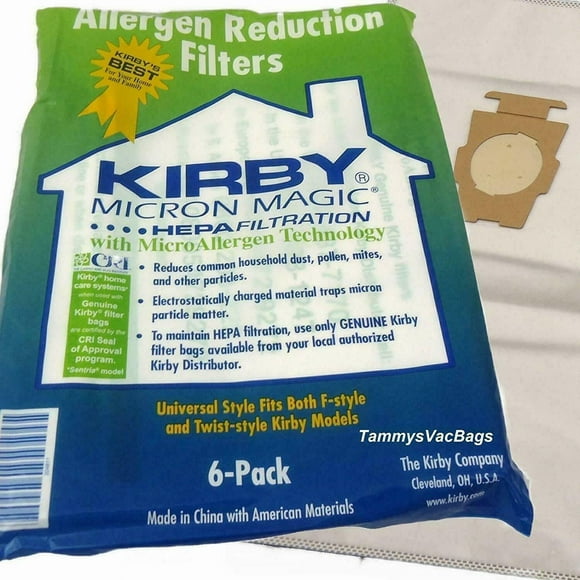
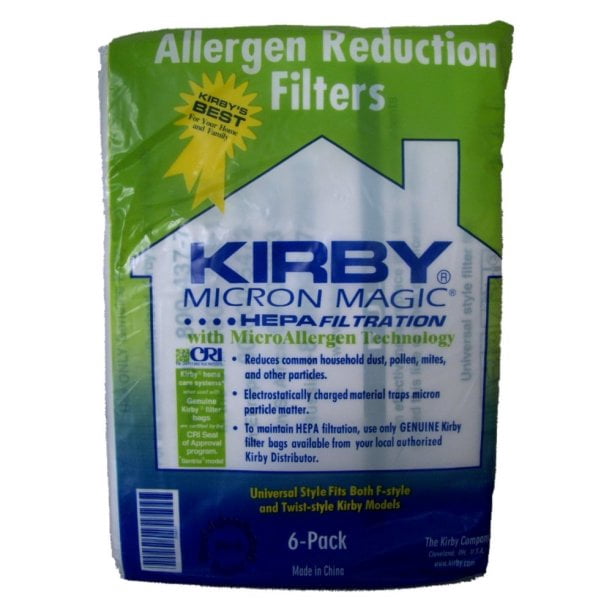
Kirby HEPA or micron filter bags are designed to trap fine dust inside the disposable bag. Kirby has sold bags described with terms such as Micron Magic and HEPA filtration for several upright models. The exact bag name may depend on the model and packaging version.
The word “HEPA” needs care. A HEPA-rated bag refers to the bag’s filtration claim or construction. It does not automatically mean that the complete vacuum system has been independently certified as a sealed HEPA vacuum.
What the bag does
A Kirby vacuum bag performs three main jobs:
- It holds dirt and debris.
- It filters air as air moves through the bag.
- It helps keep fine dust away from the motor and exhaust path.
A full bag can restrict airflow. The motor may still run, but the vacuum can pick up less dirt. A blocked bag can also make the machine sound different or create a dusty odor.
Paper bags versus reusable bags
Disposable paper bags are the standard option for many Kirby upright vacuums. They are simple to replace and reduce the need to empty dusty contents by hand.
Reusable cloth or aftermarket bags may cost less over time, but they can create trade-offs:
- They may not match the original collar.
- Their filtration level may not be documented.
- They can be harder to clean fully.
- Emptying them can release dust into the room.
- A poor fit can allow dirt to bypass the bag.
For homes with asthma, allergies, or strong dust concerns, a well-fitting disposable bag is usually the simpler choice. This is a practical recommendation, not a claim that every branded bag performs the same under every test condition.
Does a Kirby bag remove allergens?
A filter bag can capture dust and particles that enter the vacuum. It cannot remove allergens that remain on furniture, in the air, or in areas the vacuum does not reach.
To reduce dust release:
- Keep the bag sealed during removal.
- Avoid shaking a full bag indoors.
- Wash your hands after handling it.
- Replace a damaged outer bag.
- Follow the vacuum manual for belt, brush roll, and filter care.
How to Replace a Kirby Vacuum Cleaner Bag
Replacing a Kirby bag is usually a short task. The main risks are using the wrong bag, leaving the machine connected to power, or forcing the collar onto the fill tube.
What you need
You need:
- A replacement Kirby vacuum bag made for your model
- A trash can
- A clean, dry work area
- The owner’s manual if the bag system is unfamiliar
Step-by-step replacement
-
Turn off the vacuum and unplug it.
Do not replace the bag while the motor is running or the cord is connected. -
Let the vacuum cool.
This is especially useful if the machine has been running for a long time. -
Open the outer bag or bag compartment.
Follow the release method shown in the manual. Do not pull hard on the fabric or zipper. -
Remove the full bag carefully.
Hold the bag by its collar or support area. Keep the opening upright where possible. -
Seal or close the old bag if the design allows it.
Place it directly into a household trash bag. Do not compost it unless the product packaging specifically says it is suitable. -
Inspect the fill tube and bag holder.
Remove loose debris with a dry cloth. Do not pour water into the tube or motor area. -
Install the new bag.
Slide the collar onto the fill tube or holder until it is fully seated. The bag should hang freely without a sharp fold. -
Close the outer bag or compartment.
Check that the zipper, latch, or cover is fully closed. -
Run a short test.
Listen for unusual noise and check that the bag does not move out of place.
Signs of a correct installation
A correctly installed bag should:
- Sit straight inside the outer bag.
- Stay attached when the vacuum moves.
- Inflate gradually during use.
- Show no dust leaking around the collar.
- Allow normal airflow and sound.
If the vacuum suddenly loses suction after a new bag is installed, turn it off and recheck the collar, bag position, and fill tube.

When Should You Replace a Kirby Vacuum Bag?
Replace a Kirby vacuum cleaner bag when it is full or when airflow begins to drop. Waiting until the bag is packed tightly can make the vacuum work harder and may spread dust during removal.
Useful replacement signs include:
- The bag looks full or firm.
- Pickup is weaker than normal.
- The vacuum makes a higher-pitched sound.
- Dust or dirt appears around the bag collar.
- A musty or dusty smell comes from the machine.
- The bag has a tear, loose seam, or damaged opening.
- The outer bag inflates less than usual.
There is no single replacement schedule for every U.S. home. A home with pets, carpet, renovation dust, or several occupants may fill a bag faster than a small home with mostly hard floors.
A simple usage estimate
You can estimate annual bag use with this formula:
Bags per year = average bags used per month × 12
For example, if a household uses two bags each month:
2 × 12 = 24 bags per year
This is only a planning estimate. Heavy pet hair, fine powder, and long carpet-cleaning sessions can fill bags much faster. Never use the estimate as a reason to keep using a visibly full or damaged bag.
Fine dust needs extra care
Fine materials such as drywall dust, fireplace ash, flour, and construction powder can clog a filter bag quickly. Some materials may also be unsafe to vacuum with a household machine.
Do not vacuum hot ash, wet debris, liquids, explosive dust, or hazardous materials unless the vacuum’s instructions specifically allow it. For renovation work, use equipment made for that material and follow the product safety guidance.

Why Is My Kirby Vacuum Losing Suction After a Bag Change?
A new bag does not always solve weak suction. The cause may be the bag, hose, brush roll, belt, or an obstruction elsewhere in the vacuum.
Check the following in order:
1. The bag collar is not fully seated
A loose collar can leak air. Remove power, open the bag area, and make sure the collar is pushed fully onto the fill tube.
2. The bag is folded or blocked
A twisted bag may not expand. Smooth it gently so air can move through the full bag surface.
3. The wrong bag is installed
A bag that looks close but has the wrong opening may restrict airflow or fail to seal. Compare it with the old bag and verify the model list.
4. The fill tube is clogged
Turn off and unplug the vacuum. Look for compacted debris in the tube. Never push a sharp tool deep into the vacuum, where it could damage the tube or motor area.
5. The hose or nozzle is blocked
Check the hose, nozzle, and wand for hair, paper, or other debris. Remove blockages only when the machine is disconnected from power.
6. The brush roll or belt has a problem
A worn belt or jammed brush roll can reduce cleaning performance even when the bag is empty. Stop using the vacuum if you smell burning rubber, see smoke, or hear grinding.
7. The motor or seal needs service
If the vacuum still loses suction after these checks, an authorized repair center can inspect the motor, seals, fan, and internal passages.
Do not keep operating a vacuum that overheats, sparks, gives off a burning smell, or trips a circuit breaker. Unplug it and arrange professional service.
Genuine Kirby Bags Versus Aftermarket Bags
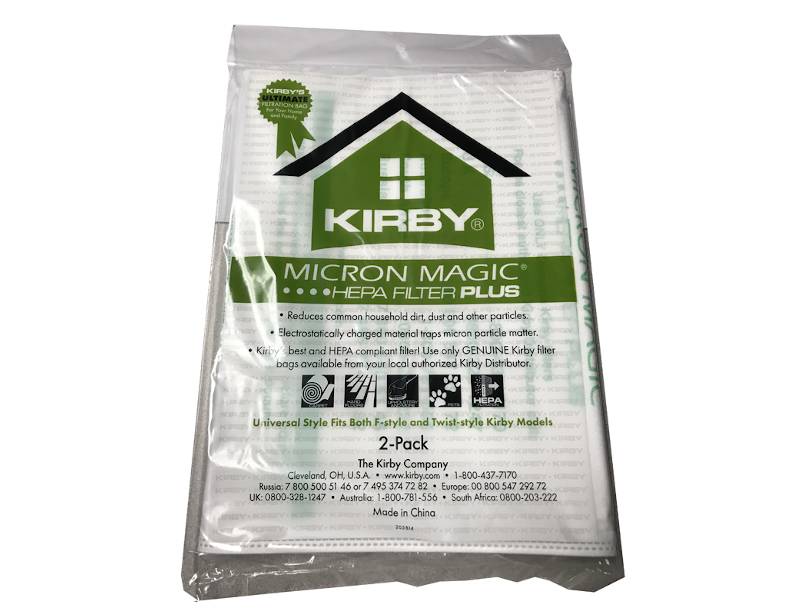
Genuine Kirby bags are made for specific Kirby bag systems and are usually sold with model information on the package. Aftermarket bags may cost less, but quality and fit can vary by brand.
The right comparison is not only price per package. Compare:
- Cost per bag
- Confirmed model fit
- Collar design
- Bag size
- Filtration claims
- Packaging quality
- Return policy
- Seller reputation
- Availability in the United States
Cost per bag calculation
Use this formula:
Cost per bag = package price ÷ number of bags
For example, a hypothetical 12-bag package priced at $24 would cost:
$24 ÷ 12 = $2 per bag
This calculation does not prove that one bag performs better. It only gives a fair way to compare package sizes.
When an aftermarket bag may be reasonable
An aftermarket Kirby bag may suit you when:
- The exact model fit is clearly stated.
- The collar matches the original.
- The seller explains the filtration claim.
- The product has a useful return policy.
- Reviews do not report repeated fit or tearing problems.
Choose a genuine bag when fit, documented compatibility, or dust control matters more than the lowest initial price.
Avoid any listing that:
- Says only “fits all Kirby vacuums.”
- Uses stock photos with no collar detail.
- Does not name compatible models.
- Makes medical or allergy claims without evidence.
- Has no clear return information.
- Does not explain whether the bag is disposable or reusable.

Common Mistakes When Buying Kirby Vacuum Bags
The most common mistake is ordering by appearance alone. Two bags may look similar while using different collars or mounting systems.
Avoid these errors:
- Buying by vacuum color instead of model name.
- Assuming every Generation model uses the same bag.
- Ignoring the bag collar shape.
- Using a full bag until airflow nearly stops.
- Reusing a torn or wet paper bag.
- Installing a bag backward or off-center.
- Buying a large pack before testing one package.
- Treating “HEPA” as proof that the full vacuum is sealed and certified.
- Using a household vacuum for ash, liquids, or hazardous dust.
- Storing bags in a damp garage or basement.
Store replacement bags in a dry place. Paper can weaken when exposed to moisture, and damp storage may cause the bag to tear during use.
Frequently Asked Questions About Kirby Vacuum Cleaner Bags
What type of bag does a Kirby vacuum use?
Many newer Kirby upright models use disposable filter bags commonly listed as Style F or Type F. The exact fit depends on the model and bag system. Check the model label and the manufacturer’s compatibility list before buying.
Are Kirby vacuum bags universal?
No. Some bags fit several Kirby models, but no bag should be assumed to fit every Kirby vacuum. Older models may use a different connection or bag design.
Can I use a Kirby vacuum without a bag?
Do not operate a bag-designed Kirby upright without the correct bag installed. The bag helps collect debris and filter air. Running the machine without it may allow dirt to enter areas that can damage the vacuum.
How often should I change a Kirby bag?
Change it when it is full, airflow drops, the vacuum smells dusty, or the bag is damaged. The interval depends on home size, floor type, pets, and how often you vacuum.
Can I empty and reuse a disposable Kirby bag?
Disposable paper bags are intended for one-time use. Emptying them can damage the seams or release fine dust. Use a new bag unless your specific vacuum system and bag are designed for reuse.
Where can I buy Kirby vacuum cleaner bags in the United States?
You can check Kirby’s official sales and support channels, authorized dealers, vacuum repair shops, and established online retailers. Verify the model, collar, seller, and return policy before ordering.
Final Recommendation
For most U.S. Kirby owners, the safest buying process is simple: identify the exact model, match the bag collar and fill tube, and choose a bag with clear compatibility information. Genuine Kirby bags provide the most direct fit path, while aftermarket bags can be a reasonable alternative when the model match and construction are clearly documented.
Replace the bag before it becomes tightly packed, and stop using the vacuum if it overheats, sparks, smells burnt, or leaks dust. If the model is unclear, take a photo of the vacuum label and old bag to a Kirby dealer or qualified vacuum repair shop before purchasing a large supply.