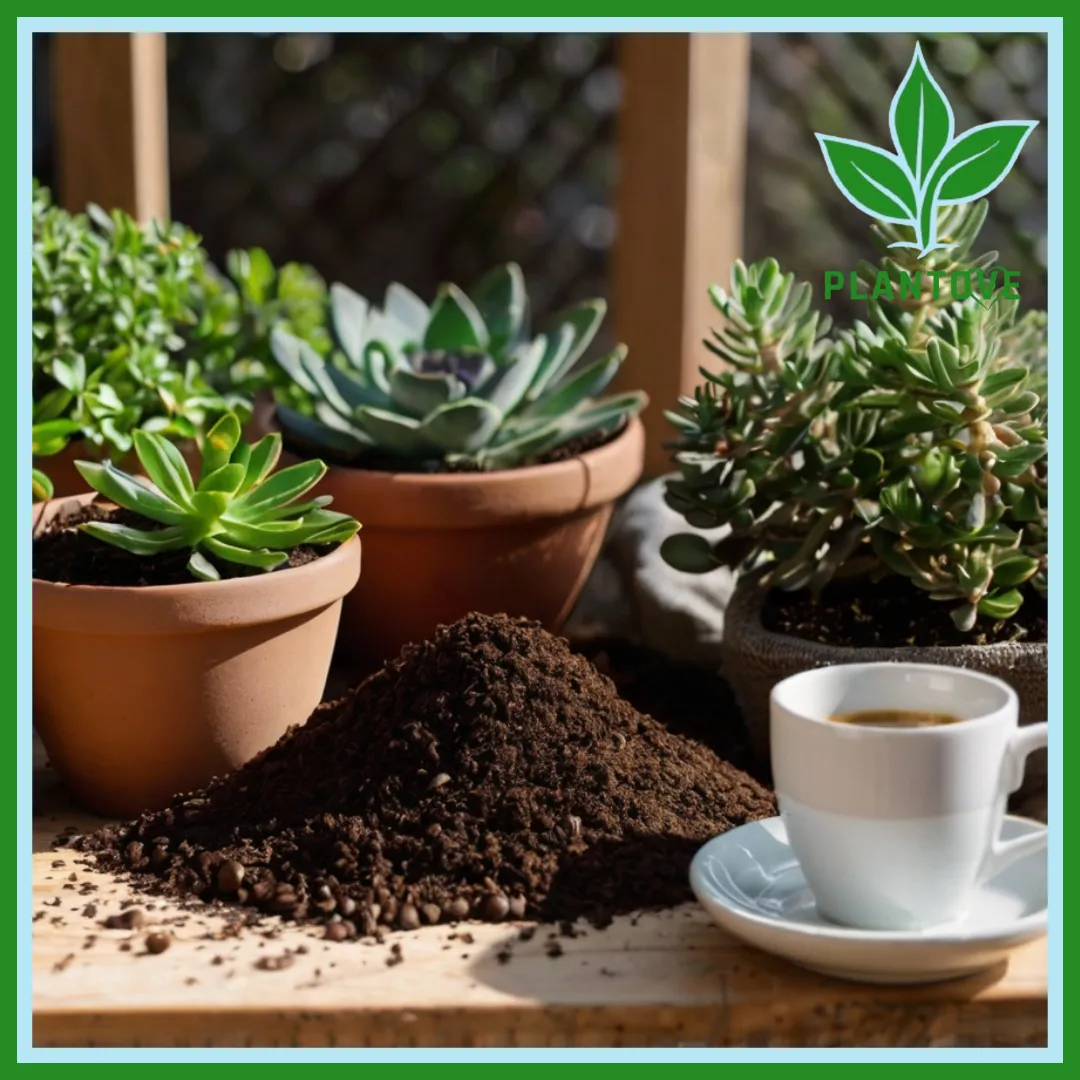
Coffee grounds can help a compost pile, but they are not a good match for every plant. Seedlings, plants that need dry soil, and many Mediterranean herbs may struggle when coffee grounds are added in thick layers or mixed into the soil. Fresh grounds pose the greatest risk because they contain more caffeine and other compounds than used grounds.
Used coffee grounds are not strongly acidic after brewing. They are usually close to neutral, so they will not reliably lower garden soil pH. The safest use is to add small amounts to compost or spread a very thin layer over well-drained soil.

Plants That May Not Like Coffee Grounds
The plants below may perform poorly when coffee grounds are used often, in large amounts, or as a thick mulch. The problem is usually not the plant name alone. Soil texture, drainage, moisture, coffee type, and the amount used all matter.
| Plant or group | Why coffee grounds may cause trouble | Safer approach |
|---|---|---|
| Seedlings and seeds | Fresh grounds may slow germination and root growth | Keep grounds out of seed-starting mix |
| Lavender | Prefers lean, dry, well-drained soil | Use gravel mulch or plain compost instead |
| Rosemary | Can suffer in wet or compact soil | Keep soil gritty and allow it to dry |
| Thyme | Prefers low fertility and sharp drainage | Avoid thick organic mulch |
| Oregano | Does best in sunny, fairly dry soil | Add only finished compost, if needed |
| Sage | Often dislikes wet roots and rich soil | Use a light, open soil mix |
| Cacti and succulents | Grounds can hold moisture and reduce air spaces | Use a mineral-based succulent mix |
| Alpine and rock-garden plants | Often need lean, fast-draining soil | Use gravel, grit, or a low-organic mix |
| Plants in containers without drainage | Grounds can add bulk and retain water | Keep grounds out unless composted first |
| Young transplants | Sensitive roots can react to salts or caffeine | Wait until plants are established |
This does not mean a single spoonful will kill these plants. The main risk comes from repeated use, heavy layers, poor drainage, or fresh grounds placed near roots.
Mediterranean herbs
Lavender, rosemary, thyme, oregano, and sage come from regions with sunny weather and soils that drain quickly. They usually need less water and fertilizer than leafy vegetables.
A thick layer of coffee grounds can work against those needs. It may hold water near the crown, reduce air in the soil, and add more organic matter than the plant can use. In wet parts of the United States, such as the Pacific Northwest or the humid Southeast, this risk may be greater.
Cacti and succulents
Cacti and succulents need air around their roots. Coffee grounds can become dense when wet, especially in a small pot. They may also encourage a gardener to water more often because the surface stays dark and moist.
Do not use coffee grounds as a top dressing for most succulents. A thin layer of gravel or a suitable mineral mulch is a better fit.
Seeds and young plants
Fresh coffee grounds can interfere with germination in some plants. They may also slow early root development. Young plants have small root systems and less ability to cope with changes in moisture, salts, or soil structure.
Keep both fresh and spent grounds out of seed trays. Use a sterile seed-starting mix instead.

Why Coffee Grounds Can Harm Some Plants
Coffee grounds can cause problems through several different pathways. Caffeine, excess moisture, poor soil structure, and overuse are usually more important than acidity.
Fresh grounds contain more active compounds
Fresh coffee grounds have not been brewed. They may contain more caffeine and other compounds that can affect seed germination and plant growth.
Used grounds still contain some caffeine, but brewing removes much of it. Used grounds are therefore less likely to cause harm than fresh grounds. They are not completely inert, however.
Never spread a thick layer of fresh grounds around plants. Add fresh grounds to a compost pile instead, where they can mix with leaves, yard waste, and other materials.
Grounds can form a dense layer
Fine grounds can pack together when wet. A thick layer may act like a crust over the soil. This can:
- Reduce air movement into the root zone
- Slow water from reaching the soil below
- Keep the surface wet for too long
- Make it harder for seedlings to emerge
- Encourage mold on the soil surface
A thin, mixed layer behaves differently from a deep blanket. The amount and method matter.
Coffee grounds are not a complete fertilizer
Coffee grounds contain nitrogen and small amounts of other nutrients, but they do not provide a balanced fertilizer for most garden plants. Nitrogen in the grounds is mostly in organic form and must be broken down by microbes before plants can use it.
When large amounts of high-carbon or fine organic material are mixed into soil, microbes may temporarily use available nitrogen while they decompose it. This can leave less nitrogen for plants for a short time.
Coffee grounds should not replace a soil test, compost, or a fertilizer chosen for the crop.
They may add soluble salts
Coffee grounds can contain soluble salts and minerals. The amount varies with the coffee, brewing method, and how the grounds are handled.
A small amount is rarely a concern in garden soil with rain and good drainage. Repeated use in a pot can allow salts to build up. Container plants are more vulnerable because the same small volume of soil holds everything added to it.

Used Coffee Grounds vs. Fresh Coffee Grounds
The difference between fresh and used grounds is central to safe use.
| Type | Main concern | Recommended use |
|---|---|---|
| Fresh grounds | More caffeine and stronger growth-inhibiting compounds | Compost only |
| Used grounds | Less caffeine, but still fine-textured and nutrient-limited | Small amounts in compost or on soil |
| Grounds mixed into finished compost | More stable texture and lower risk of a dense layer | Best garden use |
| Coffee filters | Usually compostable if made from plain paper | Add with grounds after checking for plastic or coatings |
Used grounds are generally safer, but “safer” does not mean “use without limits.” Do not place a deep pile around a plant because the grounds have already been brewed.
A practical rule is to treat grounds as a small ingredient, not as the main soil amendment. Mix them with compost, shredded leaves, or other coarse organic matter.
How to Use Coffee Grounds Without Hurting Plants
The safest method is to compost coffee grounds before using them. If you apply used grounds directly, use a very thin layer and keep it away from plant stems.
Method 1: Add grounds to compost
Coffee grounds are often treated as a “green” compost material because they contain nitrogen. Balance them with “brown” materials such as:
- Dry leaves
- Shredded paper
- Untreated cardboard
- Small wood chips
- Straw
Mix the grounds through the pile. Do not create a solid pocket of wet grounds. A mixed pile breaks down more evenly and is less likely to develop a sealed, slimy layer.
Finished compost should look dark and crumbly. It should smell earthy rather than sour or strongly like coffee.
Method 2: Mix a small amount into garden soil
If you use used grounds directly, mix them into the top layer of soil rather than leaving them in a thick mat. Keep the material away from stems and crowns.
Do not use this method in heavy clay soil, waterlogged beds, or pots with poor drainage. Compost, leaf mold, or coarse organic matter may improve soil structure more reliably.
Method 3: Use coffee grounds around plants that tolerate organic matter
Many established vegetables, shrubs, and ornamental plants can tolerate a small amount of used grounds when the soil drains well. Even then, the grounds should not be the only mulch or fertilizer.
Use a thin layer, observe the plant, and stop if growth slows or the soil becomes crusted. Gardening advice that works in a large outdoor bed may not work in a 10-inch container.

How Much Coffee Ground Is Too Much?
There is no single safe amount for every garden. The right limit depends on soil type, drainage, plant age, container size, and whether the grounds are fresh or used.
Use these practical limits:
- Seed trays: Do not add coffee grounds.
- New transplants: Avoid placing grounds in the planting hole.
- Small containers: Compost the grounds first, or skip them.
- Succulents and Mediterranean herbs: Avoid direct application.
- Outdoor beds: Use a thin, mixed layer rather than a solid cover.
- Compost piles: Add grounds as one part of a varied mix.
A layer that looks like mulch is often too thick if it is made only of fine coffee grounds. Mulch should allow water and air to move through the soil. Coarse materials such as shredded leaves or wood chips usually do this better.
Signs That Coffee Grounds Are Causing a Problem
Coffee grounds may be involved if several of these signs appear after repeated use:
- Seeds fail to sprout
- New leaves become small or pale
- Soil stays wet longer than usual
- Water runs off instead of soaking in
- A hard crust forms on the soil surface
- Mold grows on the top layer
- Plant stems remain weak near the soil line
- Roots smell sour when examined
- A potted plant wilts even though the soil is wet
These signs have many possible causes. Overwatering, poor light, root disease, compacted soil, pests, and nutrient shortages can look similar.
What to do if a plant is struggling
- Remove any thick layer of grounds from the soil surface.
- Check whether the pot or bed drains freely.
- Let the soil dry to the level required by the plant.
- Avoid adding more coffee grounds or fertilizer while you assess the problem.
- For a container plant, repot into fresh, well-drained mix if the soil is compacted or smells sour.
- Check roots for dark, soft, or foul-smelling tissue.
- Use a soil test before adding nutrients to an outdoor bed.
Do not add lime simply because coffee grounds were used. Used grounds are not a dependable way to make soil acidic, and lime can create a new pH problem.

Do Coffee Grounds Make Soil Acidic?
Used coffee grounds usually do not acidify soil in a dependable way. Brewing removes many water-soluble compounds, and the final pH varies by coffee type and preparation.
Fresh grounds may be more acidic than used grounds, but they are still a poor tool for managing soil pH. Soil pH changes slowly and depends on the soil’s natural buffering capacity.
If a plant needs acidic soil, test the soil first. Then use an amendment suited to the test result and the crop. Blueberries, azaleas, and rhododendrons need more specific soil conditions than coffee grounds can provide.
Coffee grounds can go into compost used around acid-loving plants, but compost does not guarantee a low soil pH. A soil test remains the better guide.
Do Coffee Grounds Keep Pests Away?
Coffee grounds are often promoted as a way to repel slugs, ants, cats, or other pests. The evidence is not strong enough to treat grounds as a reliable pest-control method.
A garden may look better after grounds are added for other reasons, or pests may simply move for a short time. The result is not the same as proven control.
Use methods matched to the pest. Examples include barriers for slugs, exclusion netting for some insects, and approved controls used according to the product label. Never apply coffee grounds to replace a needed treatment for a serious pest outbreak.
Common Mistakes to Avoid
Using fresh grounds as mulch
Fresh grounds are more likely to contain caffeine and compounds that can affect germination. Compost them instead.
Covering the soil with a thick layer
A deep layer can become compacted and slow water movement. Mix a small amount into compost, or use a coarser mulch.
Putting grounds in the planting hole
The planting hole should give roots room, air, and suitable soil contact. A pocket of grounds can hold water and create an uneven nutrient zone.
Adding grounds to every houseplant
Indoor pots have limited drainage and little rainfall to wash out salts. Many houseplants do better with a tested potting mix and a complete fertilizer used as directed.
Assuming the smell means the soil is improved
Coffee odor does not show that the soil has gained useful nutrients. Plant response, drainage, soil structure, and test results matter more.
Treating coffee grounds as fertilizer
Grounds can contribute organic matter and some nitrogen, but they do not meet the full nutrient needs of most plants. Use compost or fertilizer based on the plant and soil condition.
Frequently Asked Questions
What plants like coffee grounds?
Many established plants may tolerate small amounts of used grounds in compost or well-drained soil. Leafy crops and some vegetables are often mentioned, but tolerance depends on the soil and application rate. Coffee grounds are not a special fertilizer for any plant.
Can I put coffee grounds around tomatoes?
You can add a small amount of used grounds to compost used around tomatoes, but do not rely on grounds to feed the plants or prevent disease. Tomatoes need adequate sunlight, water, and balanced nutrients. Keep the soil loose and avoid a thick ground layer.
Are coffee grounds good for roses?
Roses may tolerate used grounds mixed into compost, but coffee grounds do not replace rose fertilizer or mulch. Apply them sparingly and keep the material away from the canes.
Can coffee grounds kill plants?
Fresh grounds or thick layers of used grounds may harm seeds and sensitive plants. They can also contribute to poor drainage, compacted soil, or salt buildup in containers. A small amount of used grounds mixed into compost is much less likely to cause damage.
Should coffee grounds go in the compost or garden soil?
Compost is usually the safer choice. It spreads the grounds through a balanced mix and reduces the chance of a dense layer near roots. Finished compost can then be used as a soil amendment.
Evidence and Practical Limits
University extension guidance in the United States generally supports using coffee grounds as a compost ingredient rather than treating them as a universal fertilizer or soil acidifier. Research and extension recommendations also distinguish fresh grounds from spent grounds because their effects on germination and plant growth can differ.
The exact response depends on the coffee, brewing method, amount, soil, plant, and climate. A result from a large outdoor garden may not apply to a small indoor pot. Where the evidence is limited, the cautious recommendation is simple: use small amounts, compost them when possible, and watch the soil as well as the plant.
The Bottom Line
The plants most likely to dislike coffee grounds are seedlings, cacti, succulents, lavender, rosemary, thyme, oregano, sage, and other plants that need dry, lean, well-drained soil. Fresh grounds carry more risk than used grounds, but even spent grounds can cause trouble when applied as a thick layer.
For most U.S. gardens, the best practice is to compost coffee grounds first. If you apply used grounds directly, use a small amount, mix it lightly into healthy soil, and never use it to manage soil pH or replace a complete fertilizer.