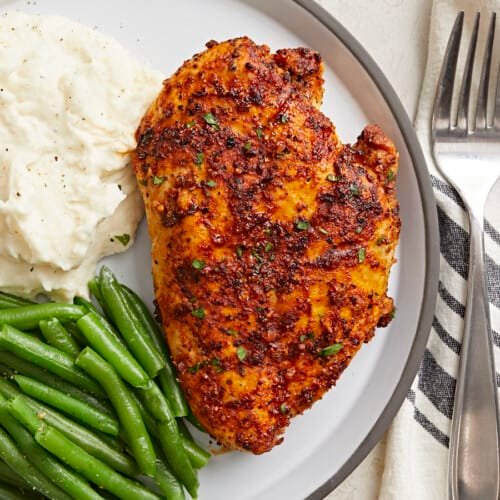
Pour over coffee is made by slowly pouring hot water over ground coffee in a paper filter. The water passes through the grounds and drips into a cup or carafe. For a reliable brew in a typical U.S. kitchen, start with 20 grams of coffee, 300 grams of water, a medium-fine grind, and water just off the boil.
The method is simple, but small changes can affect the taste. A slow pour can bring out more flavor, while a grind that is too fine can make the coffee bitter or cause the filter to drain too slowly. This guide explains the equipment, recipe, timing, and adjustments you need to make balanced pour over coffee at home.

What You Need to Make Pour Over coffee
You need a few basic tools:
- Pour over brewer, such as a cone-style brewer
- Paper filter that fits the brewer
- Fresh coffee beans
- Burr grinder
- Digital kitchen scale
- Gooseneck kettle or other controlled-pour kettle
- Timer
- Mug or carafe
- Clean, good-tasting water
A burr grinder helps create more even coffee particles than a blade grinder. Even grounds extract at a similar rate, which makes the cup easier to control.
A gooseneck kettle is helpful because its narrow spout gives you better control. It is not required, but it makes it easier to pour slowly and evenly.
Use a paper filter made for your brewer. Cone-shaped brewers and flat-bottom brewers use different filters, so check the shape and size before brewing.
The Basic Coffee-to-Water Ratio
A good starting ratio is:
- 1 gram of coffee for every 15 grams of water
- Or about 20 grams of coffee for 300 grams of water
This ratio is close to the 1:15 starting point used in many specialty coffee brewing guides. You can change it later:
| Coffee | Water | Approximate cups |
|---|---|---|
| 15 g | 225 g | 1 small mug |
| 20 g | 300 g | 1 medium mug |
| 30 g | 450 g | 2 small mugs |
| 40 g | 600 g | 2 medium mugs |
The final amount in your mug will be lower than the water added because the coffee grounds hold some water.
The Best Pour Over Coffee Recipe
For one medium serving, use:
- 20 grams of coffee
- 300 grams of water
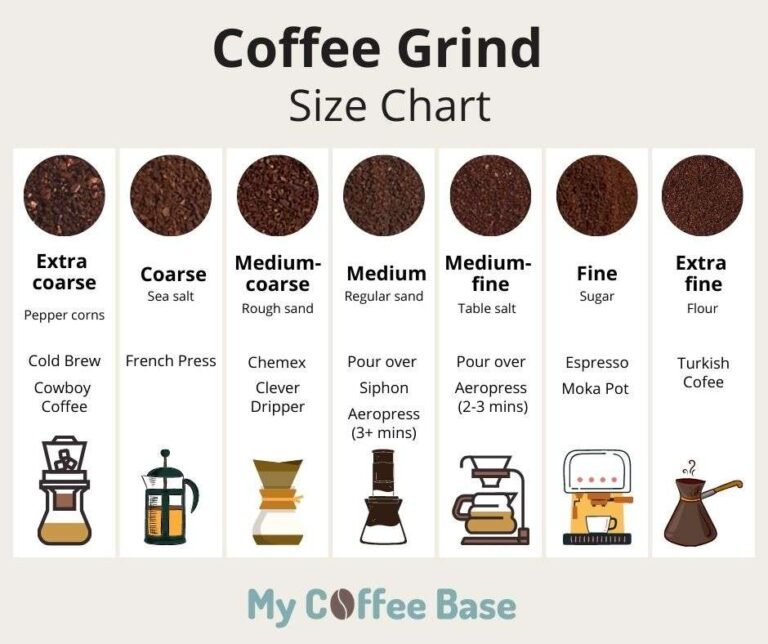
- Medium-fine coffee grind
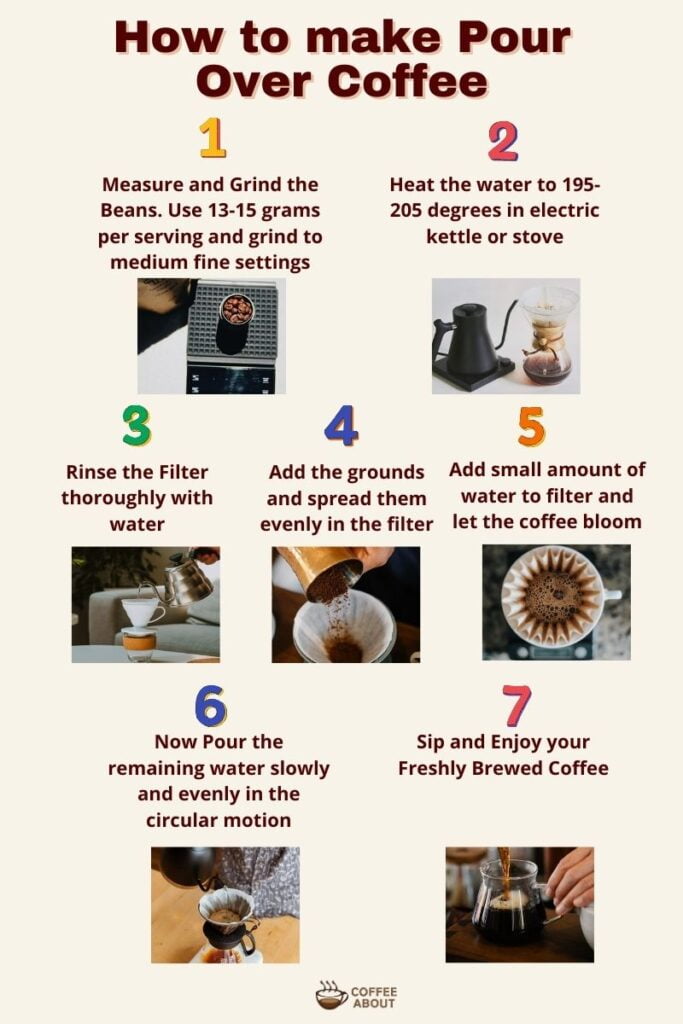
- Water at about 195–205°F
- Total brew time of about 2½–4 minutes
The Specialty Coffee Association lists 195–205°F as a common brewing water range. Water at 212°F is boiling at sea level. Let it sit for about 30 seconds after boiling if you do not have a temperature-controlled kettle.
Use the recipe below as a starting point, not a strict rule. Coffee beans, brewer shape, filter type, and water all change the result.
Step-by-Step Instructions
1. Heat the water
Heat at least 350 grams of water. You need extra water to rinse the filter and brew the coffee.
Aim for about 195–205°F. If you use a kettle without a temperature display, bring the water to a boil and let it rest briefly.
2. Rinse the paper filter
Place the filter in the brewer. Pour hot water over the filter until it is fully wet.
Rinsing does two things:
- It removes much of the paper taste.
- It warms the brewer and mug or carafe.
Discard the rinse water before adding coffee.
3. Grind and add the coffee
Grind 20 grams of coffee to a medium-fine texture. It should feel finer than sand but coarser than flour.
Add the grounds to the filter. Gently shake the brewer to make the coffee bed level. A flat bed helps the water move through the grounds more evenly.
4. Start the bloom
Start your timer. Pour about 40–60 grams of water over the coffee, making sure all the grounds are wet.
Wait 30–45 seconds.
This step is called the bloom. Fresh coffee releases carbon dioxide when hot water touches it. If the gas remains trapped, it can push water away from the grounds and lead to uneven extraction.
5. Pour the remaining water
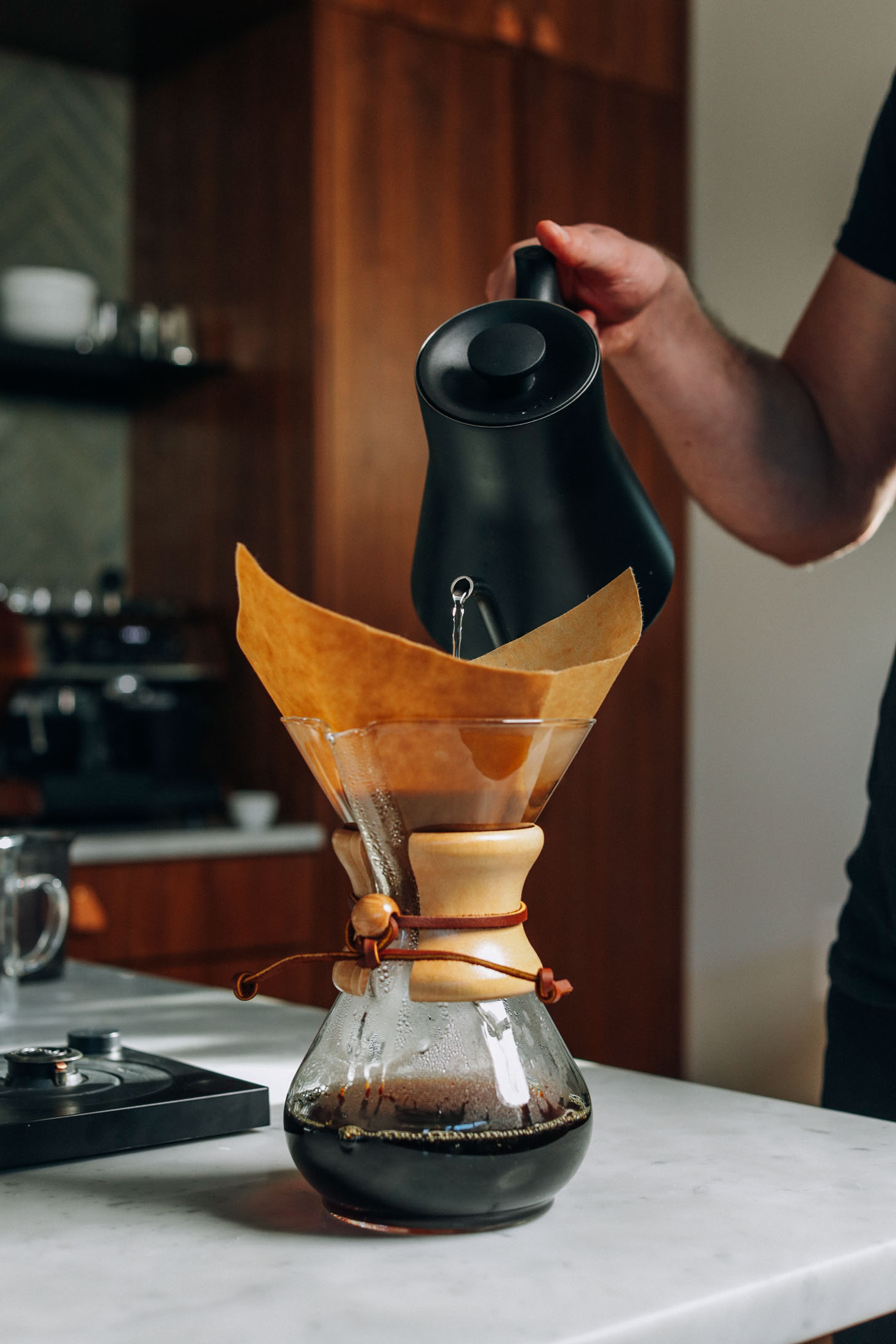
Pour slowly in small circles. Begin near the center and move outward, but avoid pouring directly onto the paper filter.
For a 300-gram recipe, you might pour:
- 50 grams during the bloom
- Up to 150 grams at about 1:00
- Up to 225 grams at about 1:30
- Up to 300 grams at about 2:00
Let the water level fall slightly between pours. Do not let the coffee bed dry out completely during the main pour.
6. Let the coffee drain
Allow the water to pass through the coffee. The brew may finish between 2½ and 4 minutes, depending on the brewer, grind, dose, and pour style.
Remove the brewer when the flow slows to a drip. Swirl the brewed coffee gently before drinking. This mixes the stronger and weaker liquid layers in the mug.
7. Taste before changing the recipe
Let the coffee cool for a minute or two. Coffee can taste different as it cools.
Look for a cup that tastes clear, balanced, and pleasant. You may notice fruit, chocolate, nuts, florals, or spice. You do not need to identify every flavor note to brew good coffee.
How to Adjust the Flavor
Change only one variable at a time. The grind size is usually the best place to start.
If the Coffee Tastes Sour or Thin
Coffee that tastes sharp, sour, weak, or grassy may be under-extracted. This means the water did not pull enough flavor from the grounds.
Try one of these changes:
- Grind the coffee finer.
- Use slightly hotter water.
- Pour more slowly.
- Increase the brew time.
- Stir or swirl gently during the bloom.
Start with a slightly finer grind. This increases contact between the water and coffee without changing the recipe too much.
If the Coffee Tastes Bitter or Dry
Coffee that tastes harsh, bitter, hollow, or dry may be over-extracted.
Try:
- Grinding the coffee coarser.
- Using slightly cooler water.
- Pouring a little faster.
- Reducing agitation.
- Shortening the brew time.
A dry feeling on the tongue can also come from dark-roasted coffee. Dark beans often extract quickly and may taste better with slightly cooler water or a shorter brew.
If the Coffee Tastes Weak but Not Sour
Weak coffee may result from too little coffee, too much water, or a roast that does not suit your taste.
Try using:
- A stronger ratio, such as 20 grams of coffee to 270 grams of water
- A finer grind
- A fuller-bodied coffee
- Less water in the next brew
If the Coffee Tastes Strong but Heavy
Use more water or less coffee. For example, move from a 1:15 ratio to a 1:16 ratio:
- 20 grams of coffee
- 320 grams of water
This can make the cup lighter without changing the grind.
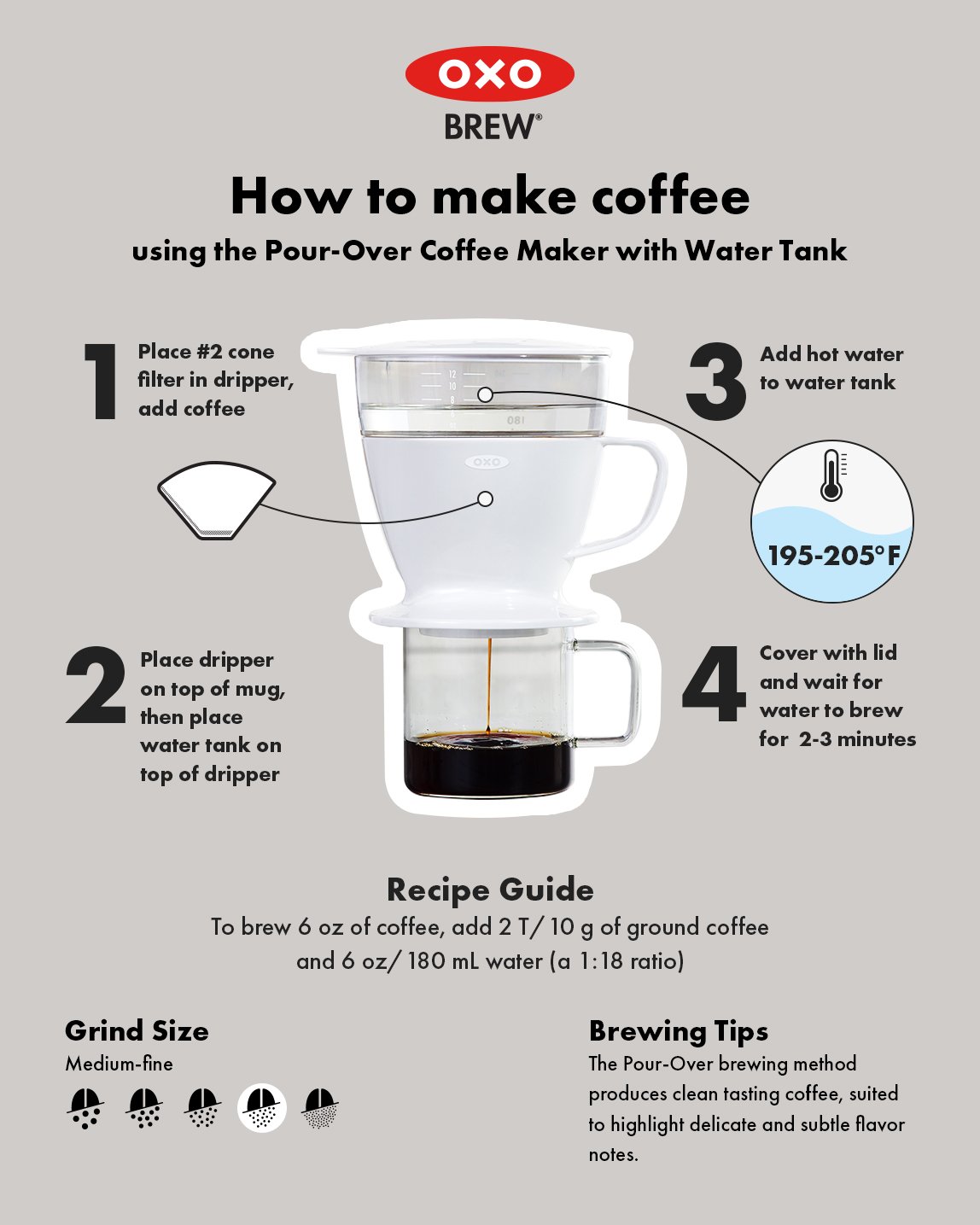
How Grind Size, Water, and Pouring Affect Coffee
Each part of the brew changes how fast water moves through the coffee and how much flavor it extracts.
Grind Size
Grind size controls the total surface area of the coffee.
- Finer grounds: More surface area, slower flow, and usually more extraction
- Coarser grounds: Less surface area, faster flow, and usually less extraction
If your coffee drains very slowly and tastes bitter, the grind may be too fine. If it drains quickly and tastes sour or watery, it may be too coarse.
Water Temperature
Hotter water generally extracts coffee more quickly. Cooler water extracts more slowly.
A useful starting range is 195–205°F. Dark roasts often work well toward the lower end. Light roasts may need hotter water and a longer brew to taste fully developed.
Do not use water that tastes strongly of chlorine or minerals. Filtered tap water can work well in many U.S. homes. Bottled water may also work, but its mineral content varies by brand.
Pouring Speed
A controlled pour keeps the grounds evenly wet.
Pouring too fast can flood the brewer and disturb the coffee bed. Pouring too slowly can extend the brew and increase extraction.
Aim for a calm, steady stream. You do not need to make perfect circles. Even coverage matters more than a precise pouring pattern.
Agitation
Agitation means movement caused by pouring, stirring, or swirling.
Some agitation helps wet dry grounds. Too much can move fine particles into the filter and slow the brew.
Use gentle movements. A light swirl after the bloom or after the final pour is usually enough for a home recipe.

Common Pour Over Coffee Mistakes
Skipping the Scale
Measuring coffee by volume is less consistent because beans vary in size. A scale lets you repeat a recipe and make useful changes.
If you do not own a scale, use the same scoop each time. Still, a scale is one of the most useful low-cost tools for better consistency.
Using Stale Coffee
Coffee loses aroma after roasting. The best storage method is an airtight container kept away from heat, light, and moisture.
Do not store coffee in the refrigerator. Coffee can absorb odors and moisture there. Buy an amount you can use while it still smells fresh.
Grinding Too Fine
An overly fine grind can clog the filter. The brew may take much longer than expected and taste bitter or dry.
Move the grinder one or two settings coarser, then brew again.
Pouring on the Filter
Pouring directly onto the paper can allow water to move around the coffee instead of through it. Keep most of the water over the coffee bed.
A small amount of water may touch the filter during normal pouring. The goal is to avoid making the paper the main path for the water.
Ignoring the Water
Coffee is mostly water, so water quality affects the cup. If your tap water tastes unpleasant by itself, it will likely affect the coffee.
Use water that tastes clean. If you use a filter pitcher, replace its filter according to the manufacturer’s instructions.
Chasing Brew Time Alone
A four-minute brew is not automatically better than a three-minute brew. Time helps you spot changes, but taste is the final guide.
If the coffee tastes good and drains at a different time, do not change the recipe just to match a number.

Pour Over Brewing Troubleshooting Table
Use this table to find the most likely cause before changing several things at once.
| Problem | Likely causes | First adjustment |
|---|---|---|
| Sour and thin | Grind too coarse, water too cool, fast brew | Grind finer |
| Bitter and dry | Grind too fine, water too hot, slow brew | Grind coarser |
| Weak and watery | Too little coffee, too much water, fast flow | Add coffee or use less water |
| Harsh and strong | Too much coffee, over-extraction, dark roast | Use more water or grind coarser |
| Very slow drainage | Fine grind, clogged filter, too much agitation | Grind coarser and pour more gently |
| Very fast drainage | Coarse grind, uneven bed, fast pour | Grind finer and slow the pour |
| Paper taste | Filter not rinsed, poor-tasting water | Rinse the filter and improve the water |
| Muddy cup | Fine particles, damaged filter, heavy agitation | Use a better filter and agitate less |
Make one change per brew when possible. Write down the coffee dose, water amount, grind setting, water temperature, and brew time. A short brew log can reveal patterns quickly.

Choosing Coffee Beans for Pour Over
Pour over brewing works with light, medium, and dark roasts.
Light Roasts
Light roasts often have bright acidity and floral or fruit flavors. They may need hotter water, a finer grind, or a longer brew to taste balanced.
Medium Roasts
Medium roasts often offer a mix of sweetness, acidity, and body. They are a flexible choice for beginners.
Dark Roasts
Dark roasts tend to taste bold, smoky, or bittersweet. Try slightly cooler water and a coarser grind if the cup tastes harsh.
Choose whole beans when possible. Grind them just before brewing. If you buy pre-ground coffee, use it soon after opening and seal the package well between brews.

Can You Make Pour Over Coffee Without a Gooseneck Kettle?
Yes. A standard kettle can work if you pour slowly and carefully.
A gooseneck kettle gives more control, but it does not make good coffee by itself. The key factors are even wetting, a suitable grind, a steady flow, and a repeatable ratio.
If your kettle pours too fast, transfer the hot water to a small measuring cup or narrow-spout vessel. Take care with hot water and use a stable surface.
Can You Make Pour Over Coffee Without a Scale?
Yes, but the results will be less repeatable.
A common starting point is about two level tablespoons of ground coffee for every 6 fluid ounces of water. Spoon size and coffee density vary, so treat this only as a rough guide.
For repeatable results, weigh both coffee and water in grams. Water is easy to measure this way, and the scale does not need to be expensive or designed only for coffee.
How Much Caffeine Is in Pour Over Coffee?
Caffeine varies with the coffee bean, dose, roast, grind, and serving size. A 20-gram dose can produce a cup with a meaningful amount of caffeine, but the exact amount cannot be known from the recipe alone.
If caffeine matters to you, use a smaller serving, choose decaffeinated beans, or follow guidance from a health professional. Decaffeinated coffee still contains a small amount of caffeine.
Should You Stir Pour Over Coffee?
A gentle stir or swirl can help wet the grounds evenly. Too much movement can push fine particles into the filter and slow the brew.
Try a light swirl during the bloom or after the final pour. If the coffee becomes muddy or drains too slowly, reduce the agitation.
How Do You Clean a Pour Over Brewer?
Remove the used filter and coffee grounds after brewing. Rinse the brewer with warm water and let it dry fully.
For brewers made from glass, ceramic, or stainless steel, wash with mild dish soap when needed. Follow the care instructions for plastic brewers. Old coffee oils can create stale flavors, so clean the brewer and carafe regularly.

Quick Pour Over Coffee Checklist
Before you brew, check that you have:
- Fresh coffee
- A clean brewer
- The correct paper filter
- 20 grams of coffee
- 300 grams of water
- Water near 195–205°F
- A medium-fine grind
- A scale and timer
During the brew:
- Rinse the filter.
- Level the grounds.
- Bloom with 40–60 grams of water.
- Wait 30–45 seconds.
- Pour slowly to the final water weight.
- Let the coffee drain.
- Taste before making changes.
The best next step is to brew this base recipe once and record the result. If it tastes sour, grind finer. If it tastes bitter or dry, grind coarser. Keep the other variables the same until the cup improves.
Conclusion
To make pour over coffee, use a measured coffee-to-water ratio, fresh grounds, hot water, and a controlled pour. A recipe of 20 grams of coffee to 300 grams of water is a useful starting point for one medium serving.
Good pour over coffee comes from small, repeatable adjustments rather than a perfect pouring trick. Start simple, taste carefully, and change one variable at a time.