For most coffee drinkers in the United States, the best starting point is medium grind for automatic drip coffee, coarse grind for French press, and fine grind for espresso. The right coffee grind size controls how fast water moves through the grounds and how much flavor it extracts.
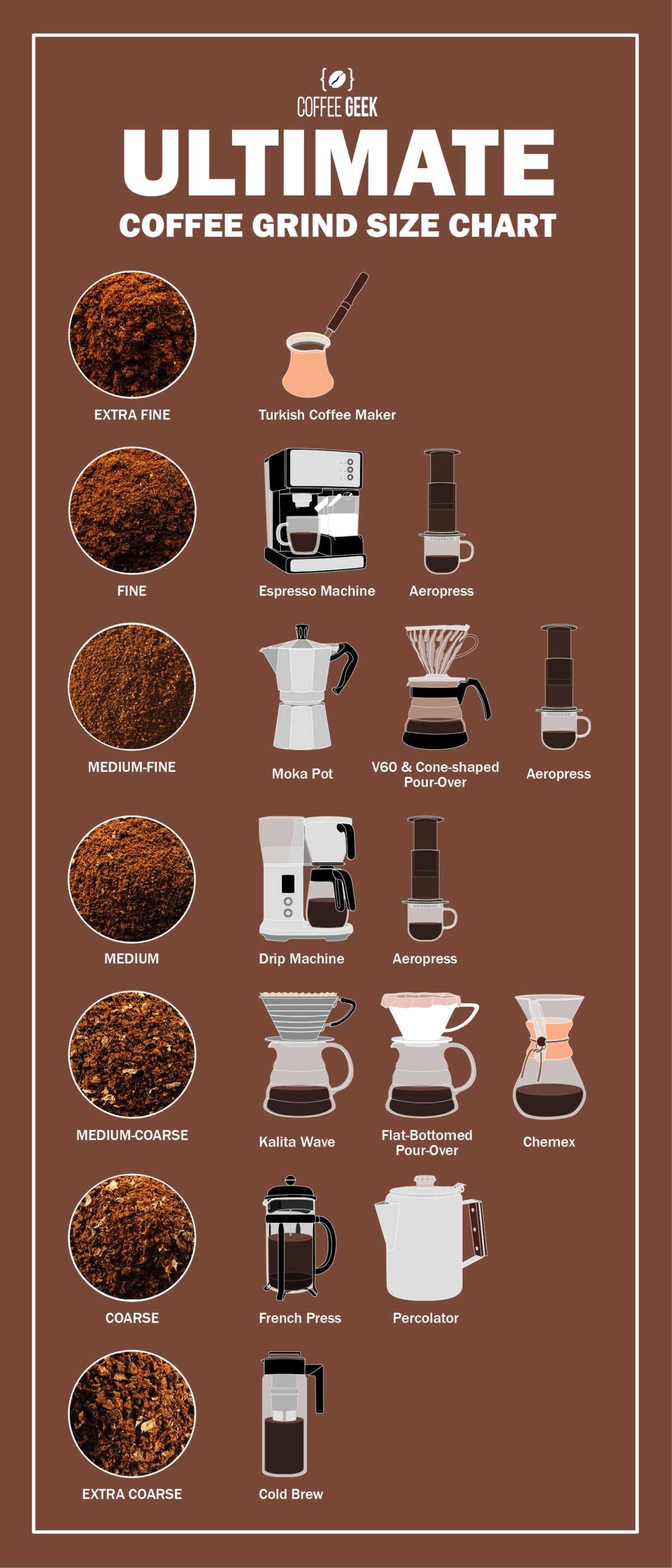
Use this coffee grind size chart as a starting point:
| Brewing method | Recommended grind size | Texture comparison | Typical brew time |
|---|---|---|---|
| Turkish coffee | Extra fine | Powdered sugar or flour | 3–5 minutes |
| Espresso | Fine | Table salt or fine sand | 20–35 seconds |
| Moka pot | Fine to medium-fine | Fine sand | 3–5 minutes |
| AeroPress | Medium-fine to medium | Fine to regular sand | 1–3 minutes |
| Pour-over cone | Medium-fine to medium | Sand or table salt | 2½–4 minutes |
| Automatic drip coffee maker | Medium | Regular sand | 4–6 minutes |
| Chemex | Medium-coarse | Coarse sand | 4–5 minutes |
| Siphon brewer | Medium-fine to medium | Sand | 1½–3 minutes |
| French press | Coarse | Cracked peppercorns | 4–6 minutes |
| Cold brew | Coarse to extra coarse | Rough sea salt | 12–24 hours |
These settings are not universal numbers. Grinder design, coffee freshness, filter type, roast level, water temperature, and recipe all affect the result. Use the chart to choose a starting point, then adjust by taste and brew time.

What Coffee Grind Size Means
Coffee grind size is the average size of the coffee particles after grinding. A fine grind has many small particles. A coarse grind has larger pieces.
Grind size matters because it changes the amount of coffee surface that touches water. Smaller particles expose more surface area, so they usually extract flavor faster. Larger particles slow extraction.
This creates a simple rule:
- Too coarse: Water passes too quickly, which can cause weak or sour coffee.
- Too fine: Water moves slowly, which can cause bitter, harsh, or dry coffee.
- Well matched: The coffee tastes balanced, with clear flavor and a pleasant finish.
Grind size is not the same as coffee strength. Strength depends mainly on how much coffee flavor is dissolved into the drink and how much water is used. A strong-tasting coffee can still be under-extracted if it tastes sharp or sour.
Grind size versus grind consistency
Grind size describes how large the particles are. Grind consistency describes how similar those particles are to one another.
A grinder that produces both fine dust and large chunks may create uneven extraction. The fine particles can become bitter while the large pieces remain sour or dull. Burr grinders usually produce a more even grind than basic blade grinders, though grinder quality and adjustment range still matter.
Why brew method changes the answer
Each brewing method gives water a different amount of contact time with coffee:
- Espresso uses pressure and a short brew time.
- French press uses long steeping with little pressure.
- Automatic drip coffee uses gravity and a paper filter.
- Cold brew uses a long steep with cool water.
A fine grind helps short methods extract enough flavor. A coarse grind helps long methods avoid over-extraction.

Coffee Grind Size Chart by Brewing method
the chart below gives practical starting points. The texture descriptions are often more useful than grinder dial numbers because grinder settings vary by brand and model.
Espresso: fine grind
Espresso usually needs a fine grind. The grounds should feel close to fine sand or table salt.
Espresso machines force hot water through a compact coffee bed under pressure. If the grind is too coarse, water may run through too fast and produce thin, sour espresso. If it is too fine, the shot may drip slowly or stop.
Start with a fine grind, then adjust based on shot time and taste. A common espresso starting point is about 18 grams of coffee for a double shot, but the correct dose depends on the basket and recipe.
Moka pot: fine to medium-fine
A moka pot works well with a grind finer than drip coffee but coarser than espresso. The grounds should look like fine sand.
Do not automatically use espresso-fine coffee in a moka pot. An overly fine grind can restrict water flow and create harsh flavors. Fill the filter basket evenly without tamping the coffee down.
Automatic drip coffee: medium grind
For most American automatic drip coffee makers, use a medium grind. It should resemble regular sand.
Paper filters and gravity-based brewing work best when water can pass through the coffee bed at a steady rate. A grind that is too fine may slow the flow and create bitter coffee. A grind that is too coarse may produce weak coffee.
Cone-shaped brewers may work better with a medium-fine grind than flat-bottom brewers, especially when the water drains quickly.
Pour-over coffee: medium-fine to medium
Pour-over coffee needs a grind that matches the brewer shape, filter, and pouring method.
Use a medium-fine grind for a fast-draining cone or a recipe with a short brew time. Use a medium grind if the water drains slowly or the coffee tastes dry. A good starting texture is slightly finer than table salt.
Chemex: medium-coarse
Chemex coffee commonly uses a medium-coarse grind. The thick paper filter and large brewer can slow the flow, so a grind that is too fine may cause a long, bitter brew.
If the brew drains very slowly, use a coarser grind. If it finishes quickly and tastes weak, move slightly finer.
French press: coarse grind
French press coffee usually needs a coarse grind that looks like cracked peppercorns or coarse sea salt.
The coffee steeps in water for several minutes. A coarse grind helps reduce over-extraction and makes it easier to press the filter. A fine grind can pass through the mesh and leave heavy sediment in the cup.
AeroPress: medium-fine to medium
The AeroPress can use several grind sizes because it supports many recipes. A short recipe with a quick press often benefits from a medium-fine grind. A longer steep can use a medium grind.
If the plunger feels hard to press, the grind may be too fine, the coffee bed may be compressed, or the filter may be blocked. If the coffee tastes thin, try a finer grind or a longer steep.
Cold brew: coarse to extra coarse
Cold brew usually works well with a coarse or extra-coarse grind. The texture should be similar to rough sea salt.
Cold water extracts coffee more slowly than hot water. Cold brew recipes often steep for 12 to 24 hours. A grind that is too fine can make filtration difficult and may produce muddy or bitter concentrate.
Turkish coffee: extra fine
Turkish coffee requires an extra-fine grind that feels like flour or powdered sugar. The coffee is traditionally brewed with the grounds still in the drink.
A standard home coffee grinder may not reach a fine enough setting. Many coffee shops and roasters sell coffee ground specifically for Turkish coffee.
How to Choose the Right Grind Size
Choose grind size based on the brewing method first, then adjust it using taste and brew behavior.
Step 1: Start with the chart
Select the recommended range for your brewer. Do not make several changes at once. Keep the coffee dose, water amount, and water temperature steady while you adjust the grind.
Step 2: Watch the brew time
Brew time is a useful clue, but it is not the only measure of success.
- A very fast brew may need a finer grind.
- A very slow brew may need a coarser grind.
- A normal brew time can still taste poor if the dose, water, or coffee is unsuitable.
For espresso, small grind changes can have a large effect because the brew time is short. For French press and cold brew, taste often matters more than an exact drain time.
Step 3: Taste the coffee
Use these general adjustments:
| What you notice | Likely issue | First adjustment |
|---|---|---|
| Sour, sharp, or thin | Under-extraction | Grind finer or extend brew time |
| Bitter, dry, or harsh | Over-extraction | Grind coarser or shorten brew time |
| Weak but not sour | Low coffee-to-water ratio | Use more coffee or less water |
| Strong but balanced | Higher concentration | Keep the recipe if you like it |
| Muddy or gritty | Too many fine particles | Grind coarser or improve filtration |
| Uneven flavor | Inconsistent grind or poor brewing | Use a better grind and more even technique |
Taste terms are not absolute. Dark-roasted coffee may taste bitter even when the grind is suitable. Light-roasted coffee can taste bright or acidic without being under-extracted.
Step 4: Make small changes
Move the grinder one small step at a time. Large changes make it hard to learn what improved the cup.
When using a manual or electric burr grinder, purge a small amount of coffee after a major adjustment. Old grounds trapped in the grinder can affect the next brew.
Step 5: Keep a simple brew note
Record four details:
- Coffee dose
- Water amount
- Grind setting
- Brew time and taste
This turns trial and error into a repeatable process. A note such as “20 grams, 320 grams water, medium-fine, sour” gives you a clear reason to adjust finer next time.

Coffee Grind Size, Dose, and Water Ratio
Grind size works with coffee dose and water ratio. Changing one variable can change the result even when the grind stays the same.
A common starting ratio for filter coffee is about 1 gram of coffee to 15–18 grams of water. For example, a hypothetical recipe using 20 grams of coffee may use 300–360 grams of water.
The right ratio depends on your taste and brew method. If the drink tastes weak, adding more coffee may help more than grinding finer. If it tastes strong but sour, a finer grind or longer brew may help.
Example: adjusting a drip coffee recipe
Suppose a 20-gram dose produces a fast, weak cup:
- Keep the dose and water amount the same.
- Grind slightly finer.
- Brew again.
- Taste the result.
- Adjust again only if needed.
If the second cup becomes bitter and slow, the adjustment was too large. Move partway back toward the original setting.
Water temperature also matters
Hotter water generally extracts coffee faster than cooler water. Water quality matters too. Very soft or heavily treated water can produce flat flavors, while water with strong odors can make coffee taste unpleasant.
The Specialty Coffee Association lists a commonly used brewing water range of about 195°F to 205°F for many hot coffee recipes. This is a starting range, not a guarantee for every roast or method.
Roast level can change the best setting
Dark-roasted coffee often extracts more easily and may taste harsh when ground too fine. A slightly coarser setting can help.
Light-roasted coffee is often denser and may need a finer grind, hotter water, or a longer brew time. This is a general tendency, not a fixed rule. Taste should decide the final setting.

Common Coffee Grinding Mistakes
Using one grind for every brewer
A grind that works for drip coffee may clog an espresso basket or pass too quickly through a pour-over. Match the grind to the contact time and filter.
Trusting grinder numbers across brands
A setting marked “10” on one grinder does not equal “10” on another. Even two grinders of the same model may produce different results because of burr wear, alignment, or calibration.
Use the texture, brew behavior, and taste as your guide.
Grinding coffee too far in advance
Ground coffee loses freshness faster than whole beans because more surface area is exposed to air. For the best flavor, grind close to brewing time and store whole beans in an airtight container away from heat, light, and moisture.
Tamping French press coffee
French press coffee does not need tamping. Add the grounds, pour the water, stir if your recipe calls for it, and let the coffee steep. Press the filter gently.
Tamping can create a dense coffee bed and make pressing difficult.
Using espresso-fine coffee in every method
Espresso-fine coffee may clog a French press screen, slow a pour-over, or create a bitter cold brew. Fine grinding is useful when the method has a short contact time or uses pressure.
Changing several variables at once
If you change grind, dose, water temperature, and brew time together, you will not know which change affected the cup. Adjust one main variable at a time.
Ignoring grinder cleanliness
Old coffee oils and trapped grounds can add stale flavors. Follow the grinder maker’s cleaning instructions. Unplug electric equipment before cleaning it, and never put water into a grinder unless the manual specifically allows it.

Burr Grinder or Blade Grinder: Which Is Better?
A burr grinder is usually easier to adjust for brewing because it crushes coffee between two surfaces and offers more control over particle size.
A blade grinder chops coffee unevenly. It can still make usable coffee, especially for a French press, but it may produce a mix of powder and large pieces.
If you use a blade grinder:
- Grind in short pulses.
- Shake the grinder gently between pulses.
- Avoid running it continuously, which can heat the coffee.
- Stop when the grounds look as even as possible.
- Use the coffee soon after grinding.
A burr grinder does not guarantee a perfect cup. It simply gives you a better tool for making repeatable changes.
Quick Takeaways
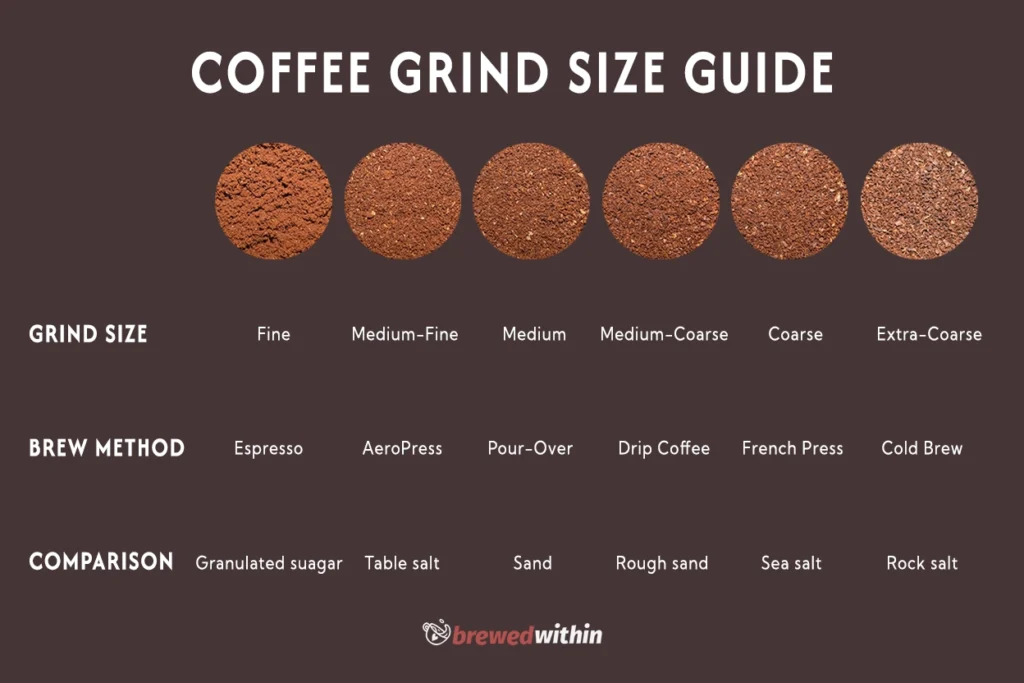
- Use medium grind for most automatic drip coffee makers.
- Use coarse grind for French press and coarse to extra coarse for cold brew.
- Use fine grind for espresso and extra fine for Turkish coffee.
- If coffee tastes sour and thin, try a finer grind or longer brew.
- If coffee tastes bitter and dry, try a coarser grind or shorter brew.
- Change one variable at a time.
- Grinder dial numbers are not universal.
- Freshly ground coffee and consistent particles make adjustments easier.
Frequently Asked Questions
Is a fine grind stronger than a coarse grind?
Not automatically. A fine grind extracts faster and can produce a stronger-tasting drink under the same conditions. Final strength also depends on the coffee dose, water amount, brew time, and extraction level.
What grind size should I use for a Keurig-style pod brewer?
Use the grind size specified for the reusable pod, if you use one. A medium grind is a reasonable starting point for many reusable filter baskets, but basket design and fill level affect the result. Do not overfill the pod or pack the coffee tightly.
Can I use pre-ground coffee for a French press?
Yes. Choose coffee labeled coarse-ground for French press. If it is too fine, the drink may contain more sediment and taste harsh. Freshly ground coffee gives you more control, but pre-ground coffee can still work.
Why does my coffee taste sour even when the grind looks right?
Sour coffee may come from under-extraction, but grind size is only one possible cause. The water may be too cool, the brew may be too short, the coffee dose may be too high, or the beans may have a naturally bright flavor. Try a slightly finer grind first while keeping the other variables steady.
Why does my coffee taste bitter after I grind finer?
A finer grind can slow water flow and increase extraction. If the coffee becomes bitter, dry, or harsh, move slightly coarser. Also check whether the water is too hot or the brew time is too long.
Does cold brew need an extra-coarse grind?
Not always. Coarse grind is common and often easier to filter. Extra-coarse coffee can reduce sediment, but it may need a longer steep or a different ratio. The best choice depends on your filter and whether you make concentrate or ready-to-drink cold brew.
Conclusion
The coffee grind size chart is a starting guide, not a fixed law. Begin with the grind matched to your brewing method, then use brew speed and taste to make small changes.
For most U.S. home coffee setups, remember the simple pattern: fine for espresso, medium for drip and pour-over, and coarse for French press and cold brew. Keep your dose, water, and brew time steady while adjusting the grind, and you will find a repeatable setting faster.
Research basis
This guide reflects standard brewing principles described in coffee education materials and brewing standards, including:
- Specialty Coffee Association, Coffee Standards and Brewing Resources: https://sca.coffee/research/coffee-standards
- National Coffee Association, coffee preparation guidance: https://www.aboutcoffee.org/
- United States Department of Agriculture, coffee storage and food-handling resources: https://www.fsis.usda.gov/
These resources support general brewing and handling principles. Exact grind settings still vary by grinder, brewer, coffee, and recipe.