Excelsa coffee beans bring bright fruit, smoky depth, and rare, bold character.
If you love coffee that surprises you, keep reading. I have roasted and brewed Excelsa Coffee Beans for years, from lively lots in Vietnam to bold crops in Uganda. This guide breaks down what they are, why they taste so unique, and how to buy, roast, and brew them at home. We will blend science and hands-on tips, so you can enjoy Excelsa Coffee Beans with skill and confidence.
What Are Excelsa Coffee Beans?
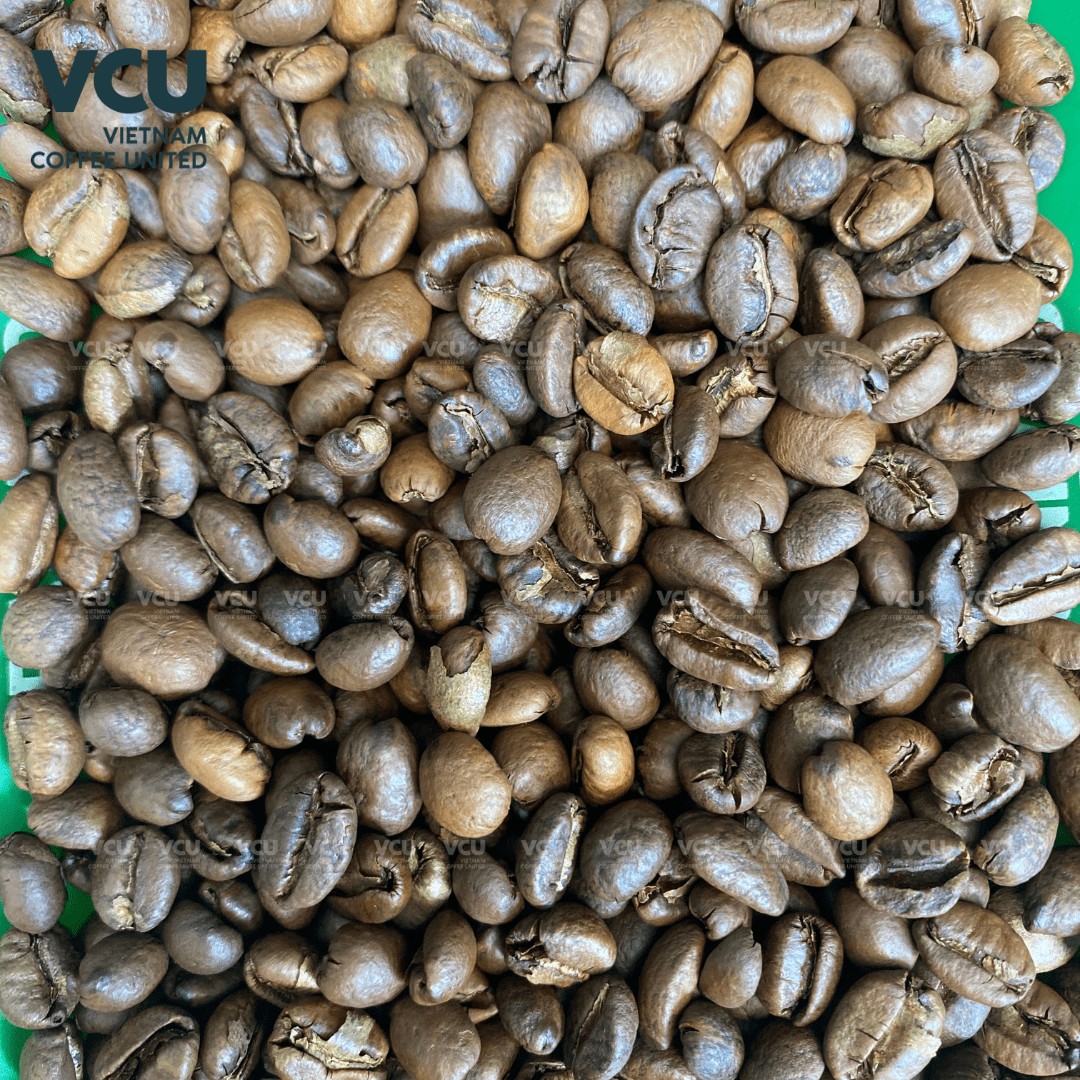
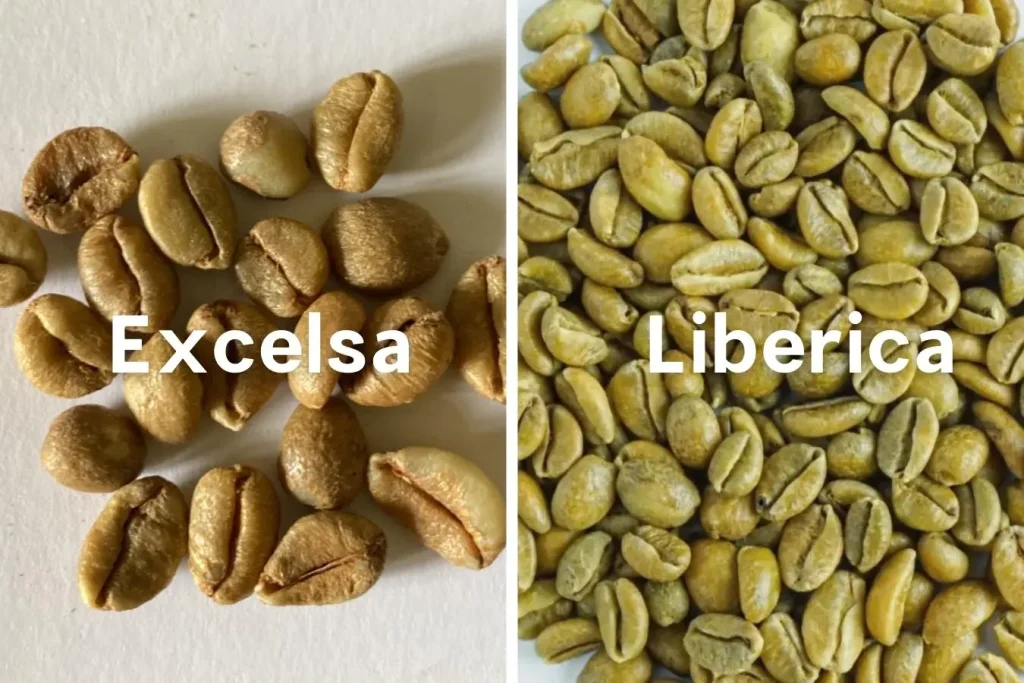
Excelsa Coffee Beans come from a branch of the Liberica family. Botany now lists Excelsa as Coffea liberica var. dewevrei. In plain words, it is a distinct type within Liberica. The trees are tall and hardy. The beans are larger than Arabica and have an uneven center groove.
They grow well in heat and humidity. Farms thrive in parts of Southeast Asia and Africa. The global share is tiny compared to Arabica and Robusta. Many roasters use Excelsa Coffee Beans in blends for lift and depth. More single-origin options are now on the market.
From a cup view, they bring a bold nose and a bright, tart edge. They taste like fruit and spice with a roasty echo. This mix stands out in filter coffee and can twist espresso in a fun way.

Flavor Profile and Aroma
Excelsa Coffee Beans carry a rare mix. Think berry tartness with a dark, smoky base. The aroma is loud and sweet. The cup can feel light yet deep at once.
Common notes include:
- Tamarind, dried berries, and lychee
- Dark cocoa, molasses, and spice
- Smoke, roasted nuts, and jackfruit-like funk
Acidity is medium to high, but not sharp when brewed well. Body ranges from medium to full. Sweetness lands in the mid range. Natural process often boosts fruit and funk. Washed lots taste cleaner and brighter.
In my roasts, light to medium levels shine most. A longer development can add cocoa and smoke. Too dark can mute the magic fruit.
Growing Regions and Farming Practices
Excelsa Coffee Beans grow in Vietnam, the Philippines, Malaysia, Indonesia, and parts of Central and East Africa. Altitude is often lower than Arabica. Many farms sit between 200 and 800 meters, with some higher sites. Trees handle heat and leaf rust better than Arabica.
Farmers often grow these trees under shade with mixed crops. This supports soil life and bird cover. The trees are tall, so picking can be hard and slow. Processing ranges from natural to honey and washed. Careful drying is key since larger beans trap moisture longer.
Yields can be steady in tough climates. That makes Excelsa Coffee Beans a useful tool for climate change. More cooperatives now share training for quality and fair pay.
Excelsa vs Arabica vs Robusta vs Liberica
Taste
- Excelsa Coffee Beans taste bright, fruity, and smoky at once.
- Arabica is sweet, floral, and balanced, with wide range by origin.
- Robusta is strong, earthy, and higher in bitterness.
- Liberica leans woody, floral, and smoky. Excelsa is a livelier cousin.
Caffeine
- Arabica is around 1.2 to 1.5 percent.
- Excelsa and Liberica often sit around 1.2 to 1.7 percent.
- Robusta runs higher, often 2.2 to 2.7 percent.
Bean traits
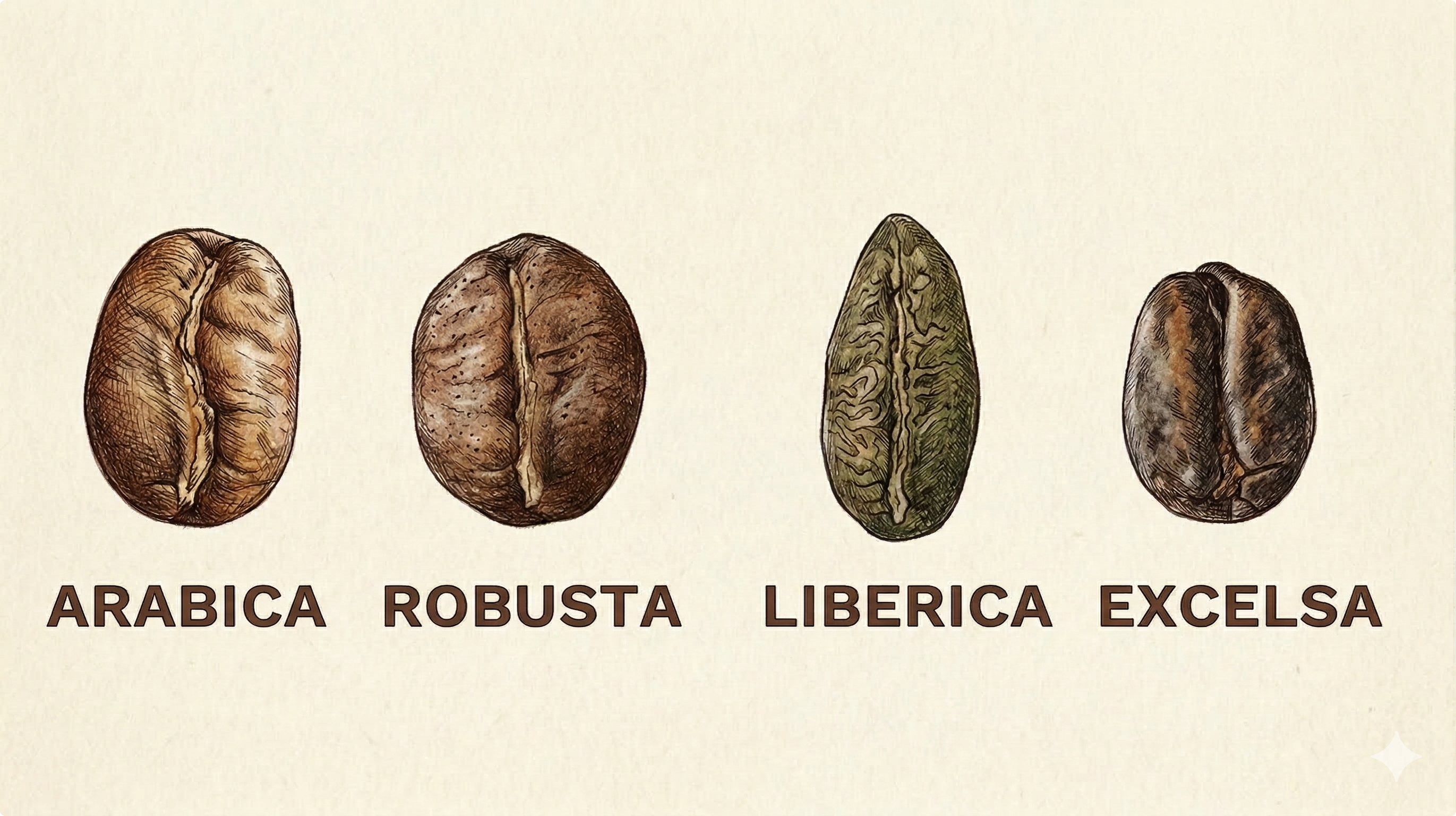
- Excelsa and Liberica beans are larger with an uneven seam.
- Arabica beans are smaller with a smooth seam.
- Robusta beans are small and rounder.
Price and access
- Excelsa Coffee Beans are niche and can cost more than common Arabica.
- Fresh crop and good processing raise the price but also the cup score.
Use cases
- Excelsa shines in blends from 10 to 30 percent for fruit lift.
- It can be a wild and fun single origin for pour-over and cold brew.

Source: specialtycoffee.id
How to Buy Fresh Excelsa Coffee Beans
Look for clear roast dates, not best-by dates. Buy whole bean in small amounts. Bags with one-way valves help keep aroma fresh. Choose roasters who share farm details and processing info. That is a good sign of quality and care.
Pick lots that fit your taste. Washed if you want clean fruit. Natural if you want bold funk and jam. For first timers, start with a light to medium roast. It keeps the tart fruit and sweet spice.
Store beans in an airtight, opaque container. Keep them cool and dry. Do not freeze or refrigerate daily-use beans. Grind right before brewing. Use within four weeks for best flavor.

Roasting Excelsa at Home
Excelsa Coffee Beans roast a bit different. The beans are larger and can scorch if heat is too hard at the start. Gentle heat and a longer browning phase help keep fruit sweet and smoke clean.
My simple drum profile
- Charge at a moderate temperature to avoid tipping.
- Use steady heat to reach first crack in 8 to 10 minutes.
- Extend development 45 to 90 seconds for light to medium.
- Drop around 203 to 208°C bean temp, depending on your setup.
For air roasters or poppers
- Keep batches small for even flow.
- Stop soon after first crack for bright fruit.
- If you want more cocoa, add 30 to 45 seconds.
Sensory cues
- First crack is softer than many Arabicas.
- Watch color and smell. Look for cinnamon to light brown with a sweet, jammy nose.
- If it smells ashy, you went too far.
Note that each machine behaves different. Log time, temp, and taste. Small tweaks pay off big with Excelsa Coffee Beans.
Brewing Guides for Excelsa Coffee Beans
Water is key. Aim for 92 to 94°C. Moderate mineral water works well. A total hardness of 50 to 150 ppm helps keep fruit bright and body round.
Pour-over recipe
- Dose 18 g, water 288 g for a 1:16 ratio.
- Medium grind. Bloom 40 seconds with 40 g water.
- Finish pouring by 2:30. Total time 3:00 to 3:30.
French press
- Dose 30 g, water 450 g for a 1:15 ratio.
- Coarse grind. Steep 4 minutes. Stir, settle, and press.
- Expect rich cocoa and berry jam.
Espresso
- Medium roast is friendly for pressure.
- Dose 18 g in, 36 g out in 28 to 32 seconds.
- If the shot tastes too tart, grind a bit finer and raise temp by 1°C.
Cold brew
- Ratio 1:6 by weight. Coarse grind. Steep 14 to 16 hours in the fridge.
- Expect soft berry, cocoa, and a smooth smoky finish.

Source: perfectdailygrind.com
Pairing and Use in Blends
Excelsa Coffee Beans are great boosters in blends. I like 15 to 25 percent Excelsa with a sweet Brazil base. Add a washed Ethiopia for florals. The cup pops with jam and cocoa.
Food pairings that sing
- Dark chocolate or cacao nib cookies
- Berry tarts and cheesecake
- Grilled pork or smoked fish for a sweet-smoky echo
For milk drinks, try a medium roast. The tart fruit cuts through milk and makes a lively flat white. For summer, a natural Excelsa over ice is a crowd pleaser.
Health, Sustainability, and Market Trends
Caffeine in Excelsa Coffee Beans is moderate. Antioxidant levels are in the same range as other coffee species. As always, enjoy in balance.
Sustainability matters here. Excelsa tolerates heat and some pests. That helps farmers adapt to climate stress. Shade-grown systems support biodiversity and soil health. More co-ops now use traceable lots and fair contracts.
Market trends point up. Niche buyers seek new flavors. More roasters highlight single-origin Excelsa with transparent farm data. Availability is still limited, but options improve each year.
Common Mistakes and Troubleshooting
Bitter or ashy taste
- Likely over-roasted or water too hot.
- Use a lighter roast or brew at 92 to 93°C.
Flat or dull cup
- Beans may be old or poorly stored.
- Buy fresher Excelsa Coffee Beans and grind right before brewing.
Too sour or sharp
- Under-extracted or too light a roast for your method.
- Grind finer or extend brew time. Try a medium roast.
Uneven roast at home
- Batch too large or heat too hard at the start.
- Reduce charge heat, keep airflow steady, and aim for even color.
Espresso channeling
- Grind or distribution may be off.
- Use a consistent tamp and even puck prep. Try a puck screen if needed.
Frequently Asked Questions of Excelsa Coffee Beans
Are Excelsa Coffee Beans the same as Liberica?
Excelsa is a recognized variety within the Liberica species. It shares traits with Liberica but shows a brighter, fruitier cup profile.
Do Excelsa Coffee Beans have more caffeine than Arabica?
They are often similar or slightly higher than Arabica. They are still much lower than most Robusta coffees.
Why do some roasters use Excelsa only in blends?
Excelsa Coffee Beans add fruit lift and smoky depth in small amounts. Blends balance its bold character for a wider audience.
What grind size works best for Excelsa pour-over?
Start with a medium grind. Adjust finer if the cup is thin, or coarser if it tastes sharp.
How should I store Excelsa Coffee Beans at home?
Keep beans in an airtight, opaque container at room temperature. Avoid light, heat, moisture, and daily fridge or freezer use.
Can I pull good espresso with Excelsa?
Yes. Use a medium roast, a 1:2 ratio, and a slightly higher brew temp to balance fruit and smoke.
Is Excelsa more sustainable than Arabica?
It can be in hot, low-altitude regions due to better heat tolerance. Results depend on farm practices and local climate.
Conclusion
Excelsa Coffee Beans offer a thrilling cup. You get tart fruit, sweet spice, and a gentle smoke that lingers. They can lift a blend or shine solo as a bright pour-over or a wild espresso.
Try a fresh, light to medium roast. Dial in your brew with simple steps, and note what you taste. You will learn fast and enjoy more with each cup.
Ready to explore more rare beans and brew tips? Subscribe for new guides, ask questions in the comments, and share your own Excelsa wins and lessons.