Yes, many people with acid reflux can drink decaf coffee in small amounts. But decaf is not caffeine-free, and it may still cause symptoms in some people. Coffee compounds, added cream, large serving sizes, and drinking coffee on an empty stomach may all play a role.
If regular coffee triggers heartburn, decaf may be worth trying. Start with a small cup, drink it with food, and track your symptoms. If reflux continues, stop and choose a non-coffee drink instead.
This guide applies to people in the United States who have occasional heartburn or diagnosed gastroesophageal reflux disease, also called GERD. It does not replace care from a doctor.

Why Decaf Coffee May Still Cause Acid Reflux
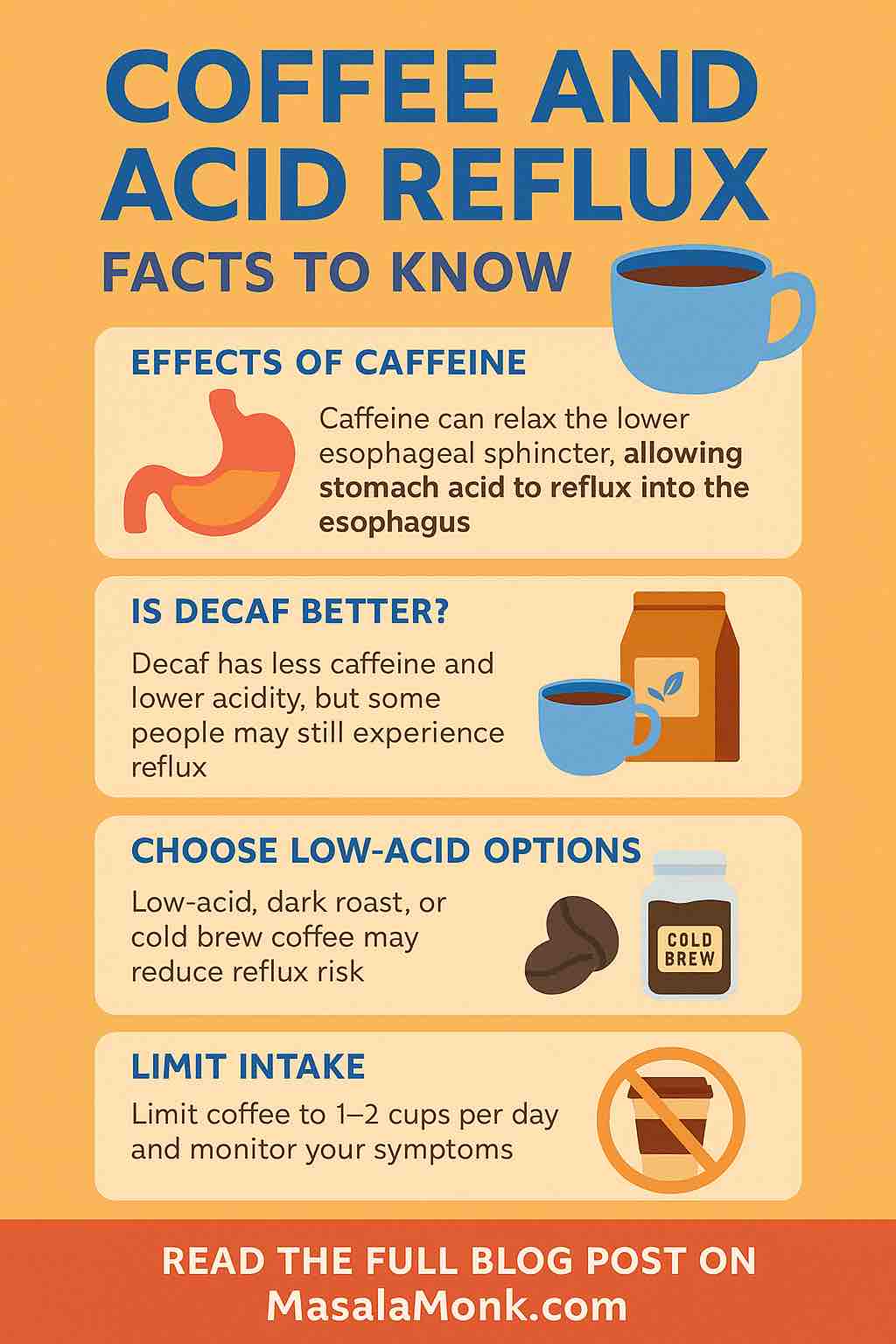
Decaf coffee may be easier to tolerate because it contains much less caffeine than regular coffee. Still, removing caffeine does not remove every compound that may affect reflux.
Coffee can affect reflux in several ways:
- It may relax the lower esophageal sphincter. This is the muscle that helps keep stomach contents from moving back into the esophagus.
- It may increase stomach activity in some people.
- It contains natural acids and other compounds.
- It may be consumed with high-fat cream, whole milk, or sweet syrups.
- A large drink may stretch the stomach and make backflow more likely.
The lower esophageal sphincter works like a valve between the esophagus and stomach. When it opens at the wrong time, stomach contents can move upward. This can cause burning in the chest, a sour taste, throat irritation, or regurgitation.
Caffeine is one possible trigger, but it is not the only one. That is why switching from regular coffee to decaf helps some people but not everyone.
The American College of Gastroenterology does not recommend that every person with GERD avoid every possible food trigger. Instead, its guidance supports finding and limiting the foods or drinks that clearly worsen symptoms for you. The American College of Gastroenterology GERD guideline supports this individualized approach.

Is Decaf Coffee Better Than Regular Coffee for GERD?
Decaf coffee is often a better test than regular coffee if caffeine seems to worsen your reflux. However, it is not automatically safe for everyone.
The main difference is caffeine content. A typical cup of decaf has a small amount of caffeine, while regular coffee usually has much more. The exact amount varies by bean, serving size, roast, and brewing method. The U.S. Food and Drug Administration notes that decaffeinated coffee still contains some caffeine.
Decaf may be a reasonable choice when:
- Regular coffee clearly causes heartburn.
- You want to reduce caffeine but still enjoy coffee.
- You drink a small serving.
- You do not have symptoms after decaf.
- You avoid drinking it close to bedtime.
Decaf may not be a good choice when:
- Even small amounts of coffee trigger symptoms.
- You have frequent reflux despite lifestyle changes.
- You drink large servings or several cups each day.
- You add ingredients that are high in fat or sugar.
- You drink it before lying down.
- You have been told by a health professional to avoid coffee.
Decaf coffee versus regular coffee
| Feature | Decaf coffee | Regular coffee |
|---|---|---|
| Caffeine | Low, but not zero | Much higher |
| May trigger reflux | Yes, in some people | Yes, in some people |
| May affect sleep | Less likely, but possible | More likely |
| Coffee compounds | Still present | Still present |
| Best use for reflux testing | Small serving first | Avoid during the first test |
The best option is not always the drink with the lowest caffeine. It is the option that does not cause symptoms for you and fits your health needs.

How to Test Decaf Coffee Safely
A short, careful trial can help you learn whether decaf coffee is a personal trigger. Do not test it during a period of severe symptoms.
Try this five-step method
-
Wait until your symptoms are calm.
Testing coffee during a major flare can make the result hard to understand. -
Choose a small serving.
Try about 4 to 6 ounces rather than a large coffee-shop drink. -
Drink it with or after food.
Avoid using coffee as your first intake of the day if an empty stomach makes your symptoms worse. -
Keep the recipe simple.
Use less cream, whole milk, butter, flavored syrup, and whipped topping. These additions may be more important than the coffee for some people. -
Watch your symptoms for the rest of the day.
Look for heartburn, sour liquid in the throat, chest burning, burping, cough, hoarseness, or trouble sleeping.
If you have no symptoms, you may be able to drink a small cup again on another day. If symptoms return more than once after decaf, coffee is likely a personal trigger. You do not need to keep testing it.
Keep a simple reflux log
Write down:
- Coffee type and serving size
- Time you drank it
- What you added
- Food eaten with it
- Time symptoms began
- Symptom severity
- Whether you lay down soon afterward
This can reveal patterns. For example, plain decaf after breakfast may be fine, while a large iced decaf with cream late at night may cause symptoms.

Ways to Make Decaf Coffee Easier on Reflux
Changing how you drink decaf may help more than changing the brand.
Use a smaller serving
Large drinks contain more coffee and may increase stomach fullness. Start with a small cup. If it causes symptoms, do not assume that a larger cup will be easier to tolerate.
Drink it earlier in the day
Coffee may cause more trouble when you drink it near bedtime. Lying down soon after a meal or drink can make reflux easier. The National Institute of Diabetes and Digestive and Kidney Diseases recommends avoiding food for at least three hours before lying down when nighttime symptoms are a problem.
Avoid high-fat add-ins
High-fat cream, half-and-half, butter, and whipped topping may worsen reflux for some people. Try a smaller amount of low-fat milk or an unsweetened alternative if you tolerate it.
Plant-based drinks are not automatically better. Some contain added oils, sugar, or thickeners. Read the label and compare your symptoms.
Do not make it very sweet
Sugar is not a reflux trigger for everyone. Still, sweet syrups can add volume and may be paired with high-fat toppings. A plain or lightly sweetened drink may be easier to assess.
Consider your brewing method—but do not expect a guarantee
Dark roast, light roast, cold brew, and espresso all affect the drink in different ways. However, no brewing method is proven to prevent reflux in every person.
Cold brew may taste less acidic, but taste is not the same as its effect on reflux. A cold-brew drink can still contain coffee compounds, caffeine, sugar, and high-fat add-ins.
Avoid peppermint if it bothers you
Peppermint flavoring is sometimes added to coffee drinks. Peppermint can worsen reflux in some people because it may relax the lower esophageal sphincter. This effect is not universal, but peppermint is worth avoiding if you notice a clear pattern.
What to Drink Instead of Decaf Coffee
If decaf coffee still causes symptoms, choose a drink that does not contain coffee or caffeine.
Possible options include:
- Warm water
- Ginger tea
- Rooibos tea
- Chamomile tea, if you tolerate it
- Low-acid herbal tea
- Warm milk or a milk alternative, if dairy is not a trigger
- A caffeine-free grain beverage, if its ingredients suit you
Be careful with common substitutes. Peppermint tea, black tea, green tea, energy drinks, soda, citrus drinks, and chocolate drinks may cause symptoms in some people.
Ginger tea may feel soothing for some people, but it is not a proven treatment for GERD. Stop any drink that causes burning, nausea, or other symptoms.
Common Mistakes When Drinking Decaf With Reflux
Several habits can make it seem as if decaf itself is the problem.
Mistake 1: Drinking a very large serving
A 20- or 24-ounce drink is not the same test as a small cup. The larger volume may increase stomach pressure and expose you to more coffee compounds.
Mistake 2: Testing several changes at once
If you switch coffee type, creamer, sweetener, meal size, and bedtime all at once, you may not know what helped. Change one major factor at a time when possible.
Mistake 3: Assuming decaf means caffeine-free
Decaf still has some caffeine. If you are highly sensitive to caffeine, pregnant, or limiting caffeine for another medical reason, include decaf in your total daily caffeine intake.
The FDA advises that most adults can have up to 400 milligrams of caffeine per day without dangerous negative effects, but sensitivity varies. That general limit is not a personal target and does not mean caffeine is safe for every person.
Mistake 4: Blaming plain coffee when the add-ins are the trigger
Cream, chocolate, mint, and syrup can change the effect of a drink. Test plain decaf or use only one simple addition.
Mistake 5: Lying down soon after drinking it
Reflux often gets worse when a person lies down soon after eating or drinking. Stay upright and avoid drinking coffee close to sleep.

When to Talk With a Doctor
Talk with a health professional if heartburn happens often, interrupts sleep, or does not improve with basic changes.
You should seek medical care for:
- Trouble or pain when swallowing
- Food feeling stuck
- Repeated vomiting
- Vomiting blood
- Black, tar-like stools
- Unexplained weight loss
- Ongoing chest pain
- Persistent cough, wheezing, or hoarseness
- Symptoms that require frequent over-the-counter medicine
Call 911 in the United States for severe or unexplained chest pain, especially with shortness of breath, sweating, faintness, nausea, or pain spreading to the arm, jaw, back, or shoulder. Heart problems can feel like heartburn.
A doctor may check for GERD, ulcers, medication effects, food intolerance, or another cause. Do not rely on coffee removal alone when symptoms are frequent or severe.
Frequently Asked Questions
Can decaf coffee cause heartburn?
Yes. Decaf coffee can cause heartburn because it still contains coffee compounds and a small amount of caffeine. The risk differs from person to person.
Is low-acid coffee better for acid reflux?
Not always. A coffee labeled “low acid” may taste smoother, but that does not prove it will prevent reflux. Serving size, caffeine, cream, timing, and your personal sensitivity also matter.
Can I drink decaf coffee with GERD?
You may be able to drink it if it does not cause symptoms. Start with a small serving, drink it earlier in the day, and avoid lying down soon afterward. Follow your clinician’s advice if you have diagnosed GERD.
Is decaf coffee safe at night?
It may be easier to tolerate than regular coffee, but it is not always ideal at night. Decaf contains some caffeine, and coffee itself may trigger reflux. Avoid it near bedtime if you have nighttime symptoms.
Can milk in decaf coffee make reflux worse?
It can. High-fat milk, cream, and half-and-half may worsen symptoms for some people. Low-fat milk or an unsweetened alternative may be easier, but personal response varies.
The Bottom Line
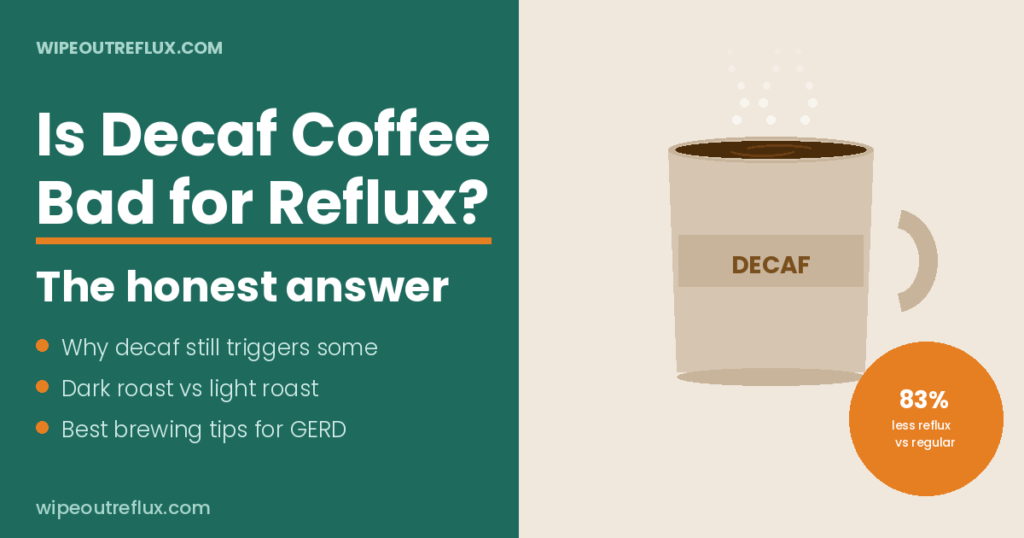
You can drink decaf coffee with acid reflux if it does not trigger your symptoms. Decaf may be a useful alternative to regular coffee because it contains much less caffeine, but it is not caffeine-free and is not reflux-proof.
Start with a small cup after food. Keep the drink simple, avoid late-night use, and track what happens. If symptoms return, choose a non-coffee drink and speak with a U.S. health professional if reflux is frequent, severe, or paired with warning signs.