Vacuum cleaners create suction by lowering air pressure and trapping dirt in filters.
Curious about How Do Vacuum Cleaners Work? You’re in the right place. I’ve tested, repaired, and recommended many models over the years, from uprights to robots. In this guide, I’ll break down the science, the parts, the pros and cons, and the simple habits that keep your vacuum strong. By the end, you’ll understand How Do Vacuum Cleaners Work and how to pick and use one like a pro.
The Core Principle: Suction, Airflow, and Pressure
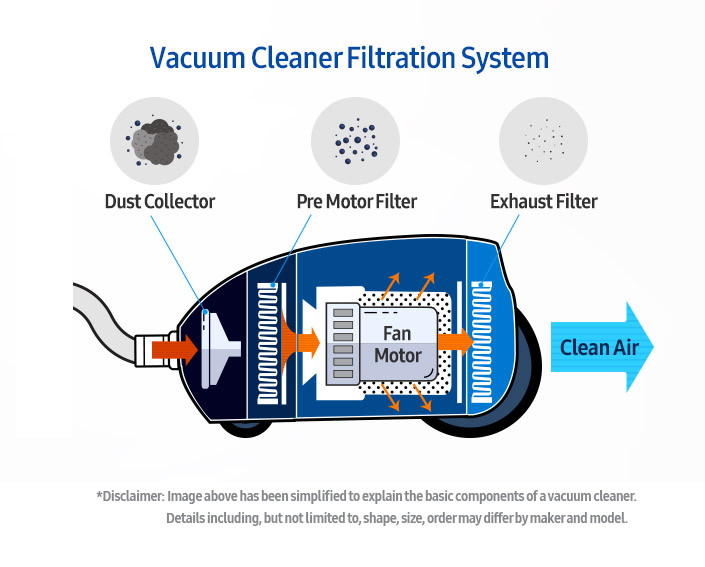
At the heart of every vacuum is airflow. The motor spins a fan. The fan pushes air out the exhaust. That drop in pressure inside the body pulls air in from the nozzle. Moving air carries dust with it. Filters then trap the particles before the air goes back to your room.
Think of a straw in a drink. When you lower pressure in your mouth, liquid rises. A vacuum does the same with air. This is the simple core of How Do Vacuum Cleaners Work. The details below turn that simple idea into clean floors.
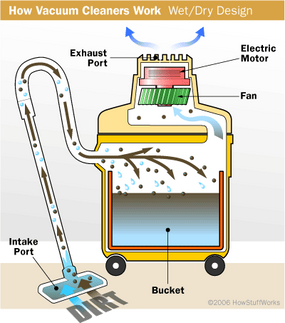
Key Components of a Vacuum Cleaner
Every vacuum has a similar set of parts. Each one matters for suction, dust capture, and ease of use.
- Motor and impeller The motor powers the fan. More power can boost airflow, but design matters too.
- Intake nozzle and head This is the opening where dirt enters. Good heads seal well to the floor.
- Brushroll or agitator On carpets, a spinning brush shakes dirt loose. On hard floors, a soft roller lifts fine dust.
- Hose, wand, and seals Leaks kill suction. Tight seals and short, smooth hoses help airflow.
- Cyclone(s) or dust bag These separate and store dirt. Cyclones spin the air. Bags act like a big filter.
- Filters Pre-motor and post-motor filters protect the motor and clean the exhaust.
- Exhaust outlet Returns air to the room. With a HEPA filter, this air can be very clean.
- Controls and sensors Speed control, floor sensors, and jam protection make use safer and easier.
When you ask How Do Vacuum Cleaners Work, these parts are the real answer.
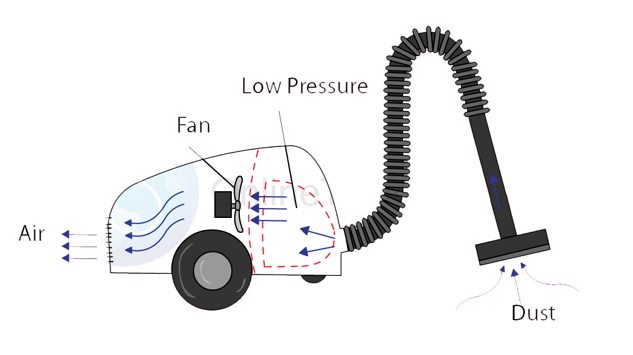
Types of Vacuum Cleaners and How Each Works
Different types solve different jobs. The core physics is the same, but the airflow path changes.
- Upright Quick on carpet. The motor, brush, and dust bin sit in one tall body.
- Canister Great on stairs and under furniture. The motor sits in a base with a long hose and wand.
- Stick Light and cordless. Smaller motors and batteries. Best for light mess and quick runs.
- Handheld Ideal for cars and sofas. Short paths mean strong pickup for small zones.
- Robot Uses a brush and small fan. Maps rooms with sensors. Works in short daily bursts.
- Wet/dry Uses a rugged motor and tank. Can handle water and heavier debris.
- Central vacuum Fixed in a garage or closet. Long wall inlets and hose. Very strong suction and quiet.
People search How Do Vacuum Cleaners Work because each type cleans in a slightly different way. Pick the one that fits your floors and habits.
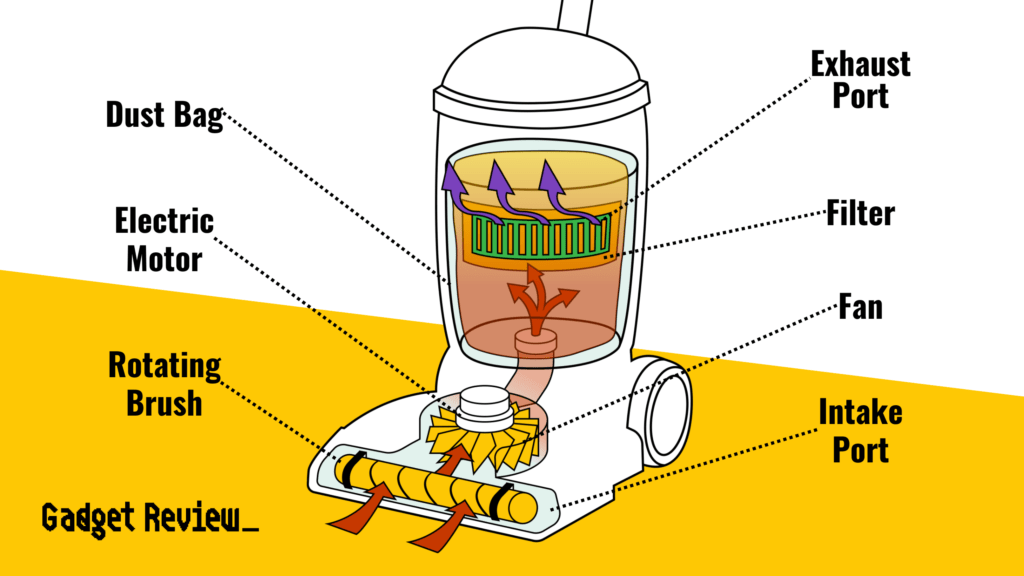
Filtration: From Dust Bag to HEPA
Air in. Dust out. Clean air back. That is filtration. It decides how much dust returns to your room.
- Bags Paper or cloth bags catch debris and act as a filter. Easy to toss. Good for allergies.
- Cyclones Air spins in a cone. Heavy dirt drops out. Finer dust goes to secondary filters.
- Foam and felt filters These catch larger fine dust. Often washable.
- HEPA filter Captures at least 99.97% of particles down to 0.3 microns in typical ratings. Great for pollen, dander, and smoke particles.
In my tests, sealed systems matter as much as HEPA. If the body leaks, fine dust bypasses the filter. When you study How Do Vacuum Cleaners Work, always check for the phrase sealed HEPA or whole-machine HEPA.
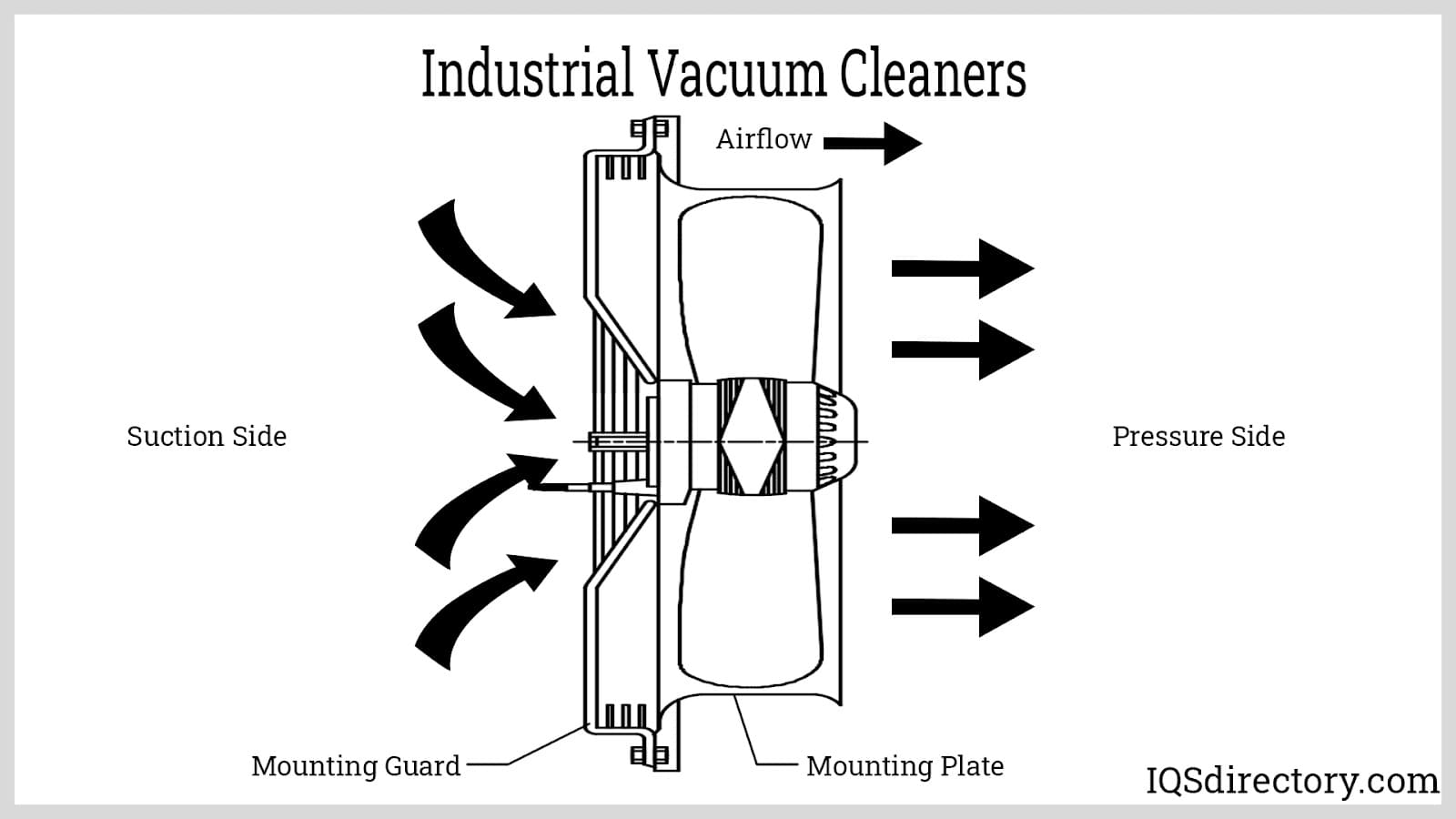
Motor Power, Air Watts, and Performance Metrics
More watts do not always mean better cleaning. Focus on airflow and sealed suction.
- Watts and amps Measure electric draw, not cleaning. Design and seals can beat raw watts.
- CFM Cubic feet per minute. Higher CFM means more airflow. Good for hard floors.
- Water lift Measured in inches or kPa. Shows sealed suction strength. Helps with deep carpet.
- Air watts A blend of airflow and suction under load. A better single number for pickup.
From experience, balanced numbers beat extremes. I’ve seen a mid-power canister outperform a high-watt upright due to smarter airflow. This is a key insight when asking How Do Vacuum Cleaners Work in real homes.
Brushrolls, Agitation, and Pickup on Different Floors
Suction alone is not enough on carpet. You need agitation.
- On carpet A stiff bristle brushroll beats down fibers and lifts packed dust.
- On rugs Use gentler bristles or lower speed to avoid pulling threads.
- On hard floors Use a soft roller or turn off the brush to prevent scatter.
- Pet hair Look for a tangle-resistant or comb-style brush to cut hair wraps.
Mistake to avoid I once melted a belt by running a jammed brush on a shag rug. If the brush stalls, stop and clear it. Brush design is a major part of How Do Vacuum Cleaners Work in daily life.

Airflow Path: From Nozzle to Exhaust
Follow the path to find clogs and losses:
- Nozzle contacts the floor and lifts debris.
- Air moves through the neck and hose. Tight turns slow air.
- Air enters the cyclone or bag. Heavy dirt drops out first.
- Pre-motor filter blocks fine dust.
- Fan pushes cleaned air toward the exhaust.
- Post-motor or HEPA filter scrubs the final air.
- Clean air leaves the machine.
If suction drops, the issue is somewhere on that path. This simple map helps explain How Do Vacuum Cleaners Work and how to fix them fast.

Bagged vs Bagless: Pros and Cons
Both work well. The right choice depends on your needs.
- Bagged Cleaner disposal. Good for allergies. Filters last longer because the bag does the heavy work.
- Bagless No bags to buy. You see what you pick up. Needs more filter washing. Can puff some dust when you empty.
- Costs Bags add ongoing cost. Bagless needs periodic new filters and gaskets.
- Odor Bags can reduce smell if changed often. Bagless may smell if the bin is not washed.
If you want less mess, go bagged. If you like to maintain often, bagless is fine. This trade-off is central to How Do Vacuum Cleaners Work for allergy control.
Maintenance, Troubleshooting, and Efficiency Tips
A few small habits keep suction strong and noise low.
- Empty before max fill Marks on the bin or bag show the limit.
- Wash or replace filters on schedule Use gentle water on foam. Let dry fully.
- Cut hair from the brush Use scissors or a seam ripper.
- Check for clogs Bend the hose and listen. Clear the neck and wand.
- Inspect belts and seals Worn belts slip. Cracked gaskets leak.
- Use the right head for the floor A good seal boosts pickup and saves energy.
Common fixes when suction drops:
- Clean the pre-motor filter.
- Check the brushroll spins.
- Look for a clog at the elbow or inlet.
- Reseat the dust bin or bag door for a tight seal.
These steps reflect how How Do Vacuum Cleaners Work in practice, not just on paper.
Safety, Energy Use, and Environmental Impact
Good use keeps you safe and saves power.
- Avoid hot ashes, large glass, or wet mess unless rated for it.
- Unplug before clearing jams.
- Keep vents open. Blocked vents overheat the motor.
- Use lower power or eco mode on hard floors.
- Replace filters instead of tossing the whole unit.
Robust seals, reusable filters, and repairable parts cut waste. These choices fit with a smart view of How Do Vacuum Cleaners Work over the long term.
Real-World Scenarios and Personal Tips
I once compared two sticks on a gritty tile floor. The lower-watt model won. Why? A better head sealed to the grout and kept the dust from escaping. Design beats specs.
Quick lessons learned:
- If the head sticks to carpet, open the airflow vent on the wand.
- For deep rugs, raise the height. You need airflow, not a vacuum-sealed head.
- Empty sandy dirt outside. Sand chews filters fast.
- For pet homes, clean the brush weekly. A clean brush feels like a new vacuum.
- Store with hose straight. Kinks cut performance.
These small habits match the science of How Do Vacuum Cleaners Work, and they make cleaning easier.
Frequently Asked Questions of How Do Vacuum Cleaners Work
What creates suction in a vacuum cleaner?
A motor spins a fan and lowers air pressure inside the machine. Higher outside pressure pushes air in, carrying dust with it.
Is higher wattage always better for cleaning?
Not always. Airflow, sealed suction, head design, and seals matter more than watts alone.
Do HEPA filters really help with allergies?
Yes. True HEPA captures tiny particles like pollen and dander. A sealed body is also key to stop leaks.
Why does my vacuum lose suction over time?
Filters clog and hoses can block. Wash or replace filters and clear the airflow path to restore power.
How do robot vacuums actually pick up dirt?
They combine a brushroll and side brushes with a small fan. They map rooms and clean often to maintain floors.
Should I choose bagged or bagless if I have pets?
Bagged is cleaner to empty and reduces smell. Bagless works if you wash the bin and filters often.
What is the difference between CFM and water lift?
CFM measures airflow volume. Water lift measures sealed suction. Both matter for balanced cleaning.
Can I vacuum liquids with a regular vacuum?
No, unless it is rated wet/dry. Liquids can ruin the motor and create shock risks.
Why does my vacuum smell bad?
Trapped hair, pet dander, and damp dust cause odor. Empty often, wash the bin, and replace filters.
How often should I replace vacuum filters?
Foam or felt filters need washing monthly in heavy use. HEPA filters often last 6 to 12 months, depending on dust.
Conclusion
Now you know the simple science and the small details that make a big difference. Suction, airflow, and a good seal power every pass. Smart heads, clean filters, and the right type for your home do the rest. Apply these tips, and your vacuum will clean faster, last longer, and release cleaner air.
Put this guide to work today. Check your filters, cut the brush clean, and choose the right head for your floor. Want more hands-on advice? Subscribe, ask a question, or share your own tips in the comments.